
For the past twenty years or so I’ve been observing other people’s mango trees in Southern California, and for the past ten years I’ve been trying to grow my own. I haven’t had quick success, frankly. But I take consolation in the fact that most others I know who grow mangos here describe them as a “long term project.”
The original Sunset Western Garden Book published in 1954 had this entry for mango: “A tropical that will exist in the frost-free areas, but that is about all.”
The last Sunset Western Garden Book published in 2012 only slightly modified the entry for mango: “In mildest parts of Southern California . . . plants often remain shrubby . . . and are likely to fruit only in the most favorable frost-free locations.”
The climate that mangos like
Nowhere in Southern California has an ideal mango climate; everywhere here is at times too hot or too cold. Near the beach it’s too cold year round. In the valleys, it’s too cold in winter. In the desert, it’s too hot in the summer.
Mangos grow like weeds in the tropics where it is 87 degrees during the day, every day, and 75 degrees during the night, every night, all year long. And the humidity is high, all year long. And there is a season of abundant rain.
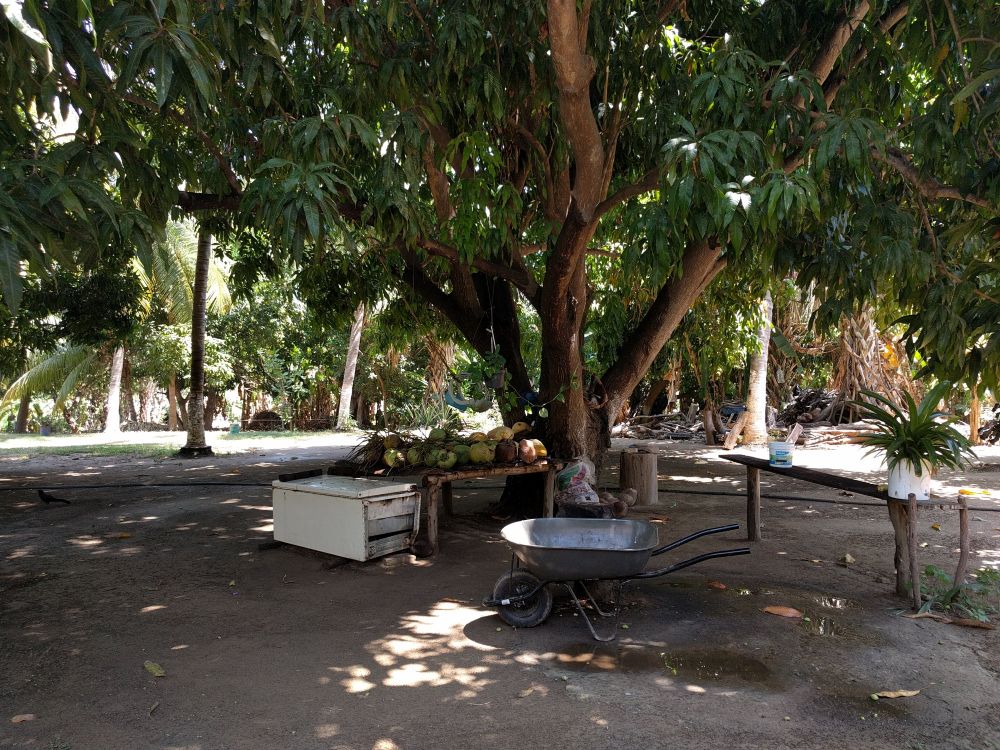
Southern Mexico is one such location, where mango trees attain great size.
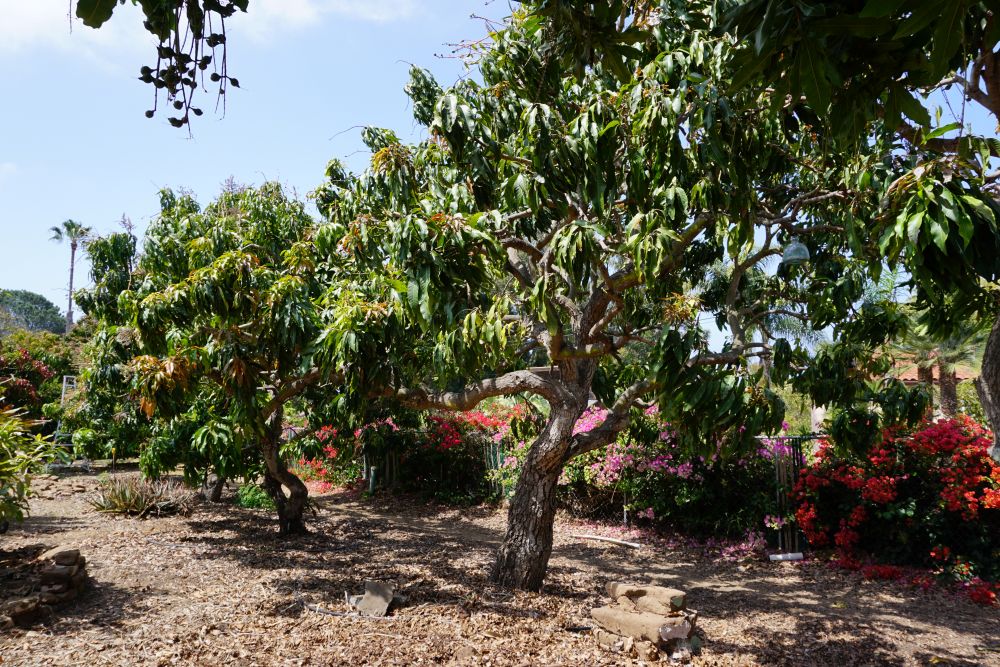
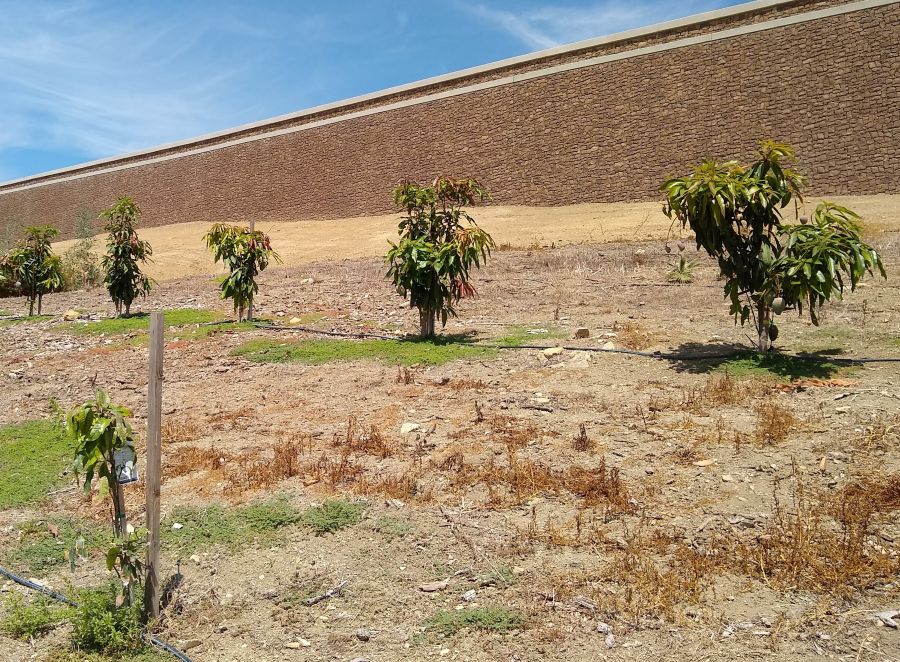
So mangos as a commercial crop here in California is not easy. It’s been tried since Captain L.L. Bucklew in Encinitas, San Diego County, in the 1930’s, some of whose trees are still alive (and pictured at the top).
(See my posts, “California-grown mangos” and “Captain Bucklew’s California Mango Trees”)
Later, Paul Thomson planted out many mango trees in Vista in the 1960’s.
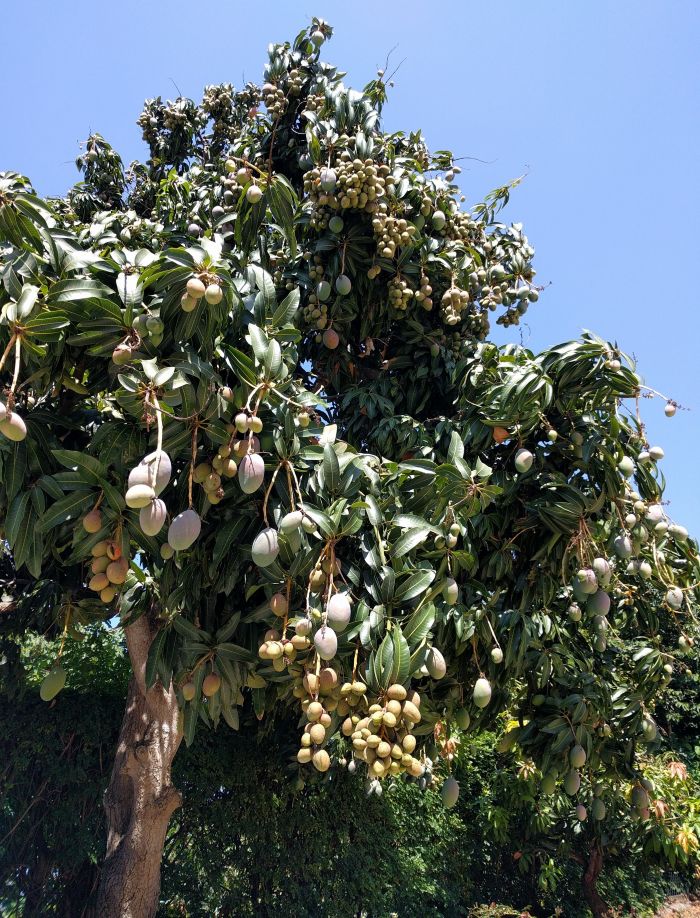
Today I know of only a few mango farm plantings, the biggest being near the Salton Sea. Backyard mango trees are innumerable here nonetheless, and some produce superb fruit.
Choosing a mango variety
My main advice is to only grow a mango variety that you find absolutely delicious; do not settle for a fruit that is only acceptable.
I used to think that mangos were not worth growing in Southern California because only inferior varieties performed here (small, stringy types). I thought this because all of the large old mango trees I first saw and ate from made inferior fruit.

Later I encountered mature mango trees that made excellent fruit.
So then my question became: Why were people growing mango trees that make small, stringy mangos that are mostly seed when they could grow a tree that makes awesome mangos?
For some, the answer is that they inherited the tree. For others, it is that they planted a seed long ago and ended up with such a tree and they think they’re stuck with it.
Regardless, here is my point: The challenge of growing mangos in Southern California is that the trees don’t love our climate. The challenge is not that only inferior varieties fruit or fruit well in this climate.
This is not to say that every mango variety performs well here, or that a given variety performs well in every part of Southern California. While I can’t say exactly how a variety will do in a certain location (because I’ve seen the same variety perform a bit differently in similar locations), there are a couple of generalizations to keep in mind when choosing a variety to grow.
One is that locations near the ocean will probably have better results with early varieties. These are varieties that mature their fruit more quickly.
This was first observed by Captain Bucklew in his mango grove in Encinitas, 1.5 miles from the ocean. He got little heat during the summer so “some varieties mature very slowly, or not at all,” he wrote. Some were barely ready to pick in December or they never completely matured before winter arrived.
Bucklew realized that he needed varieties that matured in April and May in tropical locations. These early varieties would mature at his place before the weather cooled too much in late fall. He found one such variety from Florida called “Earlygold” which matured its fruit in November, and it became his most reliable producer of the dozens of varieties he trialed. Through the years, Bucklew grafted over many of his other varieties to Earlygold.
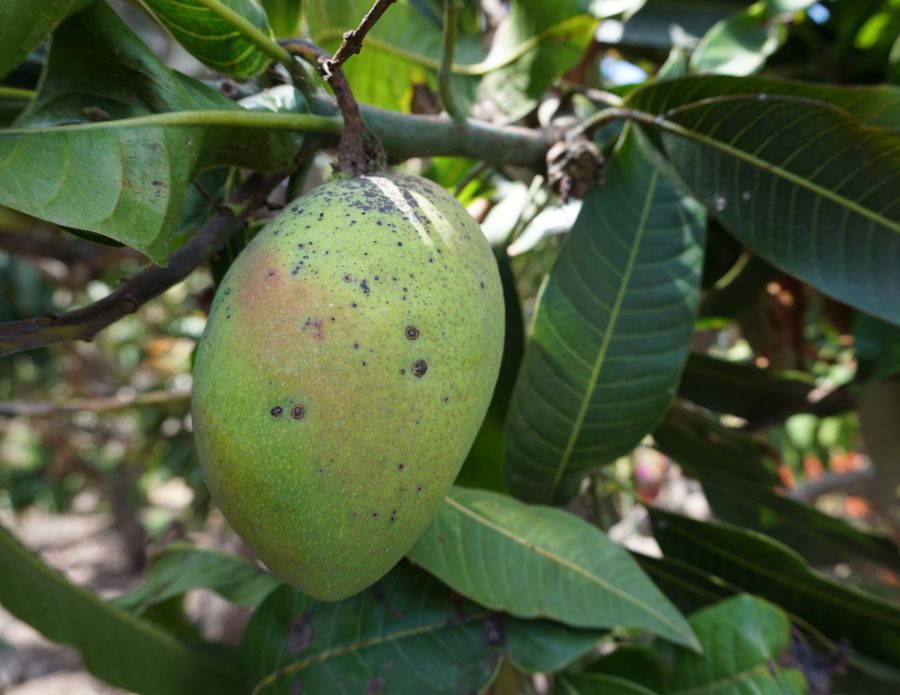
In contrast, the more inland and hotter the location, the more that variety options broaden to even include late varieties. An extreme example of this would be the many Keitt mango trees that are productive on farms in the low desert near Mecca.
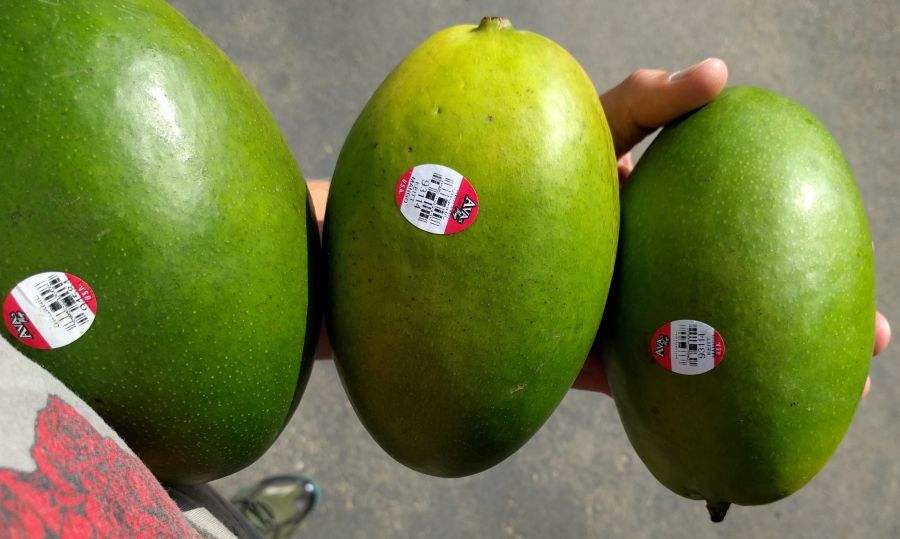
Take one more example of mango varieties and their growth and suitability to the different Southern California climates with Valencia Pride is a mid-to-late season variety. Look at these Valencia Pride mangos picked from trees growing in our different Southern California mango climates. Note the harvest dates and skin colors.
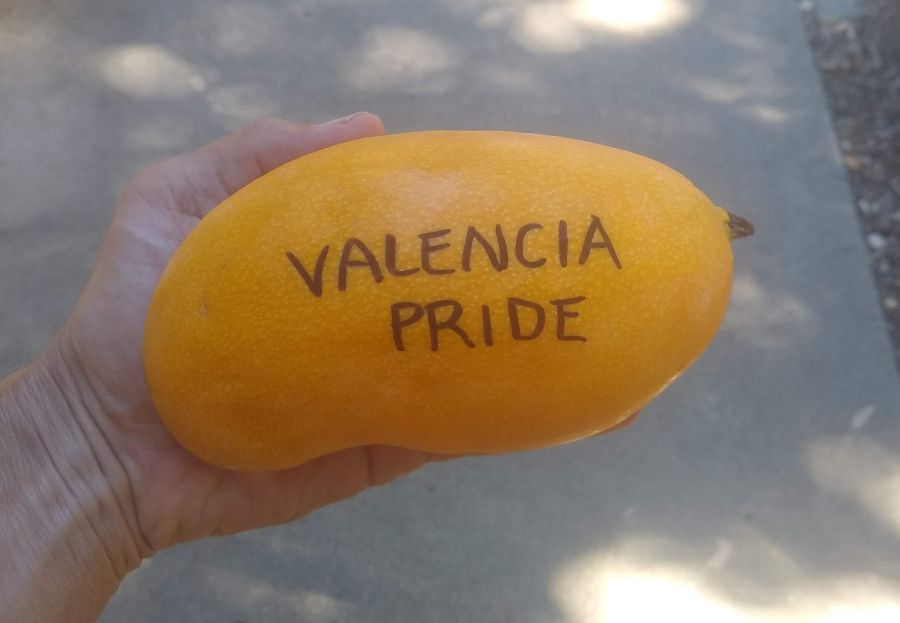
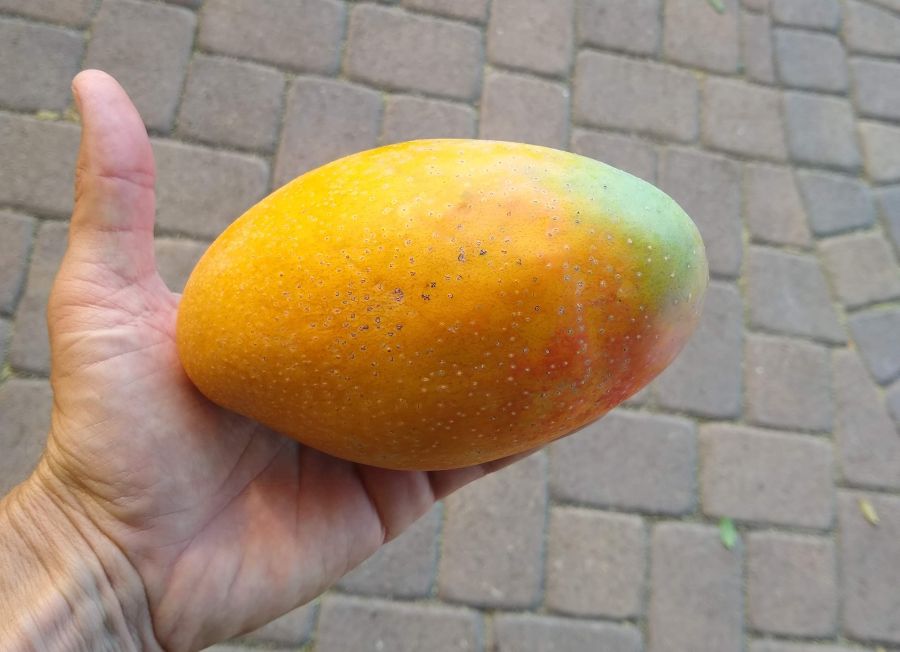
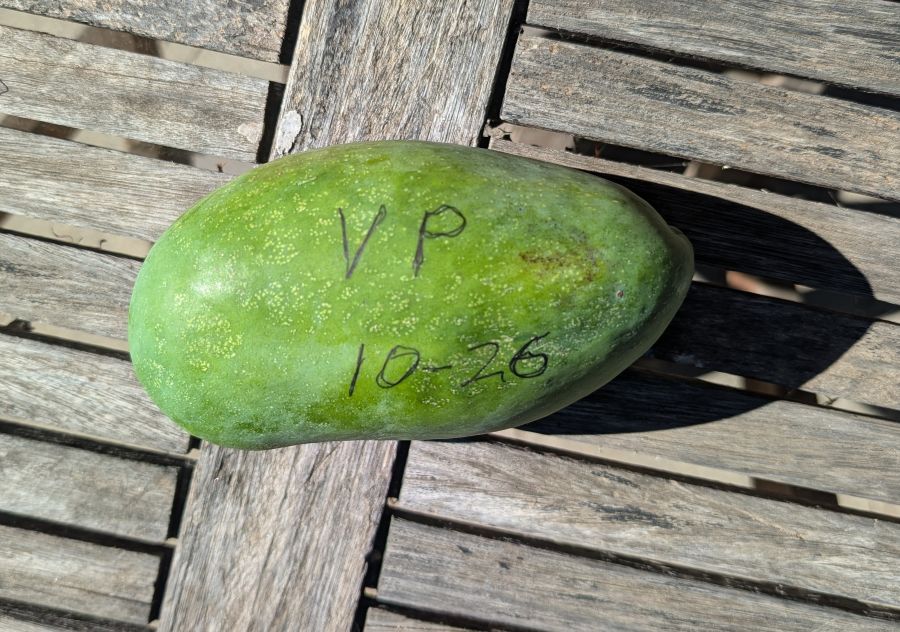
Here’s what I notice: The cooler (more coastal) the location, the later the mangos mature. And mangos grown with more heat tend to be more colorful. I have to mention that skin color does also depend on an individual fruit’s exposure to the sunlight.
Which Valencia Pride tasted the best? All three were very good.
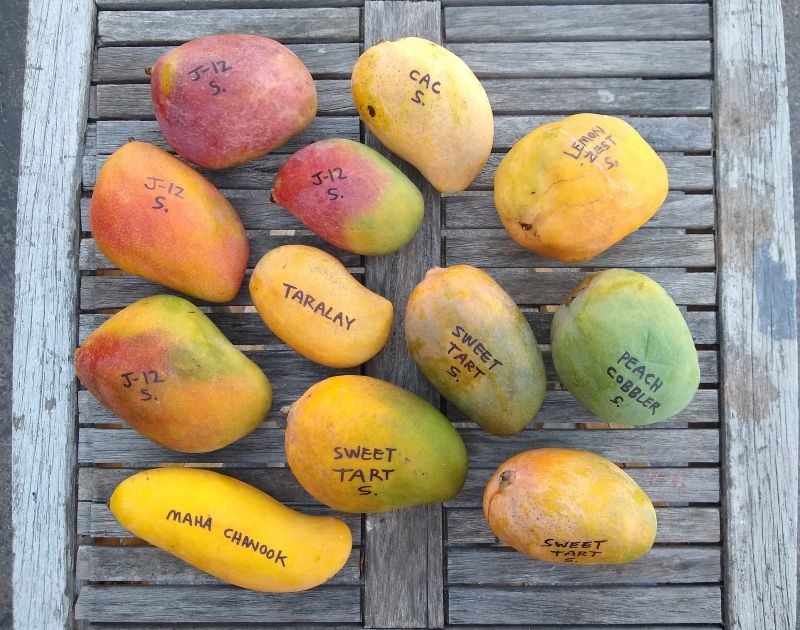
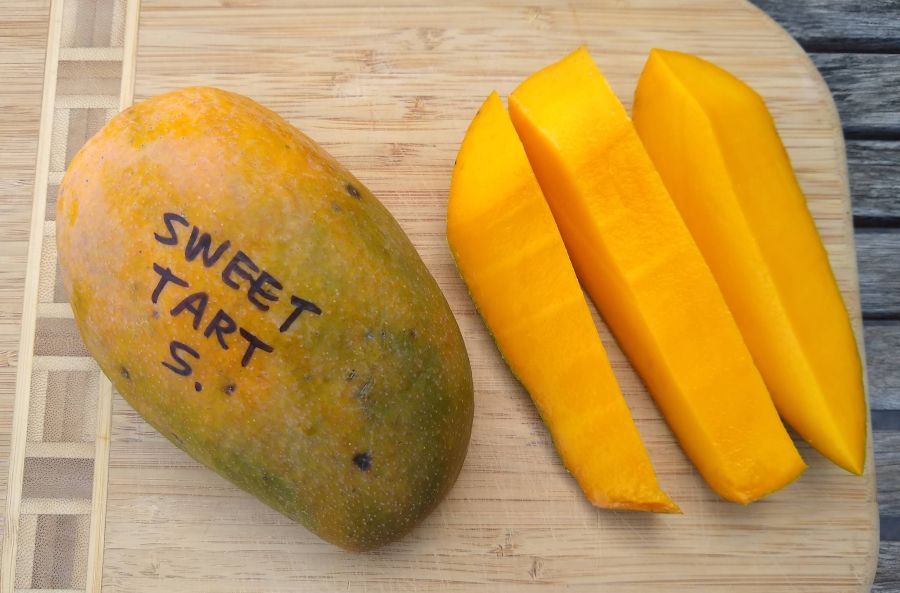
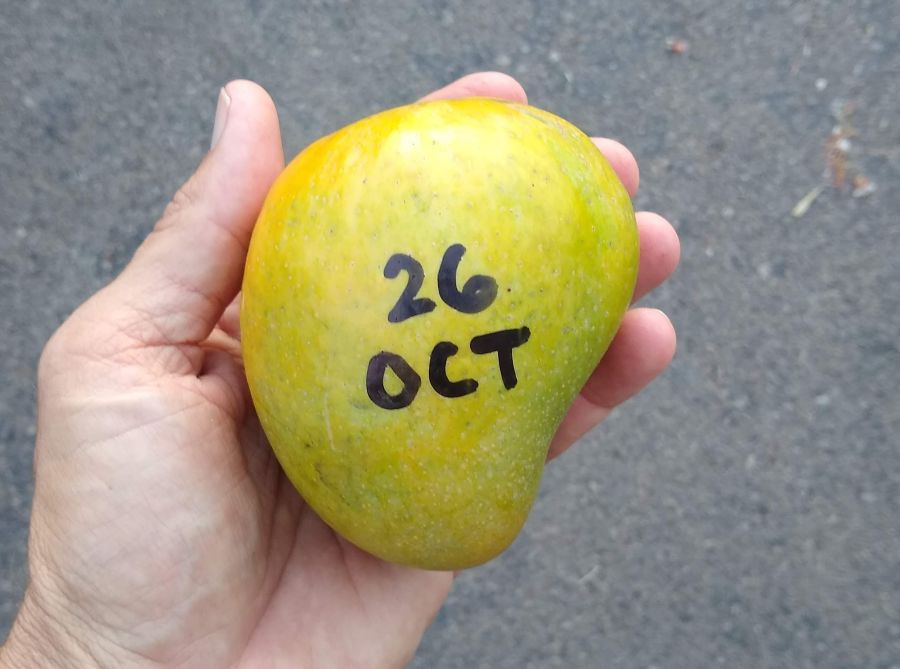
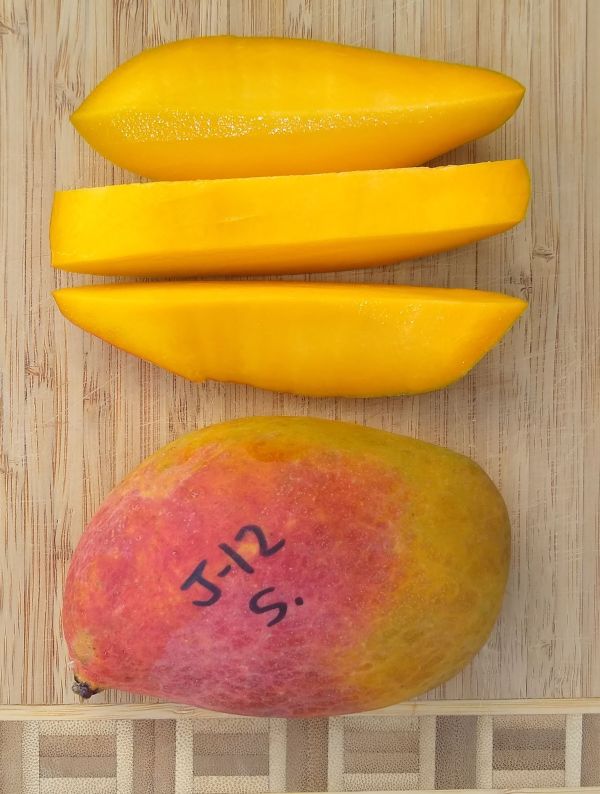
Finally, on varieties, I will add a few for you to consider because I have eaten them from trees in Southern California and they were top notch. I can’t say how productive they’ll be for you, but the eating quality justifies an attempt to grow them:
How to start growing a mango tree
There are four ways that I’ve seen successful mango trees started in Southern California, and each comes with advantages and disadvantages. In other words, each can be the best method in different circumstances.
1. Grow from seed
Advantages: cheap; often (but not always) results in a tree that is vigorous and tough; can plant a polyembryonic seed to get a tree that makes known fruit
Disadvantages: the tree will take longer to fruit compared to a grafted tree; the tree will make fruit that is unique and possibly inferior (unless the seed was polyembryonic)
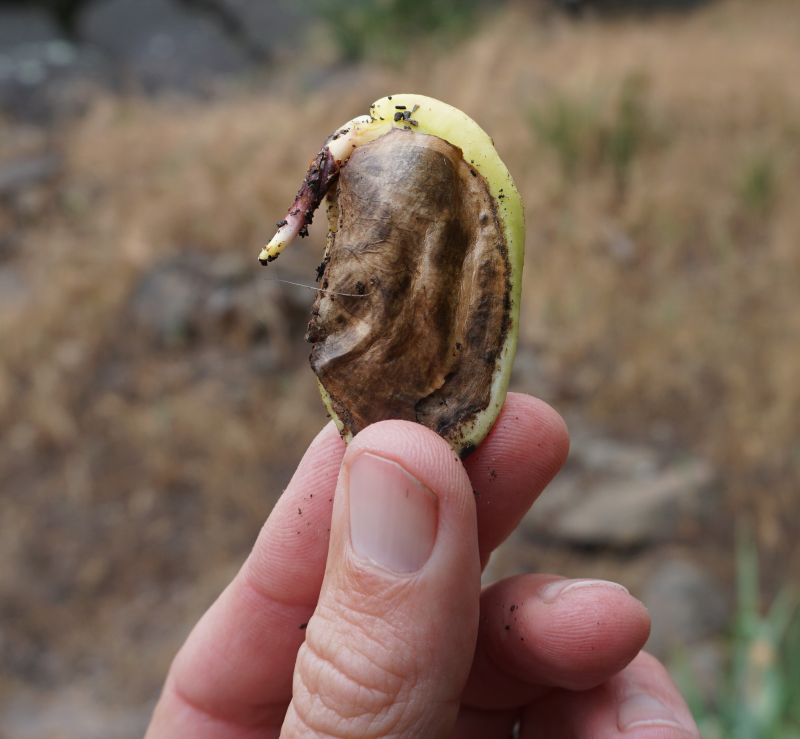
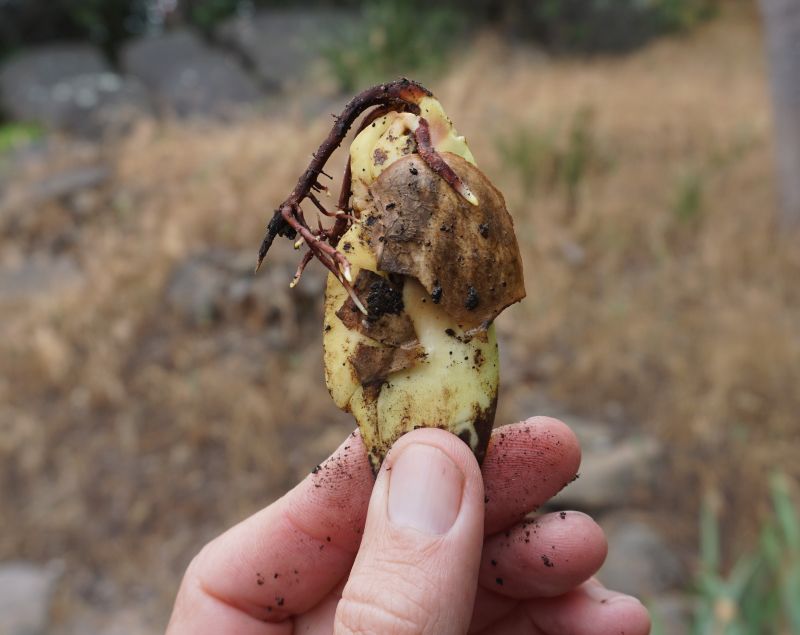
Polyembryonic mango seeds sprout multiple plants, some of which are clones of the mother tree.
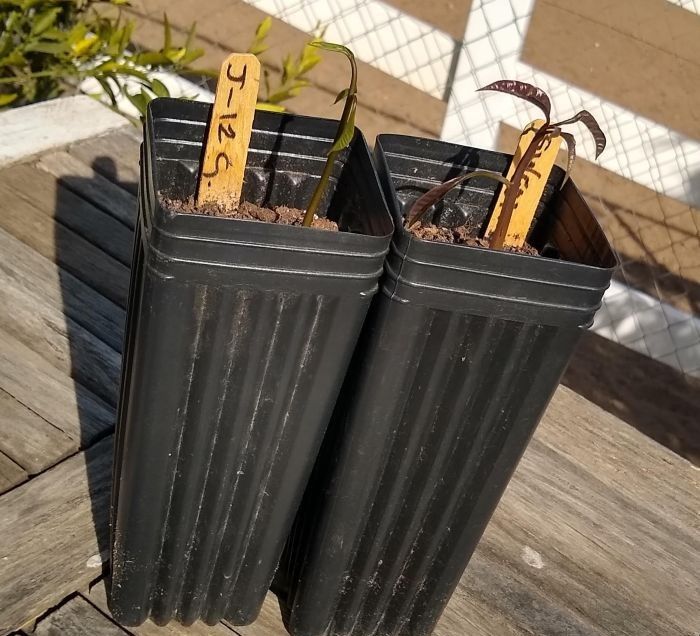

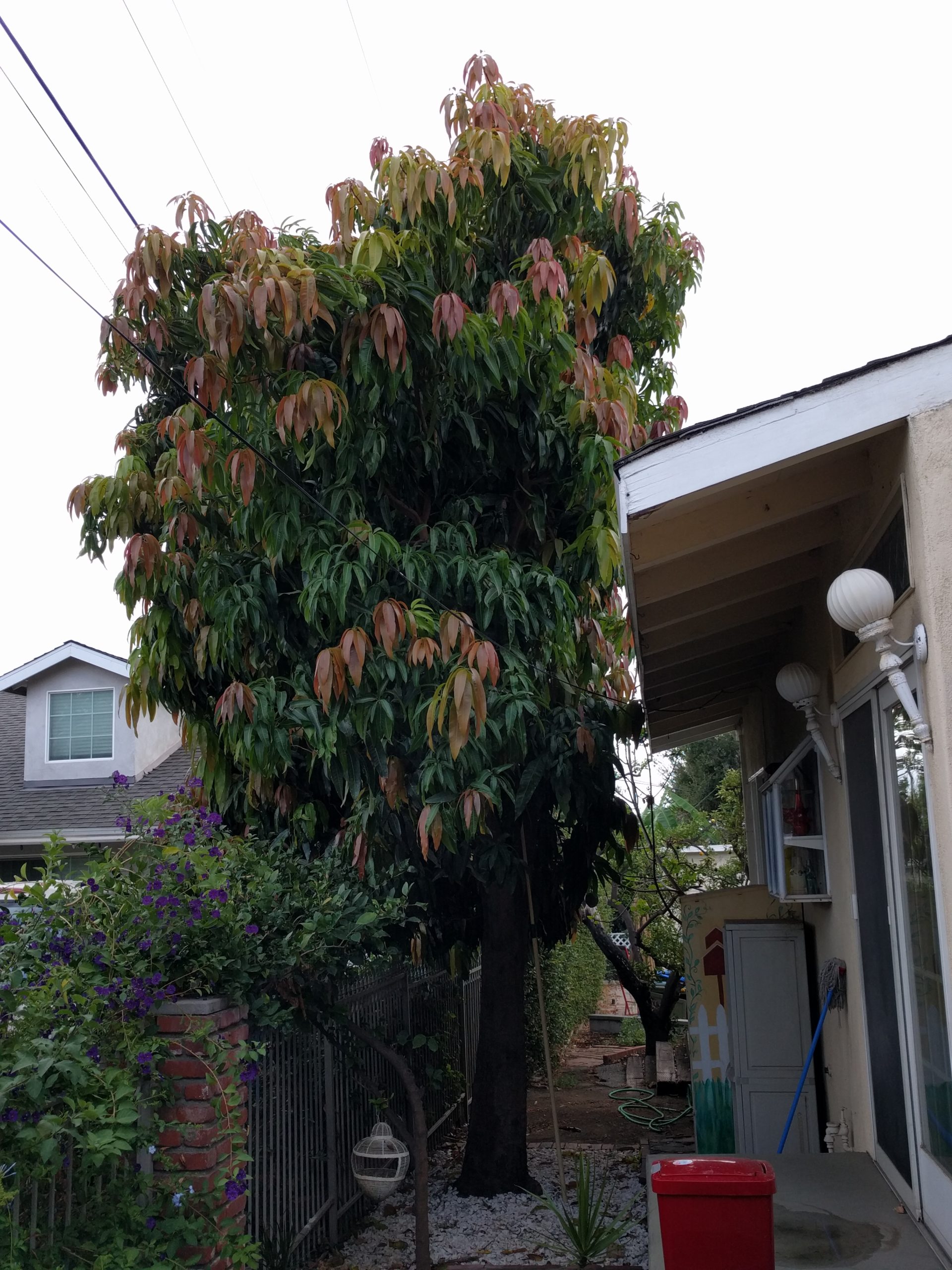
Conclusion: If you don’t want to spend much money and are willing to be patient, grow from seed. Ideally, you plant a seed from a fruit that was just to your liking because that makes it more likely that the tree it grows will make similar fruit. You can also plan to later graft, as necessary (more on this below).
2. Plant a seedling tree
Advantages: cheaper than a grafted tree; grows faster than a grafted tree
Disadvantages: will make unknown fruit (unless polyembryonic); will take longer to fruit than grafted tree (this can be seen as an advantage with mango trees though); will have other unknown tree characteristics, such as growth habit and fungus susceptibility
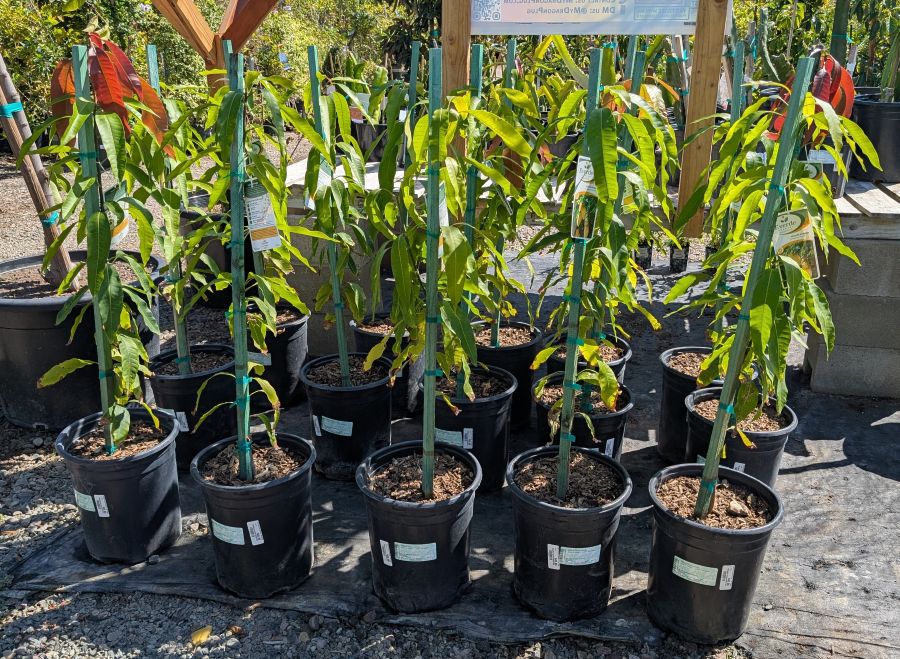
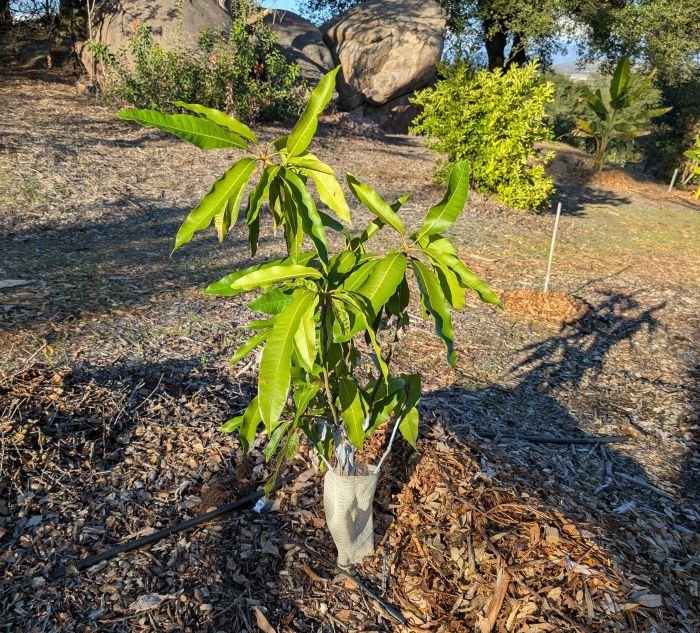
Conclusion: If you are patient and willing to risk the outcome, you could get a tree that grows well and makes quality fruit or fruit that is at least similar to its parent.
3. Plant a grafted tree
Advantages: known tree and fruit characteristics
Disadvantages: expensive; grows slowly and flowers too much
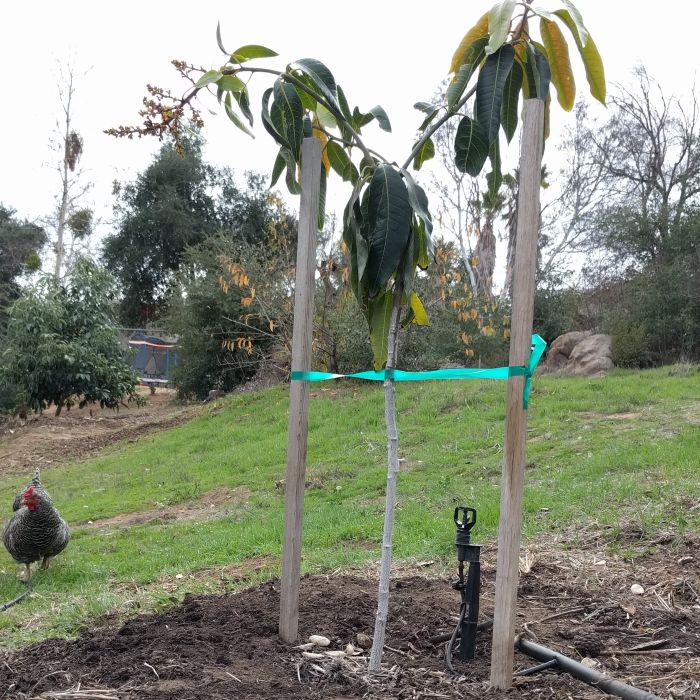
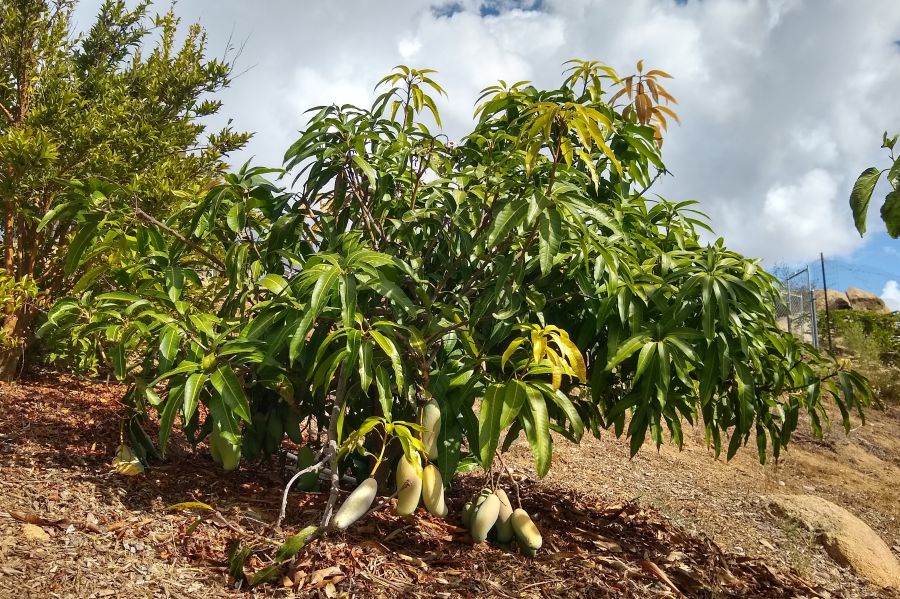
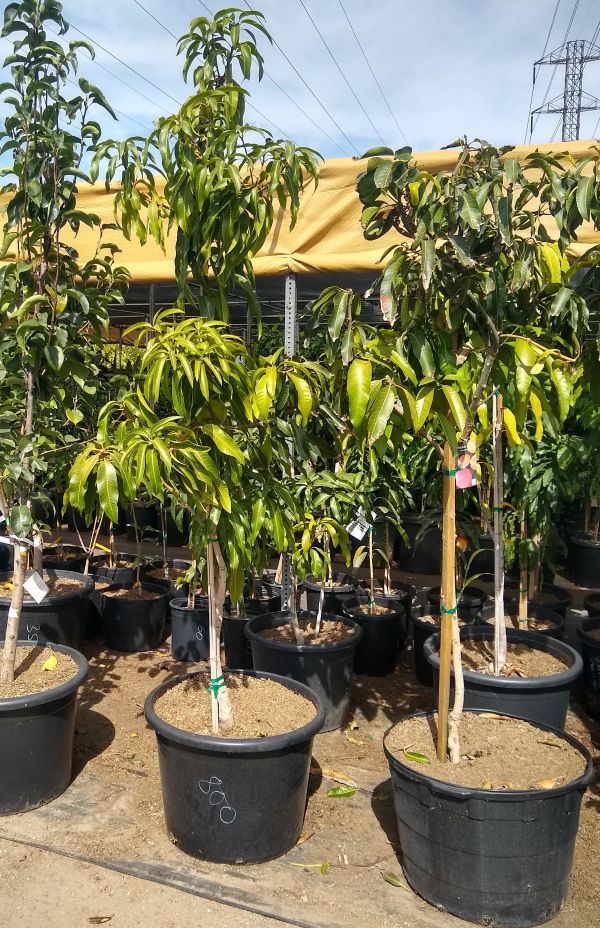
Conclusion: If you don’t know how to graft, then buying a grafted tree is the best way to know the kind of tree and fruit you are planting. But grafted mango trees do require patience and discipline because they try to fruit too much at a young age and therefore grow slowly. It’s usually necessary to remove most if not all of their fruit in the first few years in order to prevent stunting.
4. Graft onto an established tree
Advantages: best of both worlds, as you can get started with a vigorous seedling (or grafted tree) and later graft on a known, preferred variety; allows you to also grow a seed or seedling until fruiting in order to try the fruit, and then graft the tree to another variety if the fruit proves unsatisfactory
Disadvantages: must know how to graft and be able to find scionwood

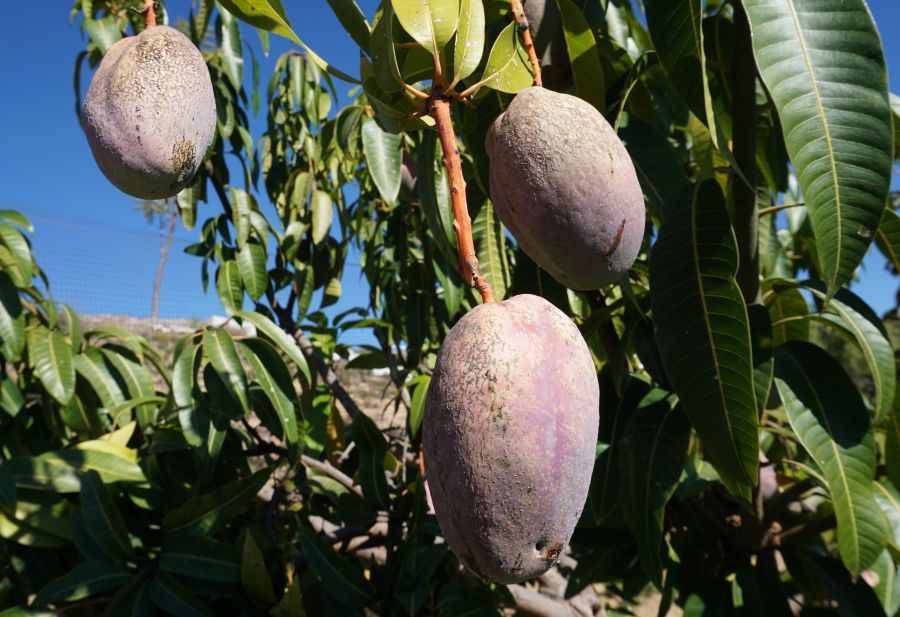
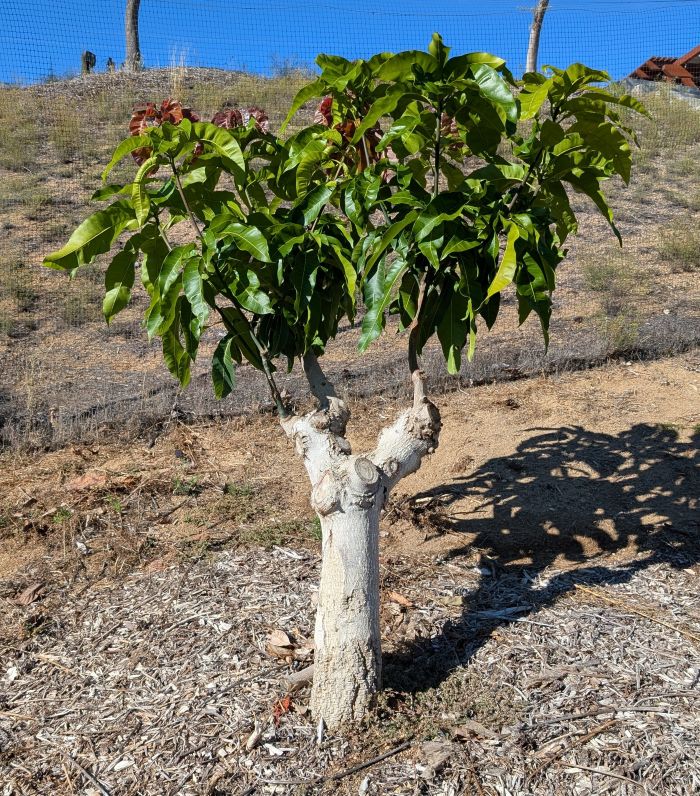
Conclusion: If you want to save money and you know how to graft, then first growing a seed or seedling to use as rootstock for grafting on a preferred variety can be the only option, as sometimes grafted trees of certain varieties are not available.
Heat and cold tolerance of mango trees
Mangos take heat better than avocados. I have seen mango leaves go through temps over 110 degrees with only slight bleaching. However, mango fruit is more sensitive than mango leaves, which is why growers in desert locations or during extreme heat waves shade individual mangos by covering them with white paper bags.
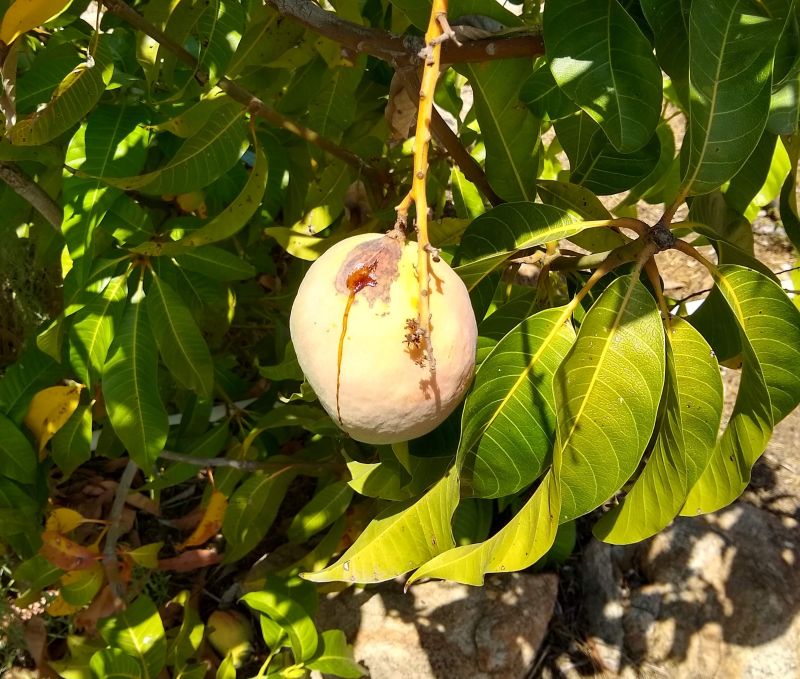
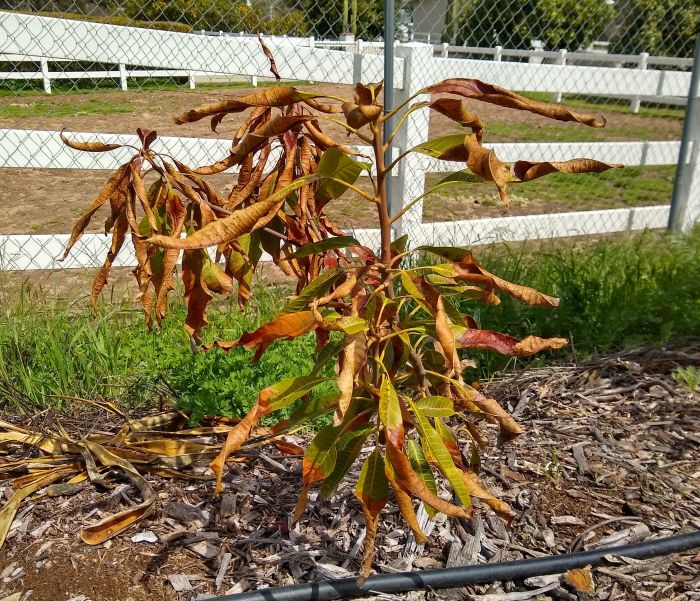
Mangos are a little more sensitive to cold than avocados, about as sensitive as bananas. Bigger mangos take cold better than young mangos.
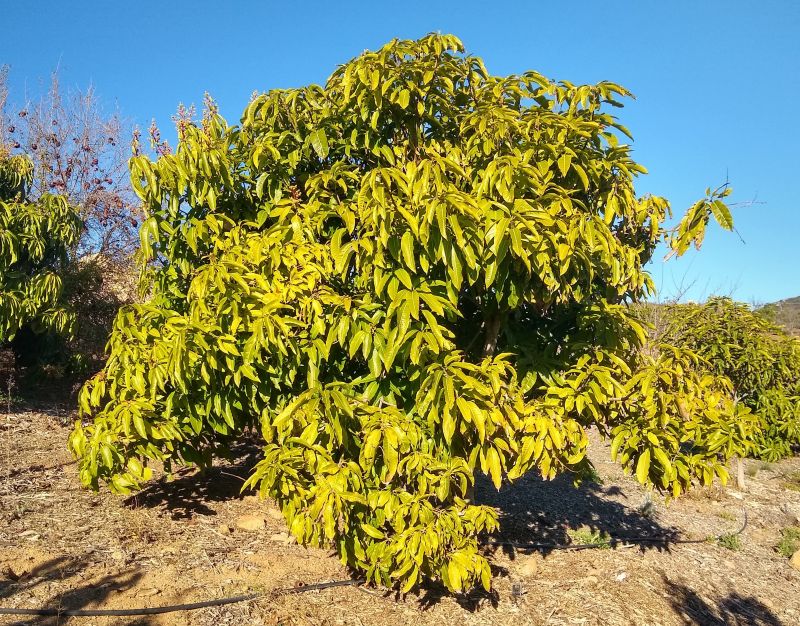
I have not seen clear evidence that certain varieties of mangos are significantly more tolerant to heat or cold.
Watering and fertilizing
Mangos are similar in their water needs to citrus trees, as far as I have observed. In other words, they need it during the warm months but don’t mind to be dryish during the winter. I have seen that mango trees do respond obviously when you lavish them with water during the warmest months though, so if you’re looking for maximum growth, do not skimp on water during late spring, summer, and early fall.
As for fertilizer, I don’t know of anyone who treats mango trees special and gets special results. Most growers I know give the trees some compost and mulch and get fine growth and fruit production.
Fungus on flowers and leaves
Mango flowers and leaves are sometimes covered with a whitish fungus, and people call this condition “powdery mildew.” It happens mostly during spring.
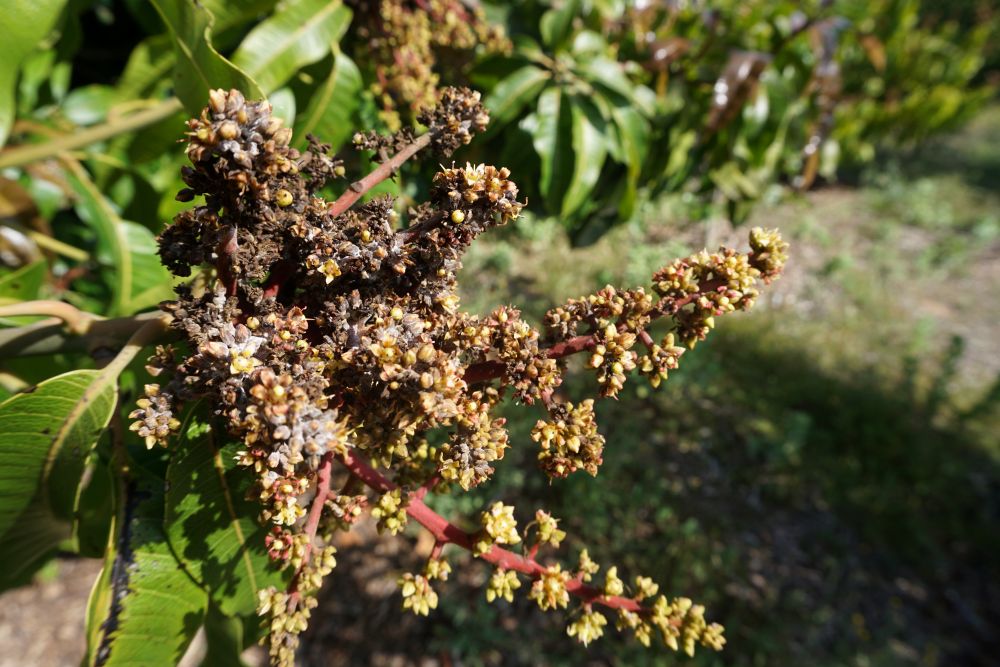
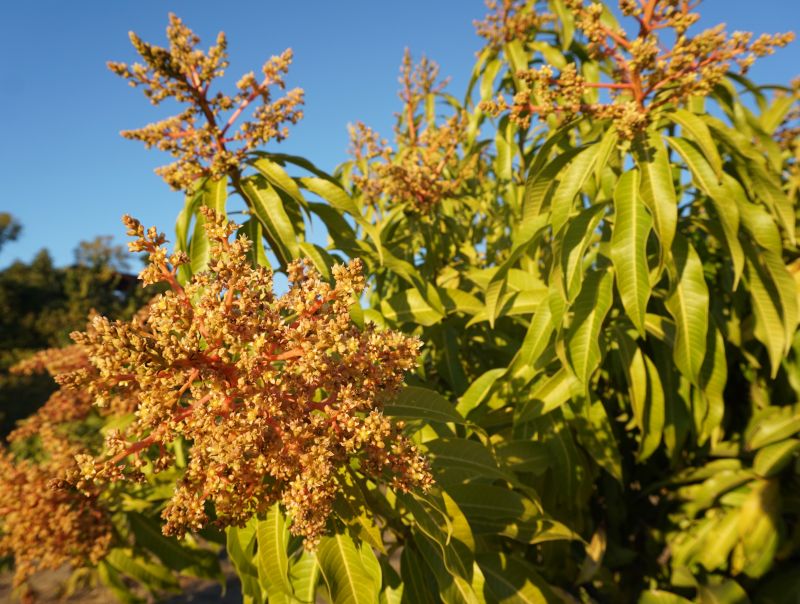
Powdery mildew is also worse in locations nearer the ocean.
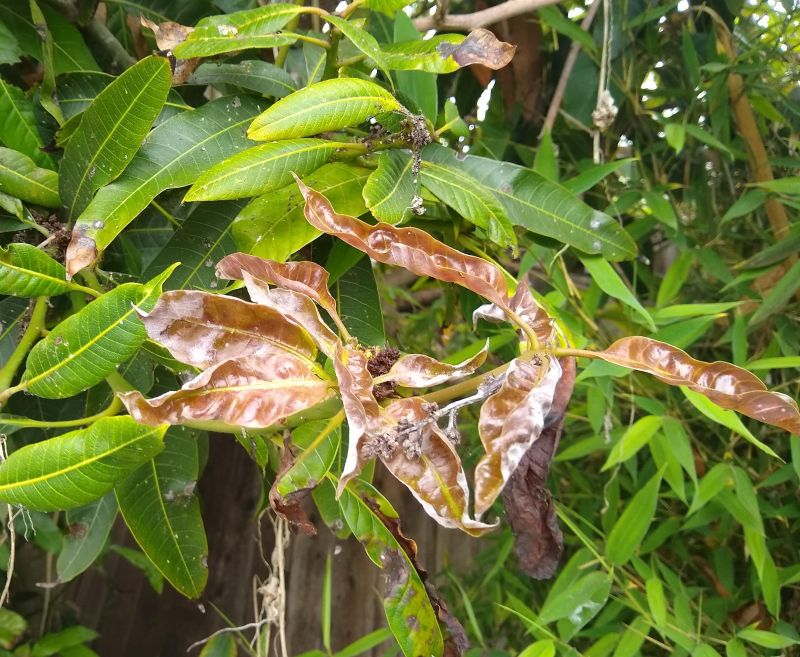

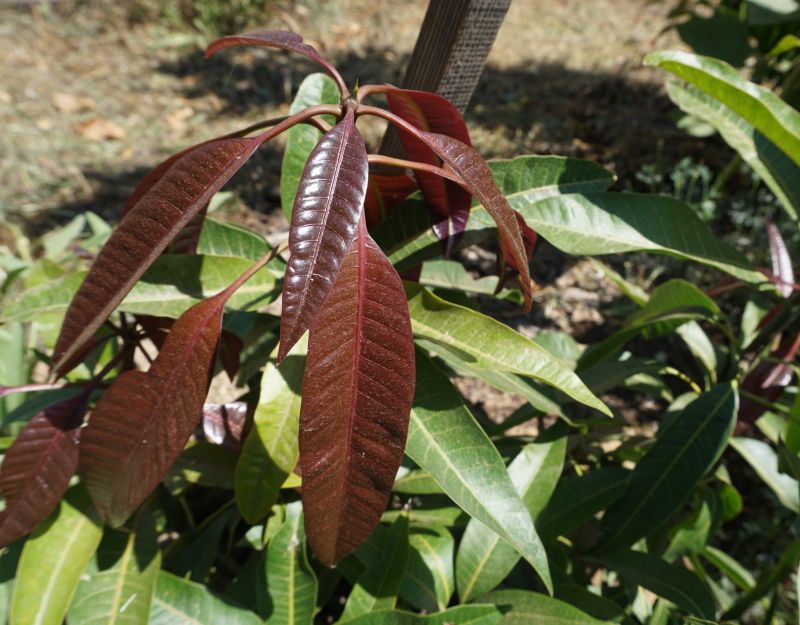
Importantly, the above mango trees are not of the same variety. And I have seen that powdery mildew occurrence varies somewhat by variety; however, in my observations it is proximity to the ocean that is by far the most determining factor.
Powdery mildew looks ugly, but this is not the real problem. The fungus kills flowers, preventing them from becoming fruit.
Therefore, some growers spray fungicides, both purchased and homemade.
I have no experience spraying mangos to mitigate mildew problems. I’ve never sprayed my own little trees nor have I watched the results of others who spray. But what I do know is that many growers do not spray and still get good yields from most trees.
Mangos are a little unusual in that they don’t have a concentrated, single period of flowering. An orange tree, for example, will begin to flower in spring and finish in spring. Mangos, on the other hand, will make more flowers if their first attempt doesn’t become fruit. So it often happens that early flowers mostly get killed by fungus, but the tree continues to bloom into early summer and it is these later flowers that make much of the crop.
Today, I still have a lot to learn about growing mangos. I write this post to help the beginner, as if I’m guiding myself from when I started trying.
If you have a lot of experience growing mangos here in California, please add it in the comments in order to teach the rest of us further.
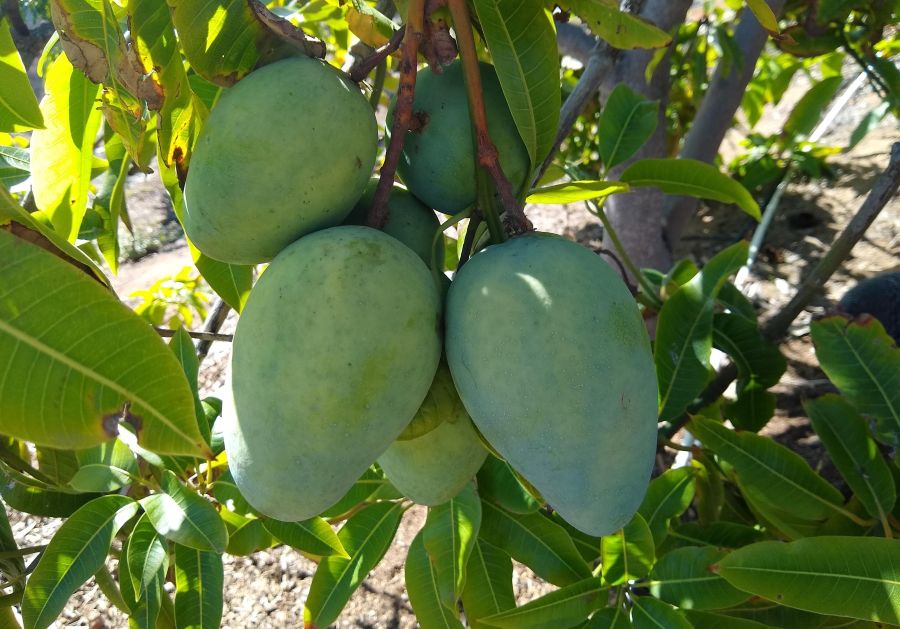
We all want:
Special thanks to my friends who have shared their delicious homegrown mangos with me over the years and who have helped me understand better how to grow my own.
Thank you for supporting my Yard Posts so I can keep them coming and keep them without ads.
All Yard Posts are categorized and linked here.

Happy to see this post Greg. About a month ago I bought 3 grafted mango trees to put in my yard as an experiment, I’m feeling a bit more confident about my new trees now. For years I’ve seen random mango trees in peoples yards here and there and always wondered. The trees I purchased are currently in pots, I plan on waiting until spring to plant them.
Been excited for this post. I have a tree that I’ve kept in a large container for prob four years now. It struggled for a long time (mostly from neglect), but has taken off in last year. It had set a handful of fruit, one of which I was able to harvest and relish. Small but delicious. Squirrels then raided the tree and stole the rest.
I bought it as a Manilla Mango, prob from Walter Andersen. Any thoughts on this variety and long term viability? We are in clairemont, so good heat but also heavy marine layer. Maybe the Goldilocks micro!?!
Planning to finally put it in the ground this rainy season.
Hi Brandon,
I know a couple of people who get decent results with mango trees in Clairemont (San Diego, not Claremont L.A.). That green Valencia Pride mango pictured above came from a tree in Clairemont. But as you implied, it can depend on the microclimate. The happy mango trees there that I know are on a south-facing hill and/or have a large south-facing wall behind them.
As for Manila specifically, I know a couple of people who have grown out those Manila seedlings commonly sold in local nurseries (originally grown by La Verne, now Everde) and are satisfied with the trees and fruit; they are small fruit, as you mentioned. Some people don’t think they’re great mangos and so later use the tree to graft on a different variety.
I have a Manila mango tree. It’s about 5 years old. I have gotten fruit from it a couple of times. The fruit tastes good and is plenty sweet, but its stringy. I live in Lakeside.
I read the post because you said it took a long time! But being in NorCal means no mangoes to grow only enjoy a rare juicy Keitt from Whole Foods when they have them or eat them everyday in Hawaii on vacation!
Happy Holidays!
I had a bunch of small mango’s on my tree but just as they started to ripen the rats ate them.
I have (1) Keitt and (1) Mallika in my backyard near CSUN. Both in the ground about 10 years. Keitt is 8-9 feet tall now and Mallika is 4-5 feet tall. Keitt produces every year in the late summer. 4”-6” long fruit. Sweet, mostly fiber free.
Both trees flower at the same time in the early summer but the Mallika drops all of its fruitlets every year and thus has never provided any fruit. Ever.
If I had a do over, Keitt would stay and Mallika would go.
Both purchased as 5 gallon grafted trees back in the day.
Thanks for this, Kevin. For those who might not know, CSUN is Cal State Northridge in the San Fernando Valley of L.A. County, which gets ample summer heat although not quite Coachella Valley desert heat.
Fascinating! Thank you. I have a small patio in Bakersfield, CA 93306.
What benefit, etc, is there growing mangos in pots?
Thanks for the great post! Imma skip mangos for now…
If you graft mangos, be sure to wear gloves and be careful! Their sap triggers reactions similar to bad poison ivy & poison oak.
I learned this the hard way when living in Miami. I bought Cogsall, Keitt, and Lancetilla from the Fairchild Tropical Garden sale supporting grad students, so a 5 month harvest season. I had no issues handling or eating the fruit (or dealing with poison ivy) until I didn’t wear protective enough gloves and sleeves when pruning hurricane damage to my trees. I reacted more than the worst case of poison ivy I’ve seen (as a vegetation ecologist I’ve seen lots of reactions to poison ivy). To this day my lips tingle a bit when I eat a mango, which is why I don’t bother with those available in stores.
Very interesting, Tom. I wonder also if reactions to mango sap/skin change over time or with exposure because I used to be able to eat them without a knife, just peeling the skin off with my teeth, but now I get some burn when I do so. It is worse with certain varieties too. Also, my kids all eat mango skins of some varieties and get no reaction. But I wonder if they’ll start getting lip burn from that as they get older.
I suspect sap is much worse than mango skin and stem, and that varieties differ in the amount of irritant in the skin (with the mediocre ones available in the grocery having much lower concentrations). I didn’t build up sensitivity: I ate hundreds of mangos without tingle until I got a big dose of sap cleaning up a bunch of snapped 2-3″ branches. For a while I had to wear gloves to slice and skin a mango. The good news is that my lip tingle seems to have decreased over the last 18 years, so if I get my hands on a good mango I’ll slice off the cheeks and devour them like one does in Florida.
Hi Greg,
Thanks for another interesting and informative post. Five years ago I bought a five gallon Altaulfo seedling from Clausen nursery (Vista, CA) and planted it at the top of my south-facing slope in inland Oceanside. I kept all three of the trunks, and it has grown from about three feet tall to now nearly eight feet tall. I think I got the first fruit (handful) after its third year in the ground, and the past two years I’ve gotten 20-50 full size mangoes and many more nubbins that I often thin. The first flowers usually open mid spring and the mangoes are usually ready to harvest starting in October through December. Overall, this has been a great mango tree. And in comparison, I bought a grafted Sweet Tart that was in a three gallon sleeve and only about two feet tall yet it flowered the first year and isn’t nearly as vigorous compared to the Altaulfo seedling. Here’s a picture from today (12/14/25) with its last two mangoes: https://photos.app.goo.gl/iYCbKAqSYohnNbWm8
Thank you, Marty, for taking the time to contribute this. Cool to hear that your Ataulfo seedling from Clausen is so successful.
I live in fresno county and have 7 mangoes in the ground, and dozens in pots in my greenhouse waiting to be planted this spring. I do have a few grafted trees that are 2 foot tall and set fruit that I pull off. The seedlings are Kent, kiett, atufaulo, ropoza, and some I don’t know the name I brought home from Costa Rica. I’ve noticed my trees love the heat, over 100 degrees and they really push new growth. We get some frost and so far I’ve had small branch tips die back but come right back.
Thanks for your website I have successfully grown dozens of avocados that are all starting to produce. I am way more successful than neighbors and friends that don’t use your suggestions.
Thanks, Nathan. That’s all good news. I love to hear it.
I live in Van Nuys, near White Oak and Van Owen I’ve been growing a Keitt I bought at Lowes around ten years ago inside a caged catio. Not a ton of sunshine in there, but the tree is large and very attractive, never having flowered yet but has endured heat in excess of 110 very often. Also a very small seedling Nam Doc Mai I just put near it for the hell of it.
Just outside the catio is a wildly flowering small Orange Sherbet, a big dense Gold Nugget, I believe, that”s never flowered. I planted it as a 15 gallon, and next to it a nice looking little Bailey’s Marvel that has finally decided to stop flowering and is putting on some heroic leaf.
Otherwise, I just bought a five gallon Manila mango I bought from Green Thumb, Canoga Park that I am going to plant near a south facing wall that gets tons of sunlight. I am confident this mango tree will do well because I grew another just like it inside the catio till it grew through the roof, producing delicious, sweet fruit, but then got an unknown bark disease and I had to remove it. Growing mangoes in Socal is for crazy people like me.
I also have an achacha tree, a green sapote, a Ross sapote and a champa tree inside the catio, all doing rather well.