
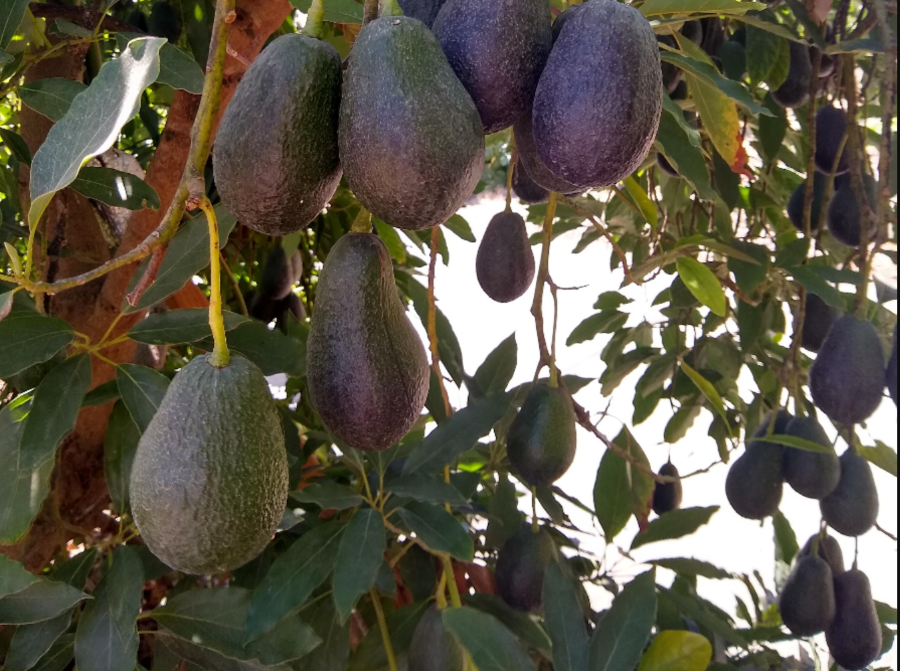
My daughter made guacamole with the last Lamb avocado from our home grove this evening. It is early January. What will we pick next? Fuerte.
This reminds me of our family trip to South Africa in March, for it was during this same season in the southern hemisphere — when the Lamb harvest ends and the Fuerte begins.
Check out this short video I took while in South Africa, and notice the similarities and differences to our avocado scene here in California:
Similarities? Even when it is not Hass season, you can still find imported Hass in grocery stores. And the imported Hass avocados are mostly junk.
Differences? You can also find locally grown Fuerte avocados.
So my question is: California, here in January, where are your locally grown Fuerte avocados?
As you probably already know, most of the Fuerte avocado trees in California are now in backyards, no longer on farms. We don’t have locally grown Fuerte avocados in stores anymore because we don’t have the trees from which to pick.
There are a few old Fuertes remaining on farms here and there. In fact, last January, I was out on a farm in Fallbrook harvesting Fuerte avocados from some old trees and I could not resist but video them and exclaim about how superior this variety is to anything else in the winter — especially superior to imported Hass.
My Fuerte exclamation:
I end the video saying, “Grow it. Demand that farmers provide it [Fuerte] for you.”
You really should grow Fuerte if you have the yard space for a tree. Here is my profile of the Fuerte variety, and here is my post about other varieties to grow in order to harvest avocados year-round at home.
As for farmers growing and selling Fuerte avocados, a few who do are:
Bacon avocados also taste as good as Bacons get in January. Bacons are available from:
For all of the above, I know the farmers or have eaten the farm’s avocados.
But why not more? Why have Fuertes in particular nearly gone extinct on California farms?
Ask a farmer and he would probably say that Fuerte trees bear too erratically.
Ask someone in the marketing side of the avocado industry and he would probably say that people are used to Hass now so they expect the skin of avocados to turn black.
This is all partially true, but only partially.
California avocado history in one paragraph
A hundred years ago, California farmers grew many avocado varieties, each with a different look, taste, and harvest season, and they supplied the local market year round. Fuerte became the most commonly grown variety for the winter into spring period. Later, Hass became the most common spring into summer variety grown. But gradually, the interests of marketers, foreign operations, and government aligned in various ways that lead to a commodification of avocados into the single-variety industry we have today: Hass only, please.
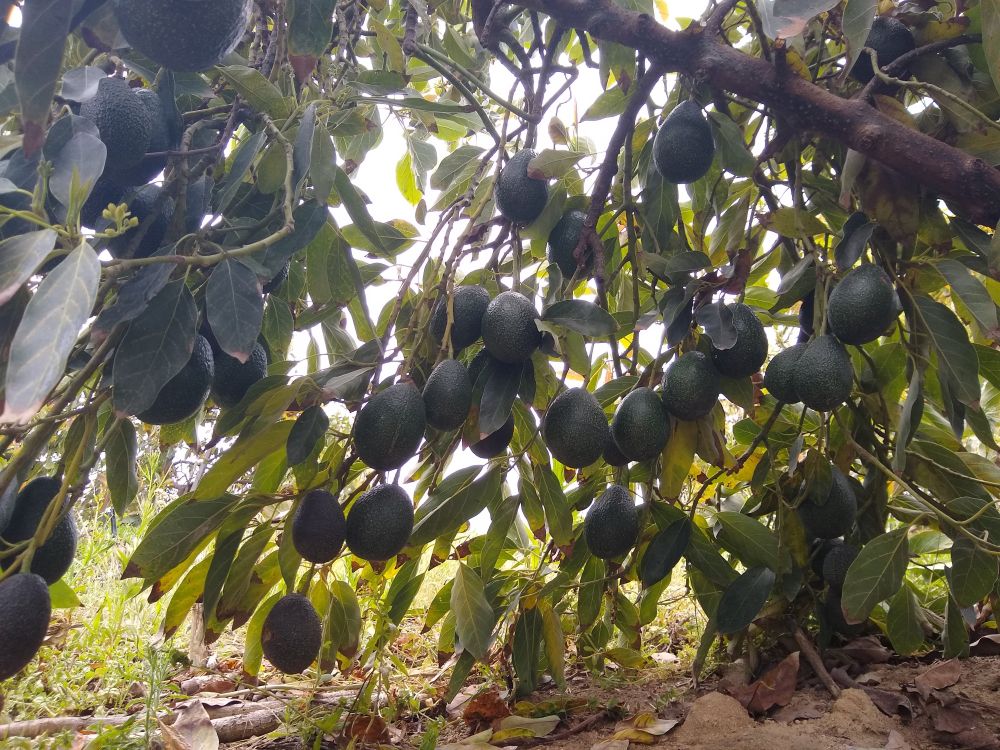
Where do we go from here?
We avocado eaters do want avocados other than Hass. If for no other reason, we want to be able to buy local avocados when Hass are not in season. Also, local California avocados of any variety are usually superior in eating quality compared to imports. So where will things go from here?
I’m going to put my neck out and make predictions.
1. Avocado farmers in California growing only Hass will gradually go out of business. Such farmers cannot compete with the low costs of water, land, labor, and fewer regulations of Mexico. It is like being in a boxing ring with Cassius Clay; it won’t last long.
2. The extinction will happen from the south to the north. Water and land are most expensive in the south, and water quality is worse in the south, and rainfall is lowest in the south (San Diego County). But it will creep northward. Ventura County and above will last a few more rounds but will also gradually be knocked out insofar as they continue to grow Hass only and try to box with Mr. Clay.
3. Avocado farmers in California who stay in the business of growing avocados will grow plenty of non-Hass varieties, catering mostly to the local market, and in response to the local market. This will be a bottom-up change. These farmers will have listened to the desires of the end-consumers, the eaters.
I’m terrible at making predictions. Ha! So I’m sure I’m wrong about some, or even all, of the above. But that is the way I see it from my chair on this day.
In 1999, I was traveling through Minneapolis and ate at a restaurant with some locals after they took me ice fishing. On the menu I saw a “California burger.”
“What is that?” I asked.
“It probably has some of that green paste on it.”
This was how familiar he was with avocados and this was how affectionate he felt toward them.
Times have changed.
Many people outside of California now love avocados, and many people who have moved out of California are not satisfied with what is currently available in grocery stores in Utah, Wyoming, Texas, or Minnesota, for they grew up eating real avocados. The “local” market is growing.
I sell a small quantity of non-Hass avocados each year, with the main purpose of giving prospective home growers the opportunity to taste varieties before planting them. (What if you’ve never eaten a Fuerte, Sharwil, or Reed avocado? It would be no fun to spend years growing the tree only to find out that you’re not a big fan of the fruit.)
I will do so again this year. Fuertes will be available soon.
Related posts:
The Lamb avocado tree: a profile
Why only one variety of avocado in grocery stores? with Mary Lu Arpaia
Gray Martin revisits his “Eight Predictions” of 1996
What happened to the Gwen avocado?
Thank you for your support of my Yard Posts so I can keep them coming and ad-free
All of my Yard Posts are listed here

About 10 years ago I would buy Fuertes from the Righetti Farm at the farmers’ market in San Luis Obispo. I don’t know if they still grow Fuertes as I now grow my own avocados or buy from neighbors. None of my neighbors grow Fuertes. Today I picked 4 Bacon avocados. My trees have plenty of blossoms, so I’m hoping for a good year.
For variety, I planted a dwarf Holiday avocado tree and after waiting a few years this season has brought my first real crop. To my surprise the fruit turned out to be much larger than I expected and still very delicious. I’m with you, given SoCal’s beneficial growing conditions the market should provide more than just Haas avocados to the consumer. People are missing out on what can be locally available at different times of the year.
Hi Greg,
Some of my Fuerte and Hass trees are blooming right now. Is this good or bad and will these blooms produce fruit?
Hi Nick,
I saw a Fuerte yesterday in about 50% bloom, and I’ve seen some Hass around with early bloom too. My Pinkerton is the one with early bloom this year.
The consequences all depend on the weather. No flowers will set fruit until it is warm enough, and there’s nothing you can do about it.
Nonetheless, usually trees still have enough flowers at the end of their bloom period such that a good crop will set even if lots of the initial flowers don’t.
The advantage of your site is that it is a south-facing slope and far enough inland such that your trees are likely to set a good crop although the flowers might not set for the next month or two.
Good to hear from you. Hope you and your trees are doing well.
Thank you,
The trees are huge and have a ton of fruit! I am going to start topping them this year. If you ever find yourself in Jamul stop by Brody’s Burger & Beer. It is the restaurant that I purchased last year. I would love to talk to you about ways that I can get quality local produce in here!
Yeah, Nick! Sounds great!
Why do you like Fuerte better than Pinkerton?
Whoooo! That’s a good question. I like Fuerte better in some ways, but I like Pinkerton better in other ways.
Fuerte matures a little earlier. I like that. Fuerte usually has a slightly better flavor to me. The shape of the Fuerte fruit makes it easier to use; Pinkerton sometimes has a long neck which makes the flesh there a bit harder to scoop out. Fuerte avocados ripen faster and they always ripen evenly; Pinkerton ripens slowly and sometimes gets a gray section below the seed.
But Pinkerton has a smaller seed, and the seed coat always adheres to the seed whereas sometimes the Fuerte seedcoat sticks to the flesh. Pinkerton has better, more flexible skin. Pinkerton has zero fibers whereas Fuerte occasionally has a few. The Pinkerton tree is very productive and more reliably productive than Fuerte. The Pinkerton tree is smaller.
I do like Fuerte a little better than Pinkerton because Fuerte fills a unique slot in the year of avocados (early winter onwards) and has unparalleled flavor. I’ve never eaten a guacamole better than one made with Fuerte.
But I love my Pinkerton tree and even planted a second in my yard last year. And sometimes when I eat a Pinkerton in around March or April I say to myself, “What could be better than this?!”
I had a Fuerte, but it died before I could get fruit. I have since bought a Pinkerton, but it won’t go in the ground for a while. We get cold winters, sometimes to 25F, so I am keeping it in a container until I can graft it on several trees to preserve the plant material. I failed to do that with the Fuerte, so I will have to buy another tree. Thanks for the clarification. I have tried a Fuerte fruit one time, and it was so fatty and dense that I didn’t really enjoy it. I wonder if I should try a few more to understand what everyone is raving about.
Hi Cynthia,
You might prefer Pinkerton over Fuerte. I know some people who do. Fuerte can get too “fatty and dense” (I like that description) for me around May or June. Maybe you had a late-season Fuerte and you would like a Fuerte picked earlier.
I’ve been gifting CA avocados from Dickinson Farm to friends on the East Coast. Can’t wait for your Fuerte!
What a friend you are!
I think you’re right that local growers can’t compete with Mexican & Peruvian growers for Hass that ship & store well and thus are a commodity. I hope you’re right about better tasting seasonal varieties that don’t ship & store well being an economically viable alternative. I remember a small grocery store in Clairmont in the 1970s & 1980s having at least 2 or 3 avocado varieties at any given time. I remember Anaheim, Bacon, Fuerte, Hass, Nabal, Zutano, but I’m pretty sure there were others. I would love for something like a Sprouts (or even Northgate) to start stocking local seasonal avocados, but can growers top-work trees in the hope that might happen in a few years?
For the past few months Walter Anderson’s has had maybe 12 varieties of avocados grafted onto non-clonal “Mexican” rootstock in 3″ by 10″ sleeves for $40 each. Gem, Sir Prize, Sharwill, Reed, Esther, Edranol, Ettinger, Leavens, Hass, Lamb Hass, Pinkerton, and a couple more. But $40 for a 12″ tall seedling with the grafting rubber band still on it? Their really good nurseryman was equally appalled by the price for something grafted just a few months before onto something from a seed. I don’t know if Atkins & Maddock & Monrovia jacked up their prices for 5 gallon avocados, or just don’t have availability. Has anyone seen this at other Southern California retail nurseries? I’m going to start seeds, then graft from my trees to give away to friends and neighbors.
I’ve settled on Gem + Sir Prize and Reed + Sharwill as my year-round trees in Point Loma, 2 miles from the ocean. My sister in Clairmont now has Stewart, Pinkerton, Lamb Hass, Holiday/Wertz, plus my biggest Sir Prize which made a huge difference in the fruiting of her all A varieties. The past few years, when she gets small crops I get large ones and vice versa.
Thanks for all this, Tom.
I’ve seen those little avocado trees in sleeves at Andersen’s. I like everybody there, and it’s an excellent nursery, so I was tempted to talk to someone about those trees. The price isn’t the real problem, to my eye. There were already rootstock suckers overtaking many of the grafts and the growth on the grafts were weak overall. Many gardeners will fail with those trees, and I hate to see that. Avocado trees are already harder to grow than any other fruit tree unless you are lucky with soil and climate.
Your question about commercial growers topworking is such a good one. It’s probably best for most growers to keep a portion of their Hass in order to have income for the moment and simultaneously topwork a portion or plant some land to alternate varieties. I would like to see a packinghouse step in and develop a relationship with a Sprouts or smaller local market to offer to supply them with local avocados year round, and then also have relationships with growers who are willing to plant the needed acreage and varieties to fulfill that. It can be done, especially if the network of growers are a little spread out from south to north because the varying climates give different harvest seasons.
I just gambled and bought four avocados at a bargain supermarket. Mostly brown mush. One problem is that avocados are “a pig in a poke” that don’t reveal their flaws until ripening. Also, customers don’t take the trouble to complain, they just eat the loss while not eating the avocados. But my earthworms are partying like it’s 1999.
Hi Randy,
Sad but true. This is one reason that Hass became the commodity variety: its black skin hides the damage. A Fuerte or Reed with similar bruising would remain on the store shelf because its skin would show the damage and no one would buy the obviously rotten avocado. Black-skinned avocados serve the wholesaler and retailer but not the consumer. Green-skinned avocados are the best for consumers.
How we have been fooled into thinking that avocados are supposed to have some bad spots inside! I remember giving a neighbor some avocados from my trees a few years ago, and later she said to me that the most amazing thing was that they were all perfect inside! How did you do that? she asked.
Thank you for all your posts. I am a San Diego native and about 13 years ago I did the thing all San Diego kids used to do. I took the seed from a Reed avocado, stuck in three toothpicks and put it in a glass of water. When it sprouted I moved the little tree to a pot. A year or so later I moved the tree into the ground in my very small back yard. Everything I found online told me trees grown from seed don’t produce fruit but I was OK with just having the pretty shade tree in my small yard. So two seasons ago, surprise, surprise! Four avocados on a tree that wasn’t ever supposed to bear. And last Spring it flowered again and I now have about 2 dozen avocados that I am waiting to mature. Since I now know, thanks to your blogs, that Reeds take a full year and are usually mature in the late Fall into Winter, I am patiently awaiting these for the end of next summer. I love this tree, not only because the fruit is yummy, but also because it’s growth habit is so upright that I can prune it to fit in my yard, where there is a height limit for trees in the community where I live. And every winter since it grew to a mature height a hummingbird nest appears about February with two little hummers that make it to fledging. The leaves on this tree offer a perfect hideaway for the little nests. If anyone wants a single self fruitful and multipurpose avocado tree for a small yard, I can highly recommend the Reed variety. Also did I already say yummmy!
Hi S.,
Once again, “the Internet” is proven wrong! Don’t even get me started on the proliferation of bad information with AI nowadays.
Just to get technical and specific about it first, your tree and fruit are not Reed. They are a unique tree and fruit produced sexually similar to our children being unique individuals and not clones of their mother or father. This is important to keep in mind as it relates to when to pick the fruit from this tree; it might be earlier or later than its Reed mother (although it usually is similar in general season). What you have is a seedling of Reed, a child of Reed, and you can name it anything you want because no one else on planet Earth has a tree exactly like this one.
I love that you find the avocados it makes delicious, and that the tree has a good shape for your yard, not to mention that hummers like it too. What luck!
For anyone living in or around the Escondido area, I sometimes find local avocados of varities other than Hass at the Jimbos market in Escondido. But also in Escondido there are two farm stands where I go to find fuerte and others in their various seasons. The first is the Farm Stand West that is just east of highway 15 at the Citracado exit. The second, and my own favorite, is also off the 15 at the Citracado exit but west instead of east. At the corner of Gamble Lane and Bernardo Ave. There is a small nursery there, Sunsol I think, but they have a farm stand with produce from Valley Center and other local areas. Depending on the time of year, I have been able to get fuerte, bacon, hass, pinkerton there. I like to buy the ones I can take home and allow to ripen in a week or so.
Thanks for this, S.
Yesterday, I happened to speak with one of the suppliers of local avocados for Jimbo’s. He said he is even looking to expand the offerings of local, non-Hass varieties throughout the year there. Good news for folks in north San Diego County! And thank you, Jimbo’s!
Thank you for your reply. And for pointing out that my tree is a child of a Reed, not a clone, which may affect timing of the fruit ripeness. A friend of a friend has a Reed, very old tree, and he has been waiting for the fruit to drop saying that fruit tastes better. I would have thought it would be too ripe by then, but apparently not. He is careful to get it off the ground immediately before any critters get to it. Any thoughts?
That can work but not always because sometimes a few Reeds drop in May before they are mature and sometimes they don’t drop in late fall or winter even though they are overmature and have a sprouted seed inside. But from May onward, I check the ground under my Reed frequently and pick up any drops and eat them.
You may be heartened to know that the mom of my neighbor has a prolific Fuerte type tree and sells amazing fresh avocados in batches to her neighbors. So we try and find a way!