
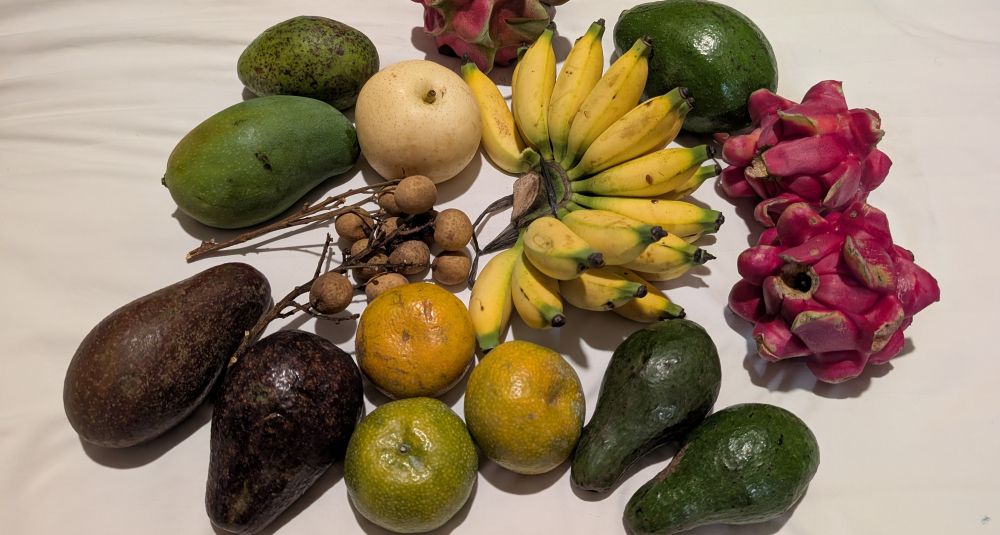
I couldn’t help but photograph and ask about every food garden I saw even though I was in Indonesia for another reason. It was a surf trip. But for a few days before and after the surfing, I explored parts of North Sumatra to observe what people grew and what they ate. This is what I saw.
The main pattern I noticed was that three plants were ubiquitous: banana, mango, and papaya.
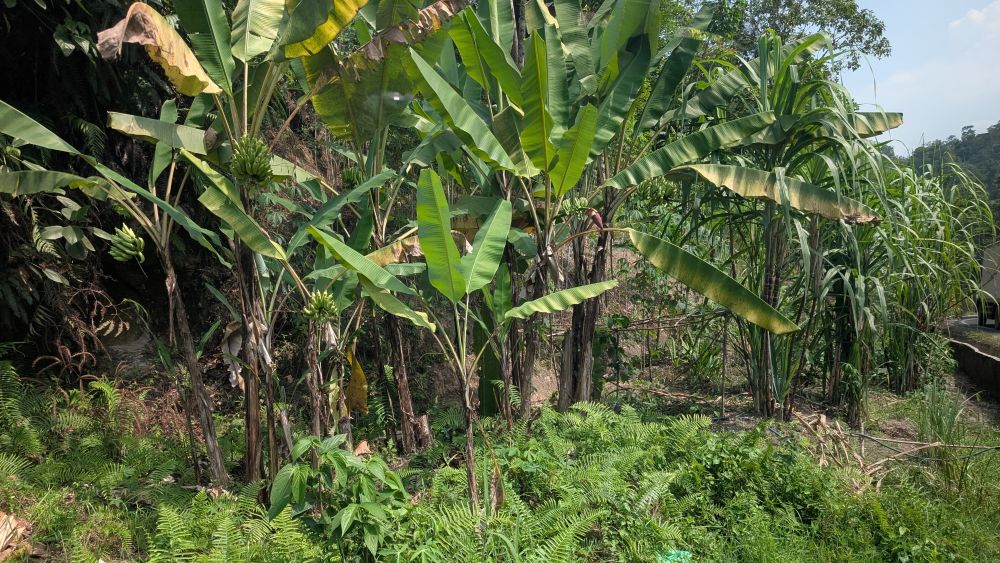
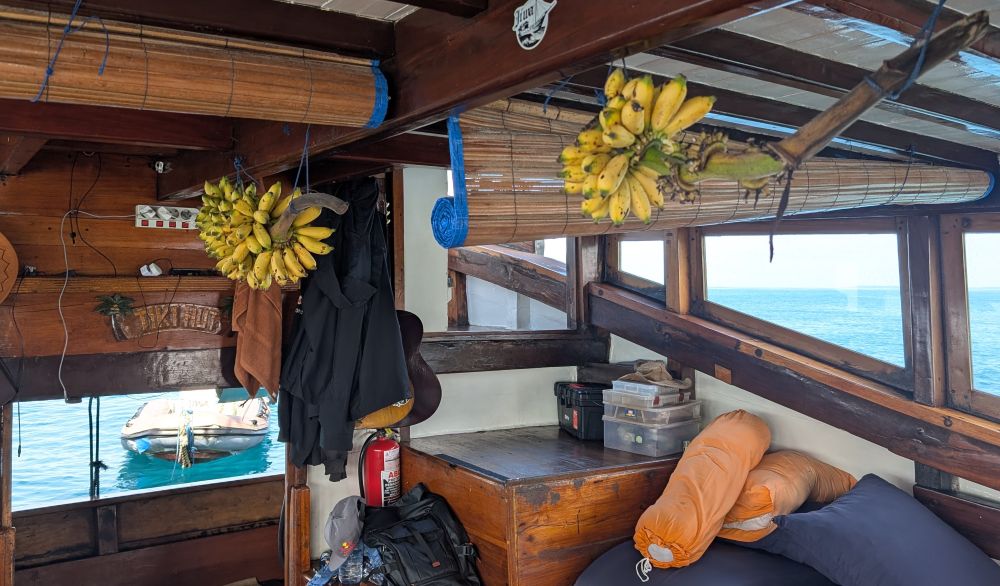
The bananas they grew were of two types, cooking or sweet. Pisang is their word for bananas, and they fry pisang and also eat pisang as a fresh snack. The most common sweet, snacking bananas were small and similar to the varieties I like to grow in California (such as Namwah).
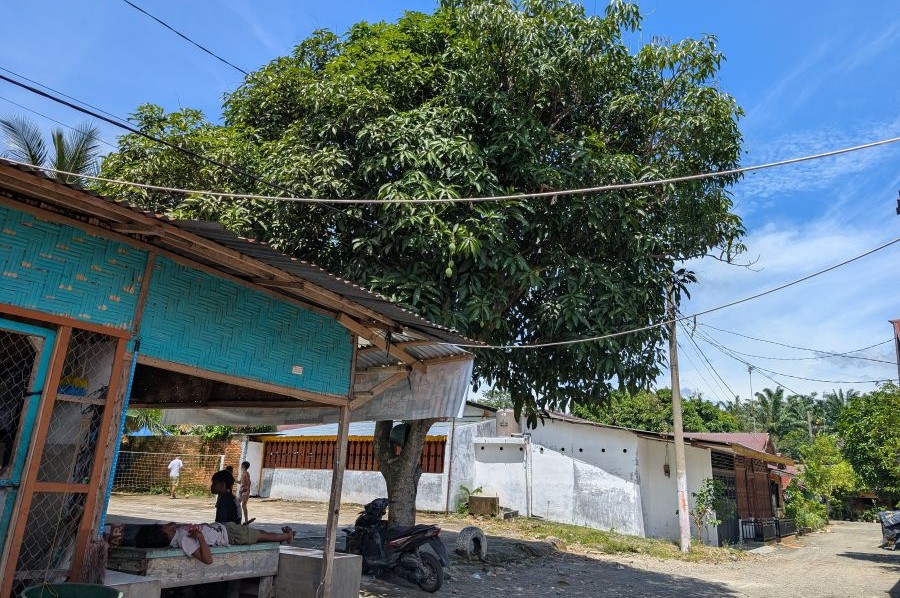
Mango trees were like weeds. Not only were they in every yard, but they were also in abandoned fields and road medians. Mango trees were everywhere I looked. All looked like seedlings, not grafted trees, but few had fruit left on them at this time, early October. It was the tail end of mango harvest season, unfortunately.
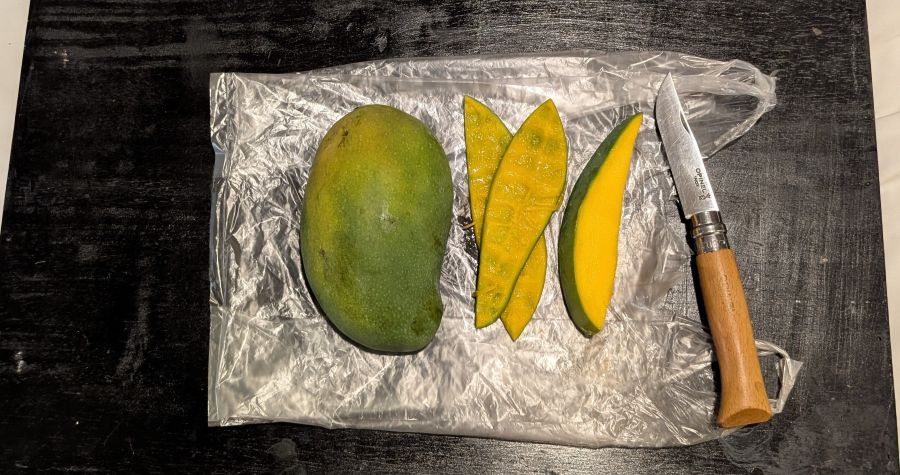
I had big dreams of being able to taste a bunch of fresh mangos off of local trees on this trip, but because of the season there were few mangos to try and most were stringy, bland or even off-flavored. Near the end though, I obtained this fine-tasting fruit which I was told had been grown on the neighboring island of Java:
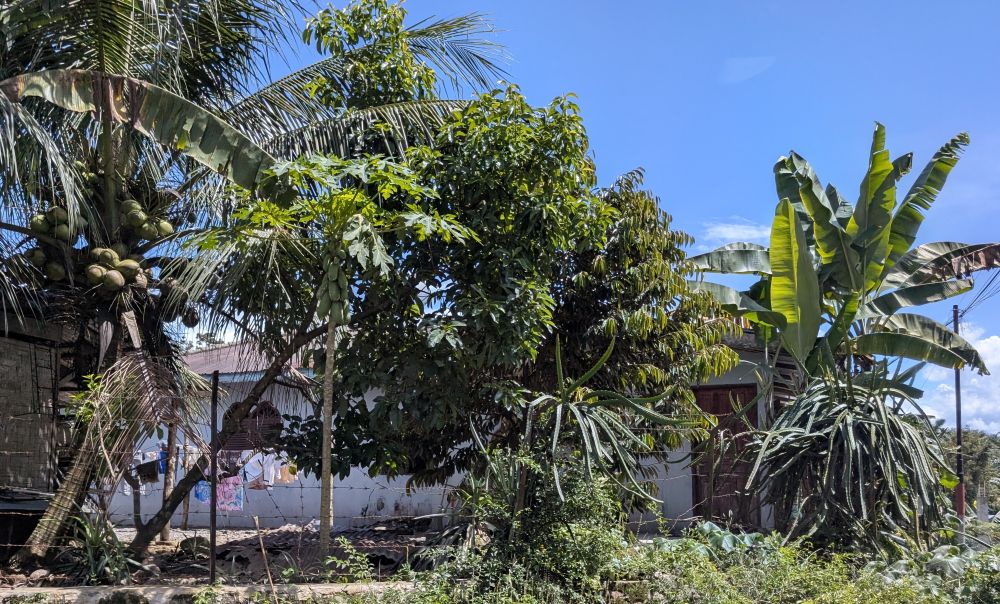
Rounding out the trio was papayas. On the boat we ate papaya with breakfast every morning.
What’s the climate like on Sumatra?
Sumatra is the largest island of the chain that makes up the country of Indonesia, which is composed of thousands of islands. Although called an island, Sumatra is bigger than California, and I only visited a portion of the northern half of it.
The equator runs through Sumatra. There is no place more tropical.
Sunset and sunrise are near 6 AM and 6 PM year round.
There are clouds in the sky every day. It rained almost every day I was there. It rains almost every day of the whole year.
But it was warm rain. Even in the rain, even if it was rainy and windy, I never wanted to wear more than shorts and a t-shirt.
Other fruits
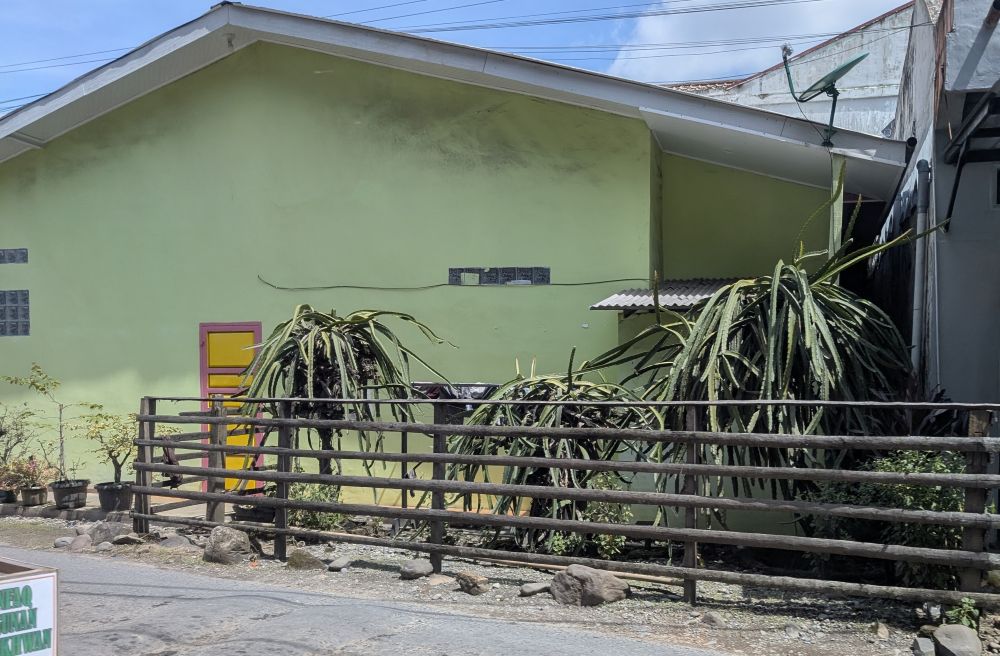
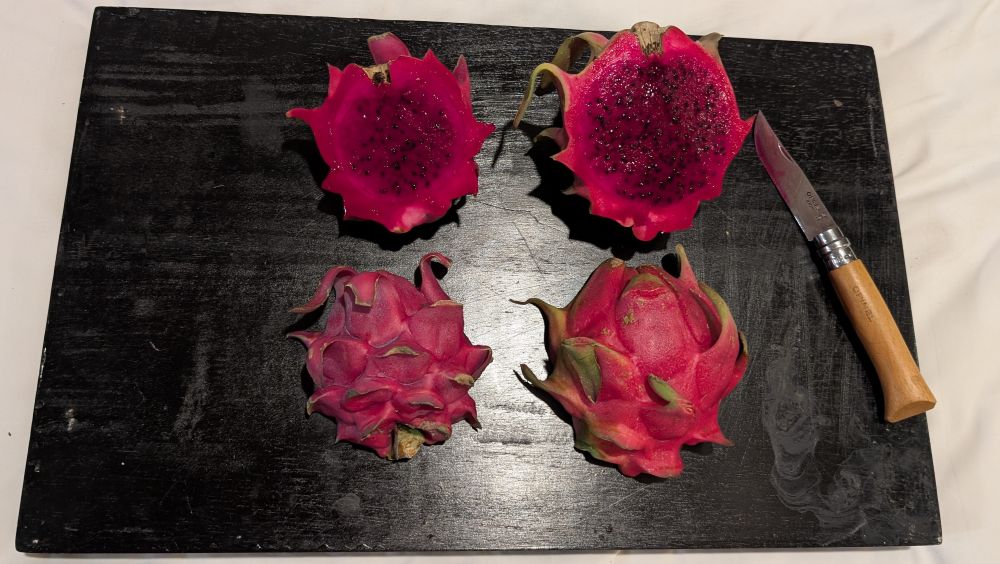
So because of the constant rain and the constantly warm temperatures, all sorts of other tropical plants grew happily in gardens: sugarcane, rambutan, pineapple, coconut trees, dragon fruit, etc.
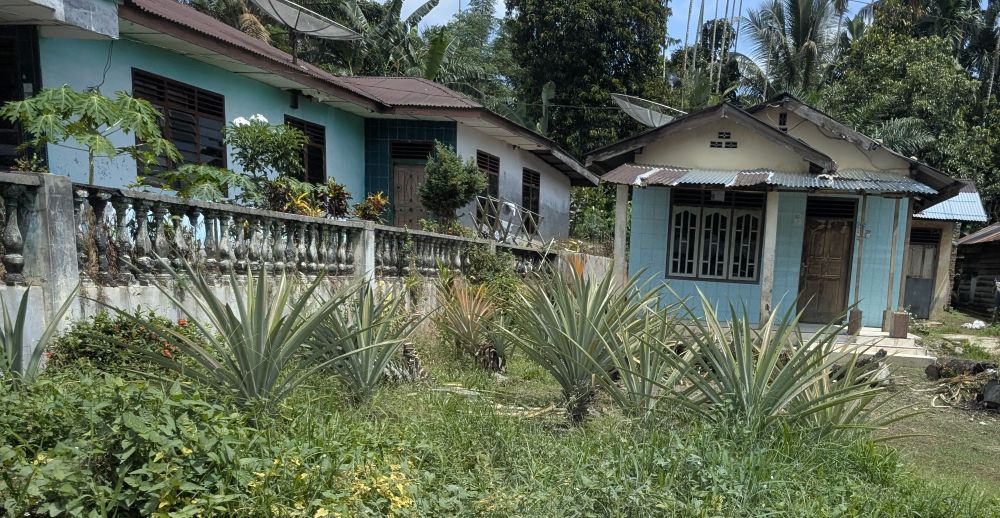
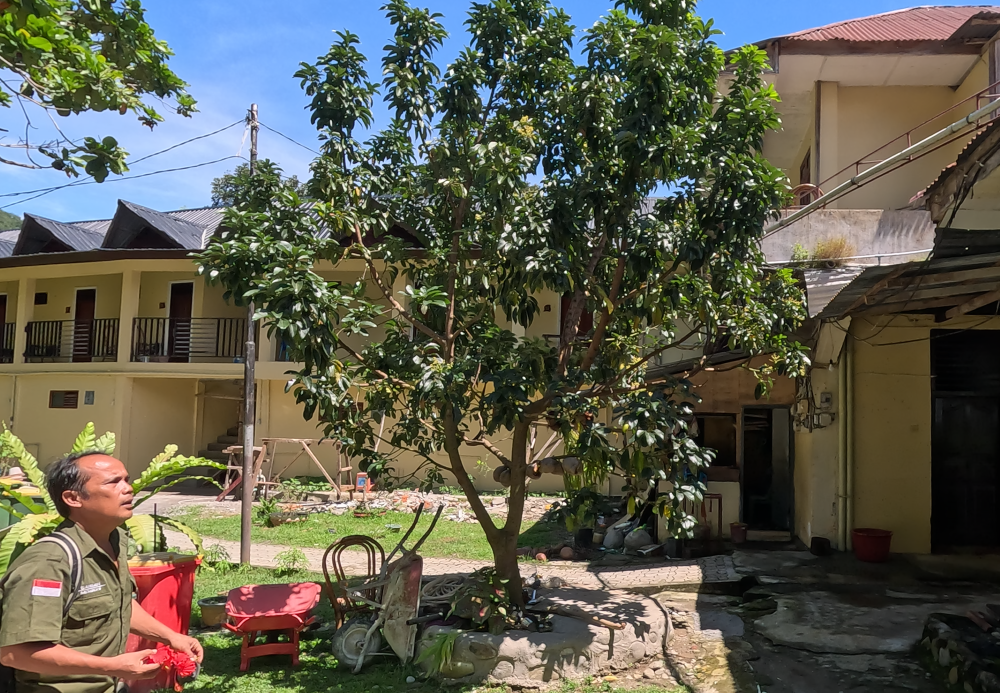
I spotted just a few avocado trees too.
Coconut day
Once during our stay on the boat, we swam to an island . . .
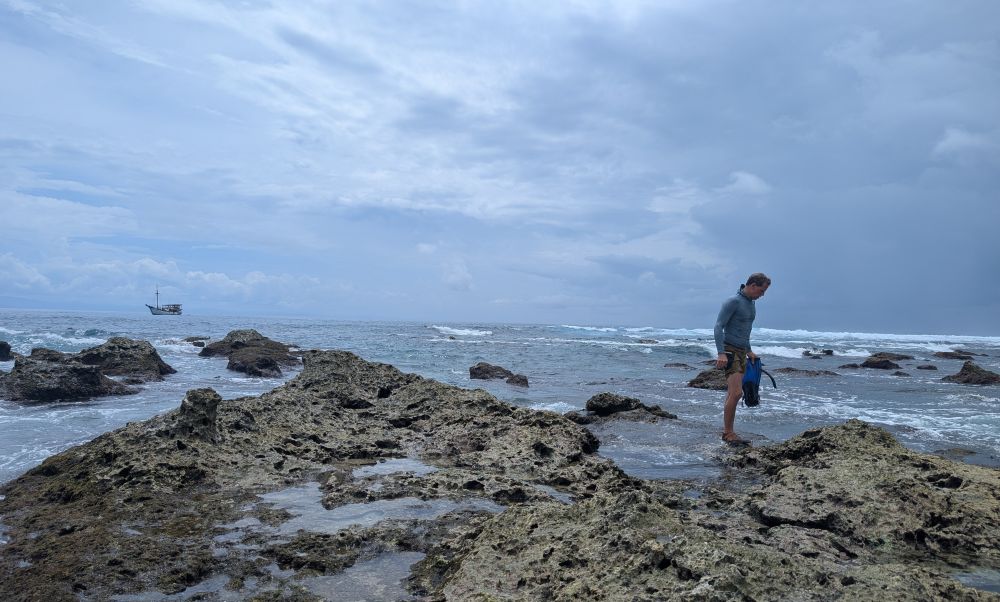
where a family was growing coconut trees around their house . . .
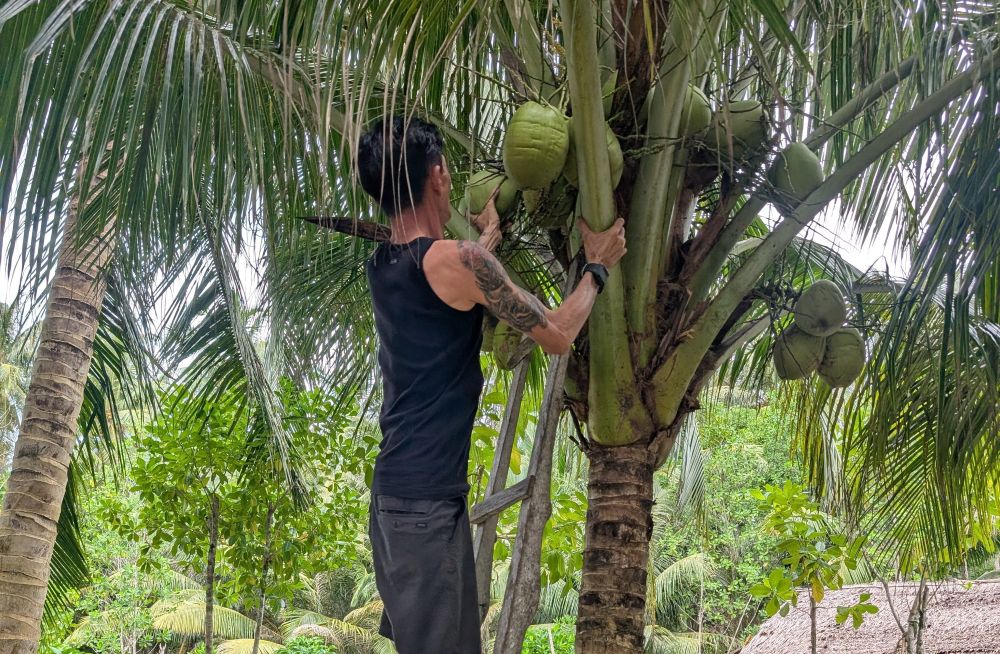
and they offered to harvest and open some for a small price.
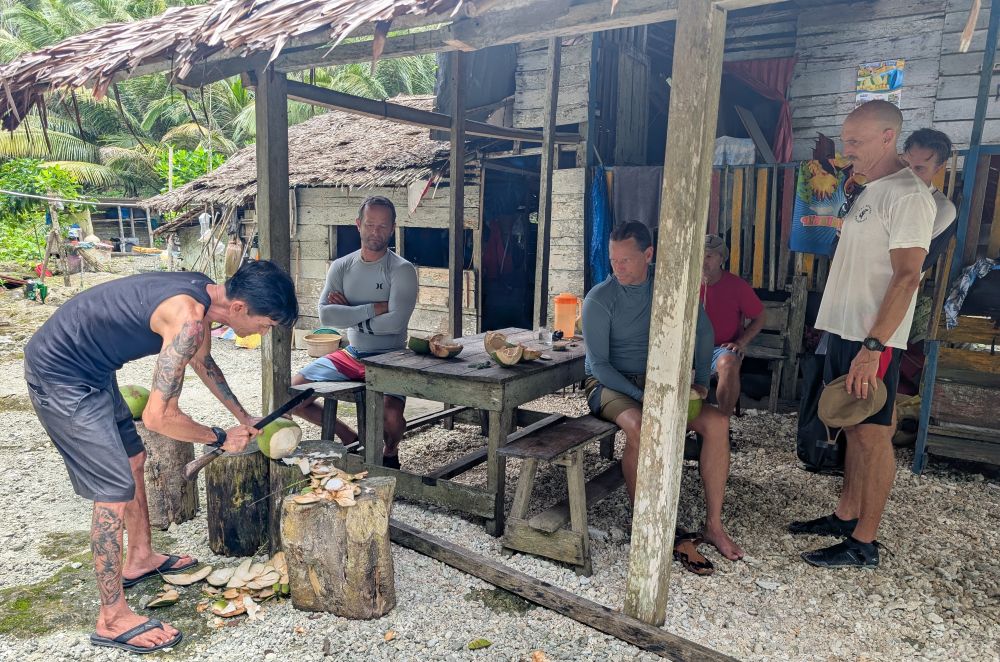
We drank the water and then ate the flesh, and then we all agreed that coconut never tasted so good.
Vegetables
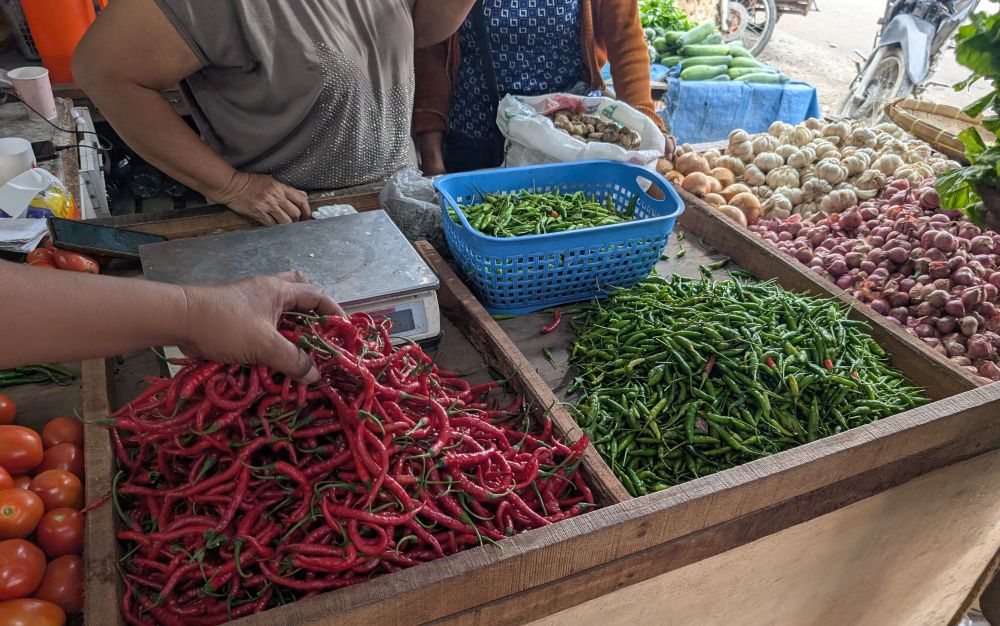
In terms of vegetables, I saw mostly tomatoes, cucumbers, and chili peppers. Food was very spicy. I like chili peppers, but I could not handle the level of spice that local Indos were comfortable with.
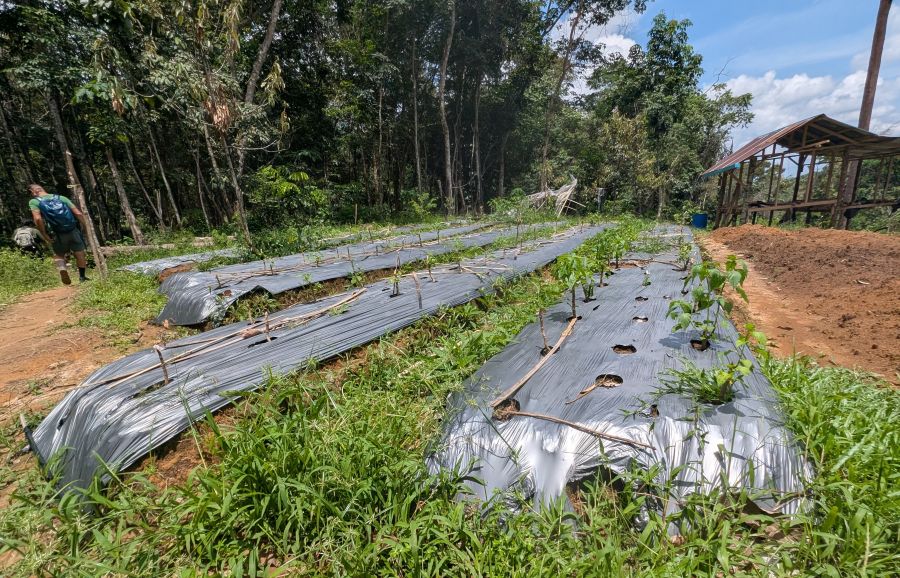
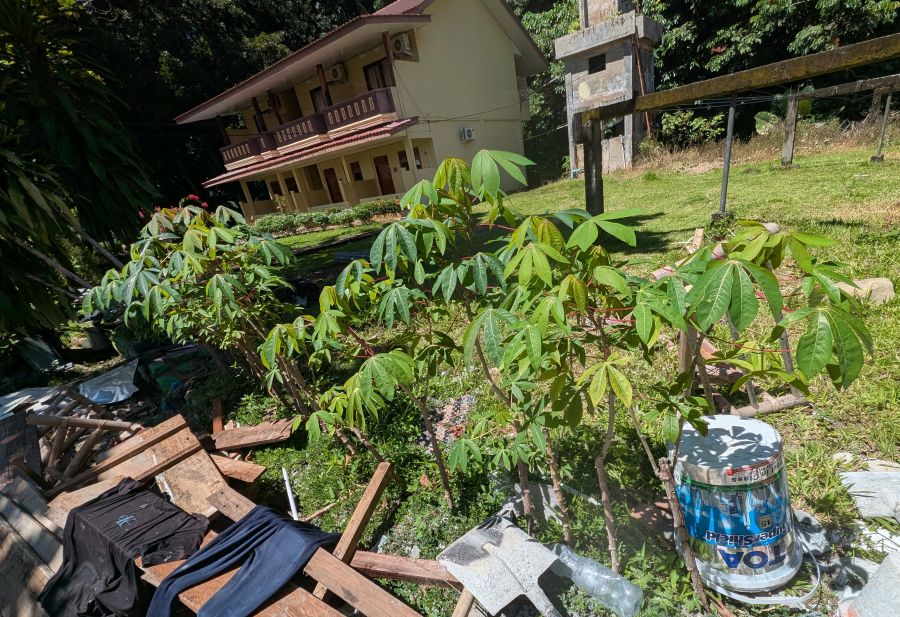
But the most common vegetable that I saw in gardens was cassava. People eat the roots, and they also boil the leaves.
I found Indonesian people to be extremely hospitable. One day a large extended family was having a reunion near a river and they invited my brother and me to eat with them.
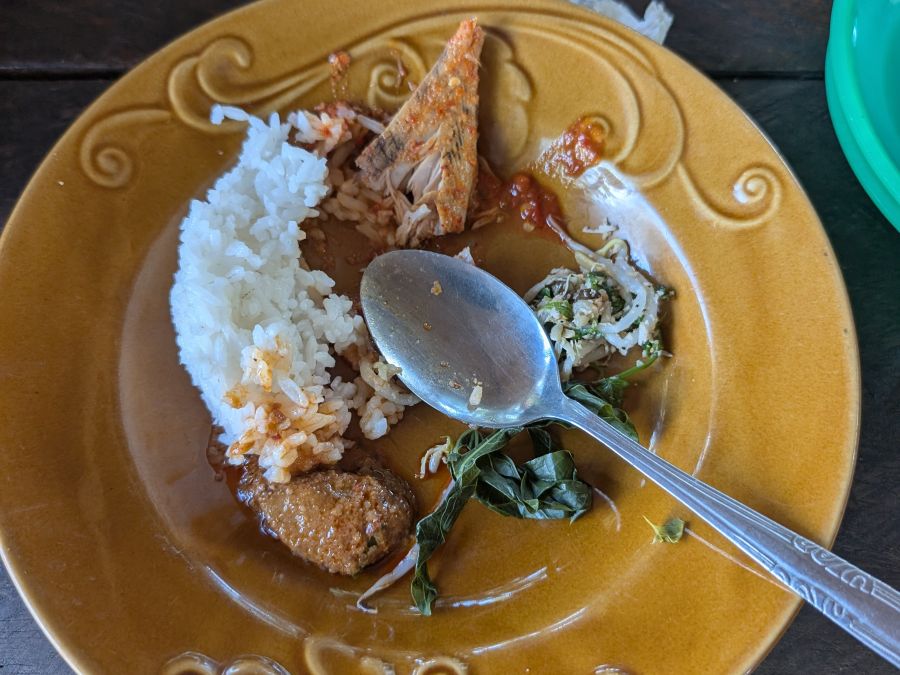
There were many fruit trees and vegetable plants in home gardens that I was unable to identify, but the above were what I saw most of and could name.
You know what I never saw? Irrigation.
Thank you for your support of my Yard Posts.
Find a complete list of them here.

As a gardener I appreciated those pictures of home gardens but as a surfer, I would love to see or read about some the waves and setups you experienced too!!
Hi, Greg,
Thank you for your interesting story about Indonesia, with your great pictures. We are happy to hear that you enjoyed your adventures in the tropics, surfing, exploring the islands and cuisine, and local gardens. My favorite quote: “There is no place more tropical.”
Fascinating, all around 🙂