
Have you ever sown vegetable seeds and then watered them only to see the seeds float up with the water? Here is a simple way that I avoid that. Rather than watering from the top, I water from the bottom and let the soil/compost/planting mix pull the water up.
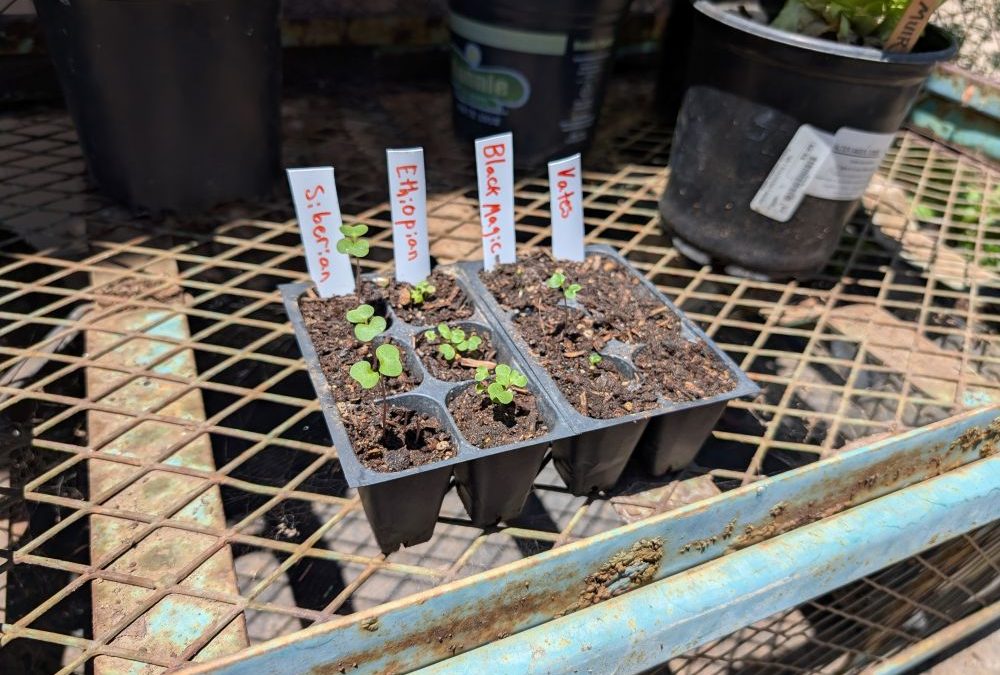
Here are some kale seeds I sowed in modules a couple weeks ago.
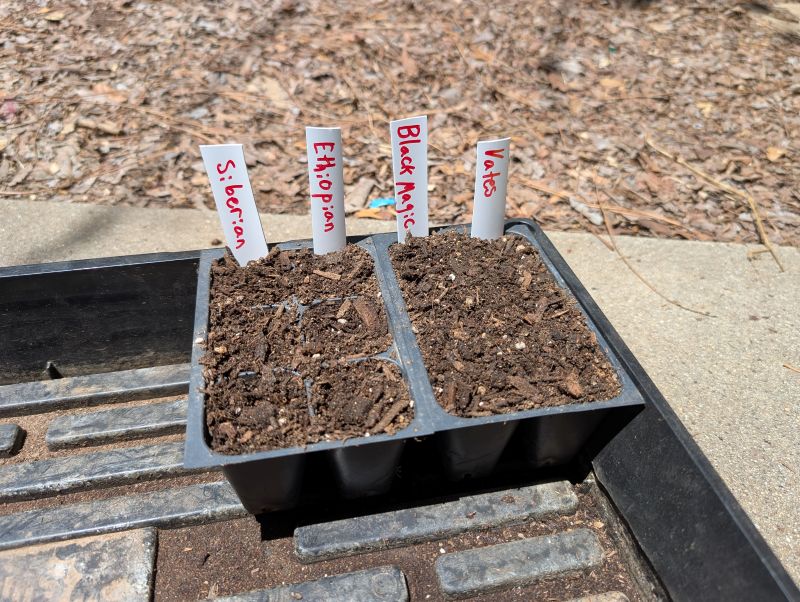
I placed the modules into a tray with no holes and added water.
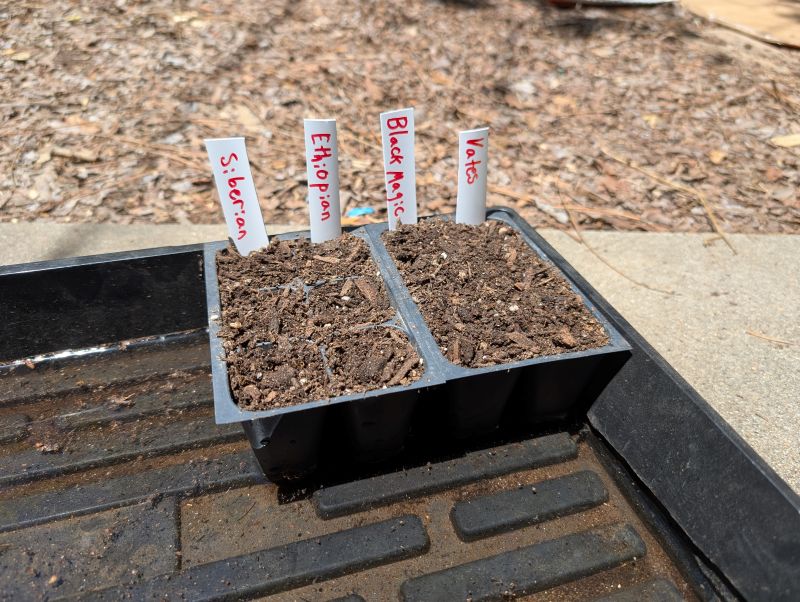
After a few hours, the compost within the modules had pulled the water up through the drainage holes at the bottom of the modules and the compost was soon wetted all the way to the surface.
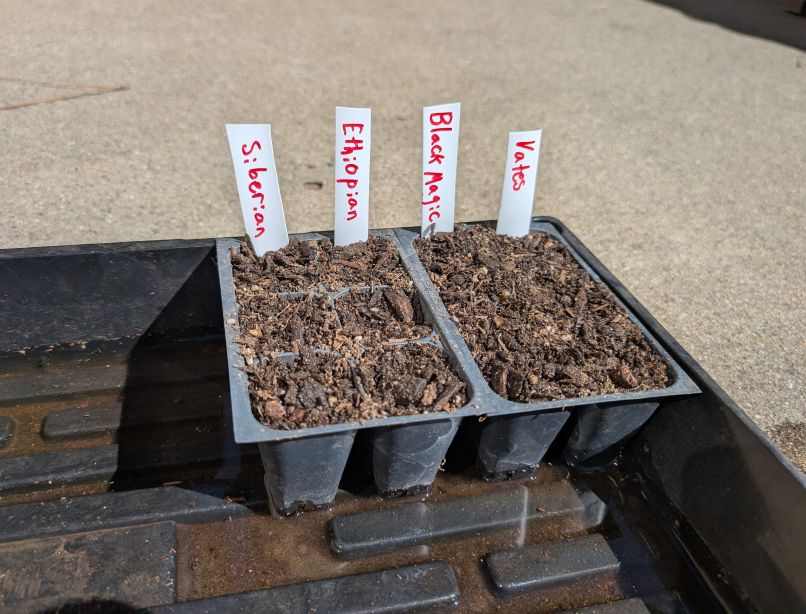
Here is a closeup so you can see the moisture now on the surface, therefore moistening the seeds too:
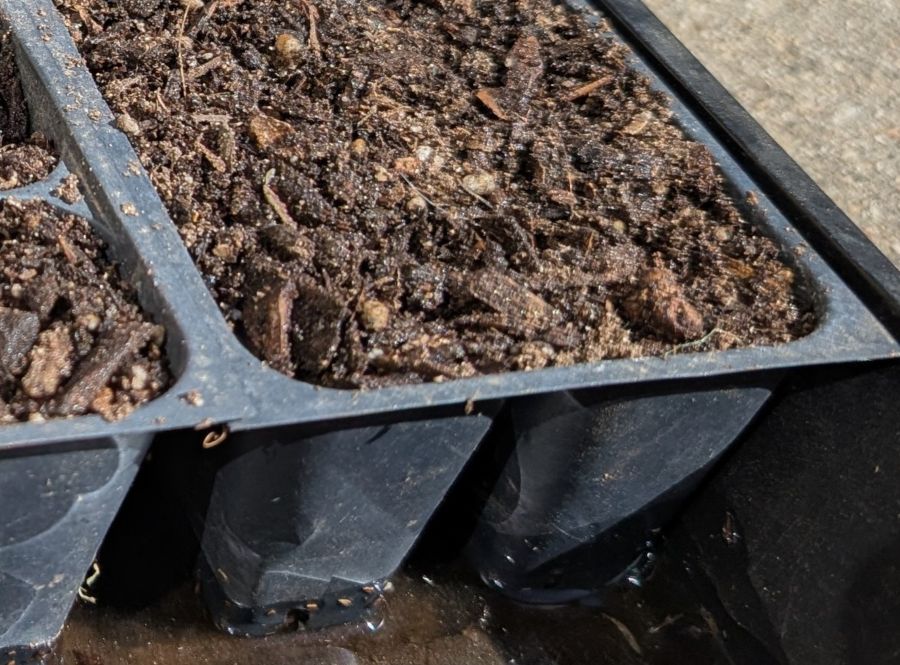
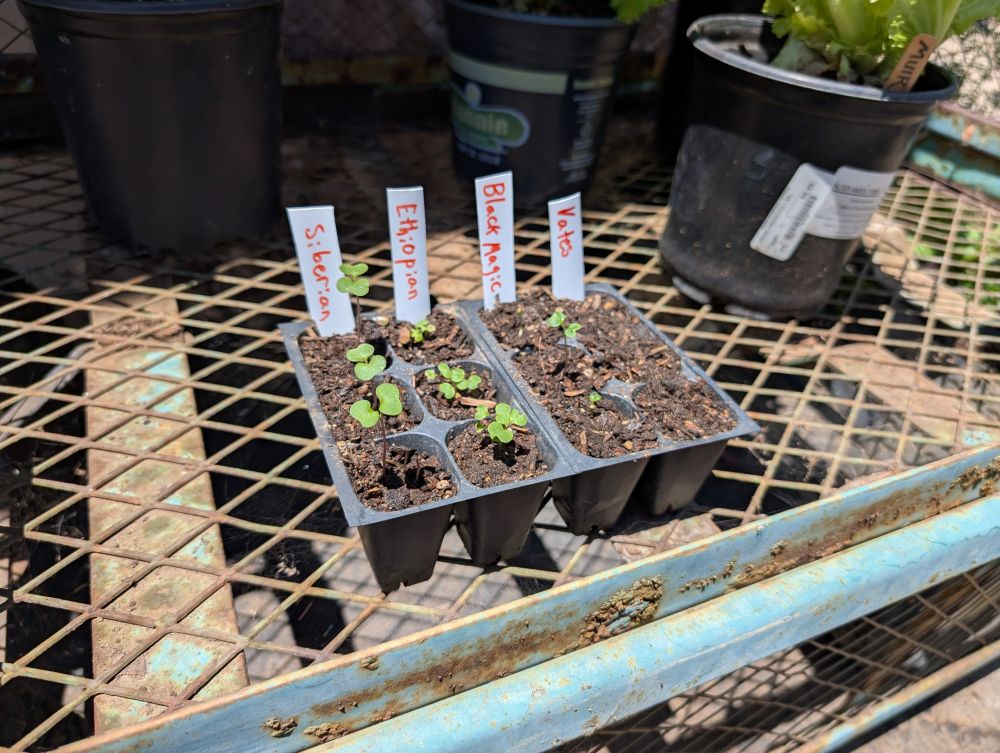
I placed the modules and tray in the shade to germinate. Once germinated, the seedlings could be watered from above because then they were rooted and wouldn’t be dislodged. Or they could continue being watered from below because that would still work too.
Here are the seedlings today:
The fancy word for how water moves against gravity (up) is “capillary action.” It’s the same principle that allows drip irrigation to spread wide within the dirt below an emitter. Water is sticky; it sticks to other water and it sticks to particles of dirt and other things.
It’s useful to know this and keep it in mind because we can exploit it in various ways throughout our gardens.
Please consider supporting my Yard Posts so I can keep them coming and keep them ad-free. Thanks
All of my Yard Posts can be found HERE.


Greg – do you not ascribe to moistened material before seeding?
Great question. Usually my compost has a little moisture in it when I’m going to use it, but I prefer to leave it on the dry side while filling the modules and sowing the seeds because it is easier to handle compared to when it’s wet and sticky. This also saves time, as I can just get started on sowing seeds rather than water and mix and wait for the compost to absorb the water first.
Also, even if the compost is somewhat moist, it needs to be thoroughly wetted after sowing at least once so that the seeds can imbibe the water. So it’s most efficient for me to use the compost in a dryish state while sowing and then set the modules in water and walk away so they become thoroughly wetted without any further work from me. (No sprinkling, and then returning to sprinkle again, etc.)
For tomatoes one can make a tray into a “seed bed” and skip the module stage. Once they get a couple of true leaves (not just the two cotyledons or “seed leaves”) seedlings can be transplanted into 3.5 x 5 inch pots in a tray. Keeping about a half inch of water in the tray saves time, evenly distributes nutrients added to the water, and encourages roots to grow down where it’s wetter, capillary action still keeping the upper soil moist. Five inch “tall boy” pots cost about 2 cents, fit 18 to a tray, and I leave out extra heirloom mater plants for neighbors. An unknown neighbor left me a couple of heirloom banana melons!