
I invite you to join me and John Schoustra at Apricot Lane Farms on March 7 for a workshop on “Growing Organic Avocados at Home.”
What’s the workshop about?
John and I will cover:
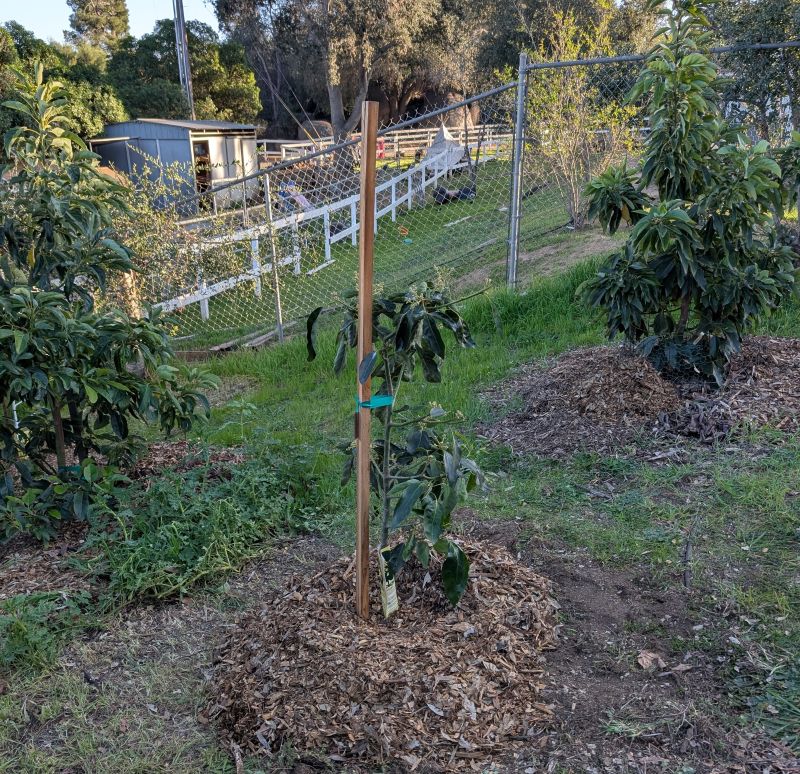
- Choosing the right varieties for your location and space
- Planting properly
- Irrigating: where, when, and how much
- Activating your soil using compost & cover crops
- Mulching for avocado trees
- Common pests & diseases
- Harvesting tips
Also, we will walk into the orchard to look at the trees up close and show some pruning.
As if that’s not enough, we will offer a tasting of a handful of top-notch avocado varieties.
Who is John Schoustra?
John is one of my favorite avocado farmers because he is curious, boldly experimental, and honest. I learn something every time I speak with him.
You have probably learned something from him too, if you’ve seen these posts:
“Interview with John Schoustra”
“Fires, farms, and being neighbors”
“A tour of John Schoustra’s innovative, organic, low-input, high-density avocado grove”
In addition to his home farm, John also manages the avocados and other fruit trees at Apricot Lane Farms.
What is Apricot Lane Farms?
Located in Moorpark, Ventura County, Apricot Lane Farms is over 200 acres of diverse plantings of vegetables and fruit trees, plus pasture and livestock. They do on-farm composting. They genuinely care for their dirt, the wildlife on and surrounding their land, and the quality and cleanliness of food they grow. I think of Apricot Lane as what my own homestead might be — if greatly magnified.
The farm was also the subject of the movie “The Biggest Little Farm.”
John and I will provide you with the essentials, but we’ll also be more than happy to dig deep into details, in order to help you grow the best avocados in the world in your own yard.
Hope to meet you at the workshop. See here for all the specifics.

Will you be posting a video of this tour at a later date? Unfortunately I will not be able to attend on Mar 7.
Hi Lonnie,
I’m not aware of plans to video this workshop and tour, but if it happens I will let you know.
Hi Greg,
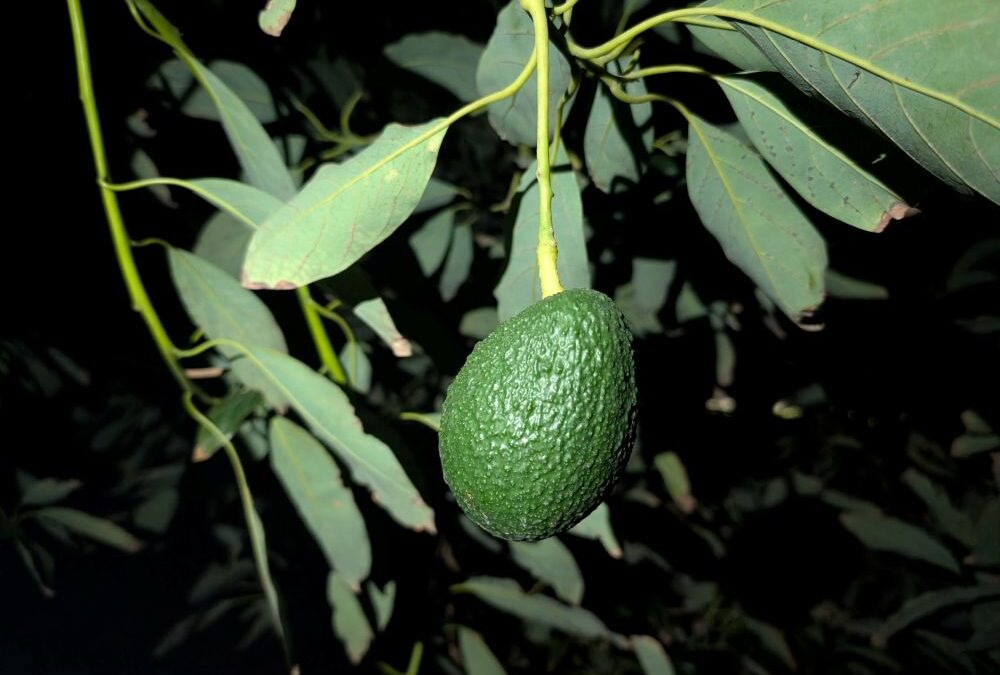
I picked a purple west indie. I can’t find very much info on them on the internet. It is almost 2 pounds!
Yikes! That’s a guacamole party right there.
Hi, I have a large Hass tree that has a lot of fruits and now ton of new blossoms. I pruned some branches that were going over the fence. This resulted in exposing some internal major branches to direct sunlight. I’m concerned about sun burns. Should I paint them? That’s what chatGPT suggests.
By the way I live in West Torrance. We moved from the east coast, bought the home a year ago and have inherited the tree.
Heya Greg, Bob in Old Carlsbad, I know seasons vary, but it seems that this year the hass grew fast in the fall and are ready a few months earlier than years past? Also a little more sun exposure with leaves dropping, brown and muddy looking, I have had about 20 fall off my 13 trees and that is rare for these trees also. I can count on the green avos that turn black after picking and this year they slowly ripen and are brown/black mostly. Some stems are brownish like I would see in June/July. Just wondering how others are doing, neighbor with lge mature hass picked all of his approx. Feb 25. Thanks Bob Gilbert Carlsbad
Hi Greg,
Unfortunately, I was unable to attend the workshop earlier this month, but I was hoping to get your insight on what varieties you would recommend in my climate. I am located in Pasadena (on the border of Altadena – adjacent to the San Gabriel mountains).
Over the last 2 years, I have planted several different varieties of Hass (Std., Lamb, Carmen) and a Reed.
Even though they are all growing, I have noticed that they take a hit whenever the temperature approaches triple digits. During heat waves I attempt to tent them with a shade cloth, but it’s been challenging. Oddly enough, the Reed tree has struggled the most.
I am looking to plant two to three more trees and was hoping you could recommend a couple varieties that you think would work best.