
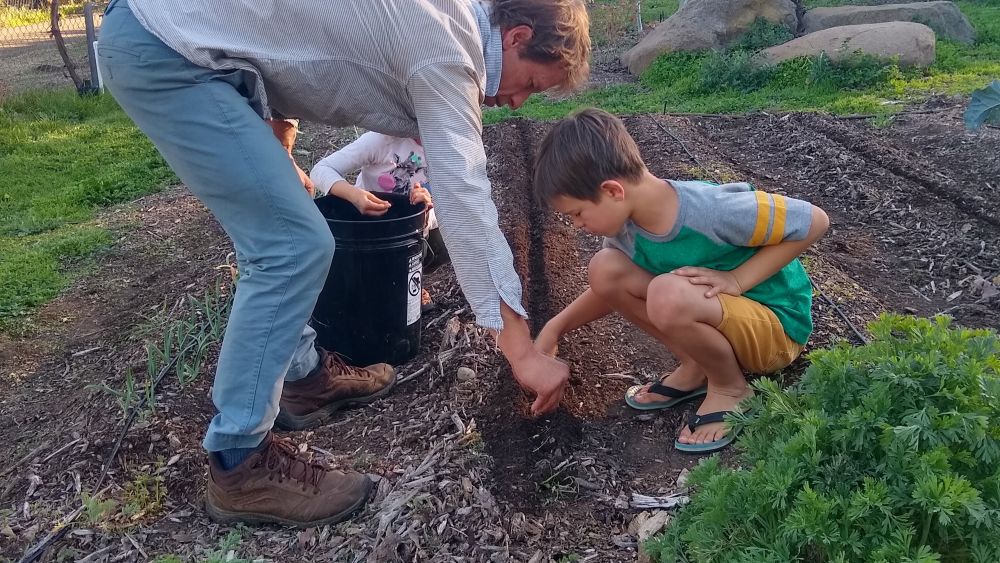
I’ve made a lot of mistakes in my attempts to teach my kids to grow food over the last dozen years, and it is through these mistakes that I’ve learned nine ways to do it better.
They might not work for you, your kids, or your context. But in case they do:
1. Let them choose their garden activities.
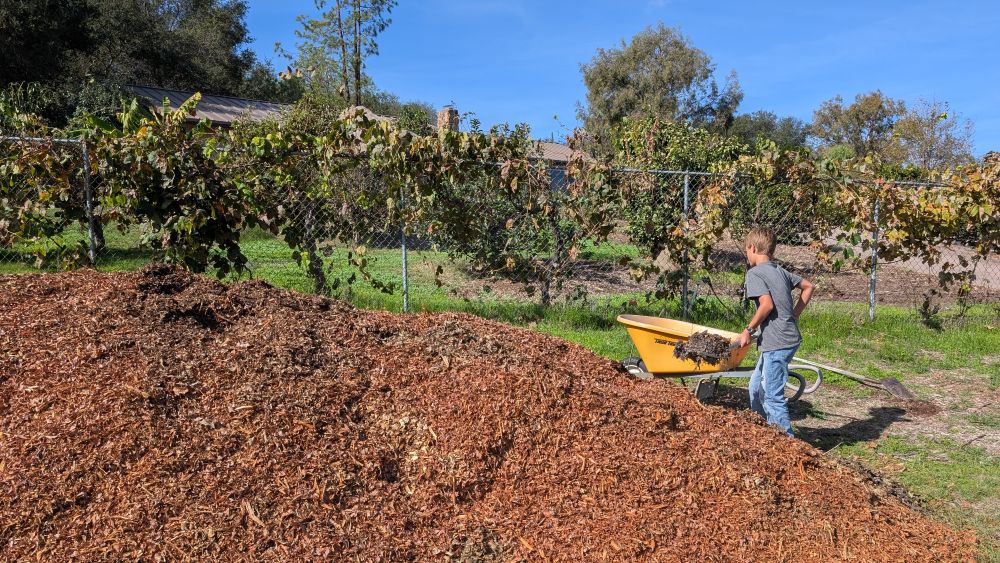
Don’t treat the garden as a job site where you’re the boss and you assign tasks. Definitely, don’t only ask the kids to help with weeding. Rather, present them with some options of garden activities that need to get done and let them pick their favorite. Last week, the options included sowing carrots, removing Bermuda grass, sowing peas, removing the nets from the apple trees, and mulching fruit trees. Miles chose the mulch. He likes filling wheelbarrows with wood chips. He wasn’t commanded; he chose, and he enjoyed it.
2. Work together.
Even when it’s a task that your child can do on his own, join him, at least for part of the time. I joined Miles at the wood chips. Doing so allowed us to chat generally, but also to observe together and for me to explain some of what he observed. He noted the fungi growing on the wood chips and that more heat came from the pile as we dug deeper. What does the fungi do? Where does it come from? Why does the pile get hot?
3. Little and often.
I’ve found that the kids are much more willing to join me for an activity in the yard that is discrete and short. Miles only filled two wheelbarrows with me that day. Done. (The next day, he chose to do two more.)
4. Let them plant what they like to eat.
If the kids are helping put in new plants or care for established plants, it’s best if the plants are those that they like to eat. My older son does not like tomatoes so I rarely ask him to work with tomatoes; however, my other kids love tomatoes so I ask them to join on tomato tasks.
5. Let them have their own plants.
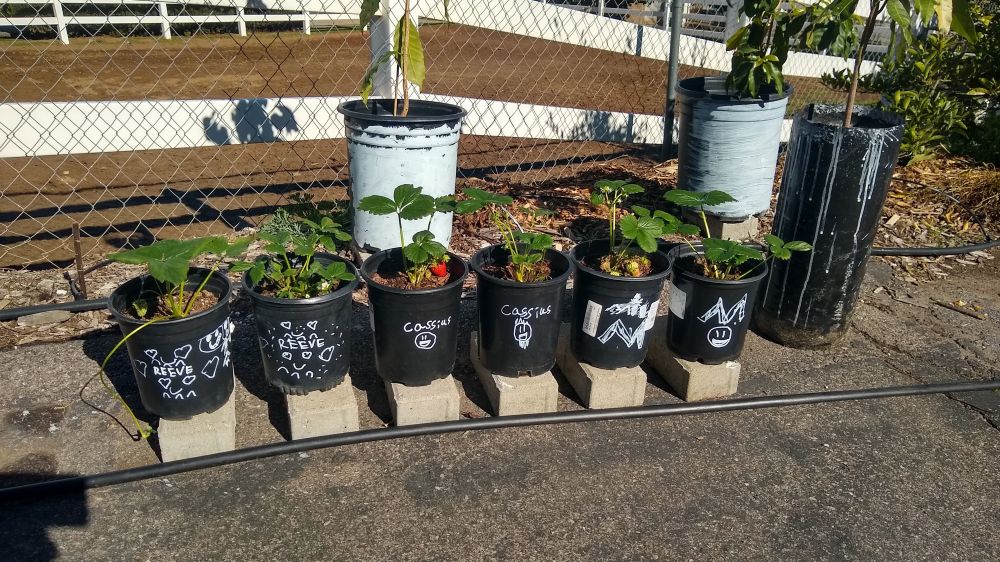
I gave Miles and Reeve (the ones who love tomatoes) their own tomato plants last summer. They planted and watered them attentively, with only occasional help or advice from me. They paid so much attention that I once overheard this lively discussion:
“Did you eat one of my tomatoes?”
“No. Why would I eat your tomatoes when I have my own?”
“Well, somebody ate a tomato off of my plant!”
6. Incorporate animals.
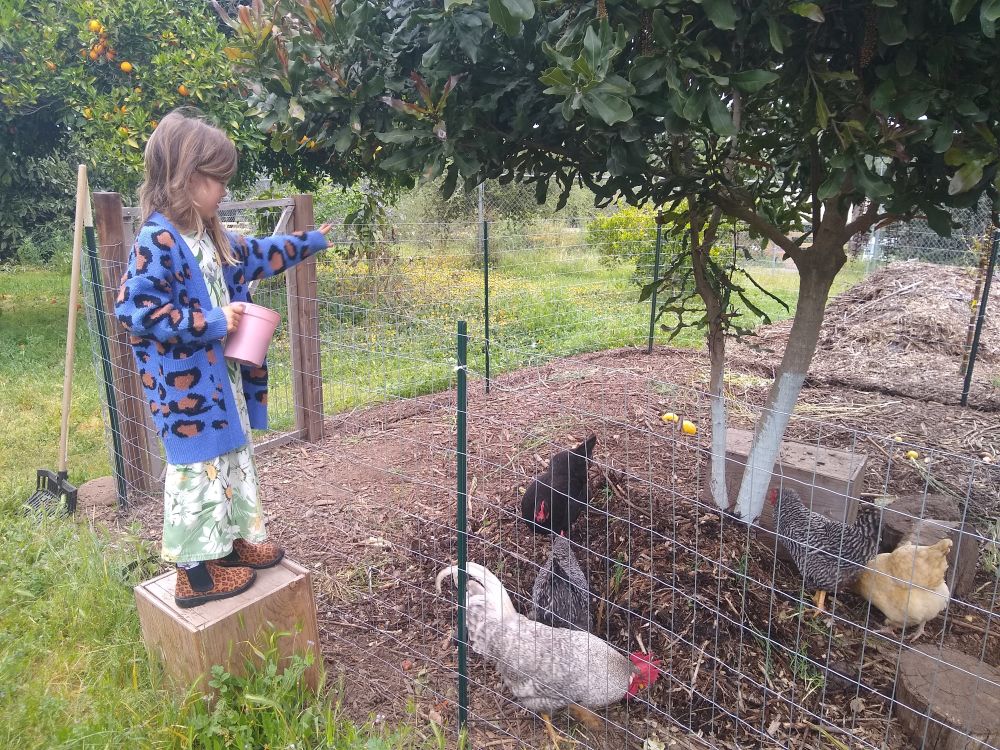
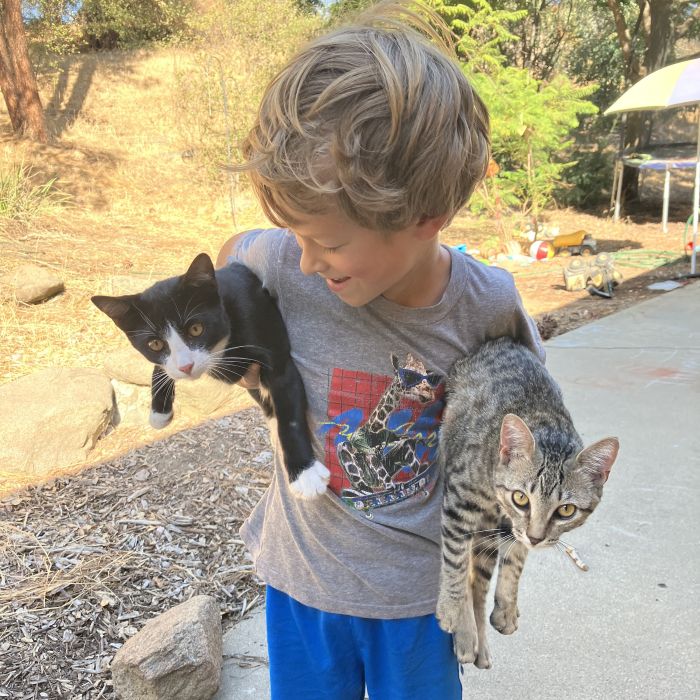
I like to work with plants more than animals, but my kids prefer animals, and every other kid I know is also more interested in the animals in our yard. We only keep cats and chickens and honeybees as part of our food garden, but they add a lot to the kids’ understanding of the relationships between plants and animals, as well as the relationships between different animals (predator-prey, for example). And the kids often choose to do chores with the animals over chores with the plants.
7. The garden is a place of discovery and experimentation more than a place of success or failure.
The onus here is on my shoulders as a parent. Don’t take the garden too seriously. Reeve sowed a row of peas last week after getting just a little guidance from me. She may have sown them too deeply, too shallowly, too far apart. I don’t know. I didn’t watch and I haven’t scratched around to check. It will be fun to see what emerges; it’s all a learning opportunity.
8. Use growing food to teach other things.
I treat our food garden as an environment in which to learn much beyond botany or entomology. This allows us to get more out of our time there. Math: How many gallons of water do the dripline’s emitters put out if we run it for an hour? Physics: Why do the lower-elevation emitters put out more water? History and geography: Where did mangos first grow, and how did they get to our part of the world? Economics: How much do our garden carrots cost compared to store carrots, accounting for seed, labor, water, carrot quality, etc.?
9. Pay them.
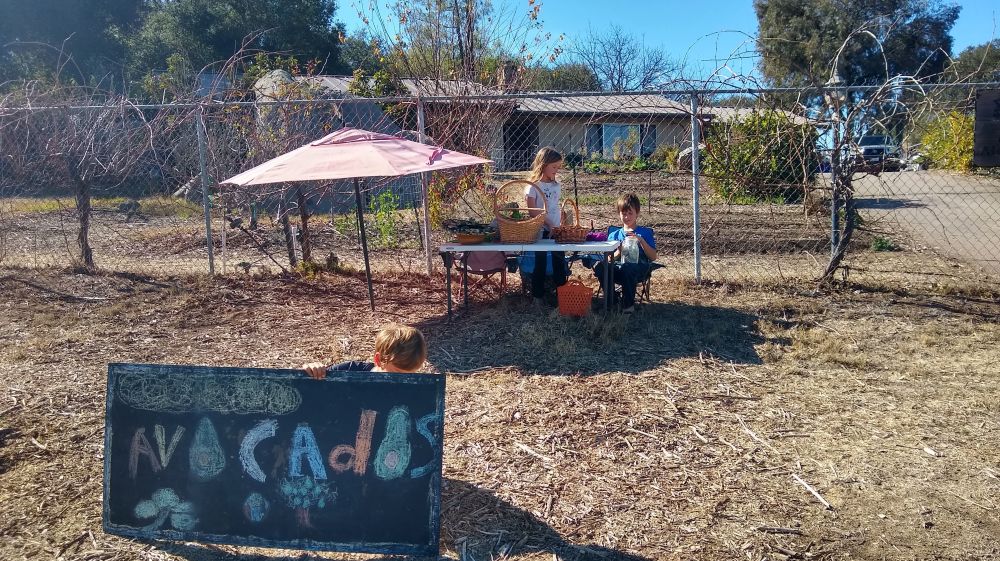
Farmers get paid for growing food. We would have to buy avocados if we didn’t grow them. The work of the kids in the yard is productive, and sometimes it ought to earn dividends in the form of dollars, even if just as a lesson about how the adult world works. I pay my kids when they do extra garden tasks or join me to harvest avocados that I’m going to sell. Also, the kids sometimes set up a stand at the road to sell our garden’s extra produce to neighbors, and they keep all the earnings.
I hope that I continue to learn better ways to teach my kids to grow food because I’ve seen that, compared to me at their ages, they not only have superior food-growing skills but also a broader understanding of the way the natural world works and their role in it as stewards.
Please see my support page if this post brought you any value and you would like to return some. Thank you, Supporters.
Find a complete list of my Yard Posts here.
Other posts about kids in the garden:
“Want kids to eat vegetables? Grow them”
“The best fruit tree for kids: Kishu!”
“Controlling aphids on broccoli: an experiment with the kids”


Recent comments