
One day it got up to 101 degrees in our yard, and on another day we played at the beach and got sunburned and the ocean water felt like summer — in March.
It was hot, but how unusual was that for March? And how did plants in the food garden respond?
HOT
I’ve been keeping weather records in my yard since 2014 and the hottest day in any March between then and now was 89 degrees in 2015. In two other years it got up to 85.
This March of 2026? It was 90 degrees or higher on 13 days. It was 95 or higher on six of those days. And as I mentioned earlier, it topped out at 101 (on March 20). So the heat of March 2026 was highly unusual compared to the past dozen Marches.
DRY
For most locations in Southern California, March is one of the wettest months, on average. The bulk of our year’s rain falls in January, February, and March. Like normal this year, we got storms that dropped a few inches in January and February, but from February 20 it was dry. Zero rainfall this March.
While dry Marches are not the norm (3-4 inches of rain is the norm), neither are they unheard of. For example, 2017 had only one day with sprinkles for a total of 0.1 inches of precipitation that March.
In 2026, it was the combination of total dry and exceptionally high heat for weeks on end that affected my food garden.
VEG
This resulted in a failure of my last sowing of carrots, lettuce plants suffering, broccoli plants bolting, and pea plants quitting.
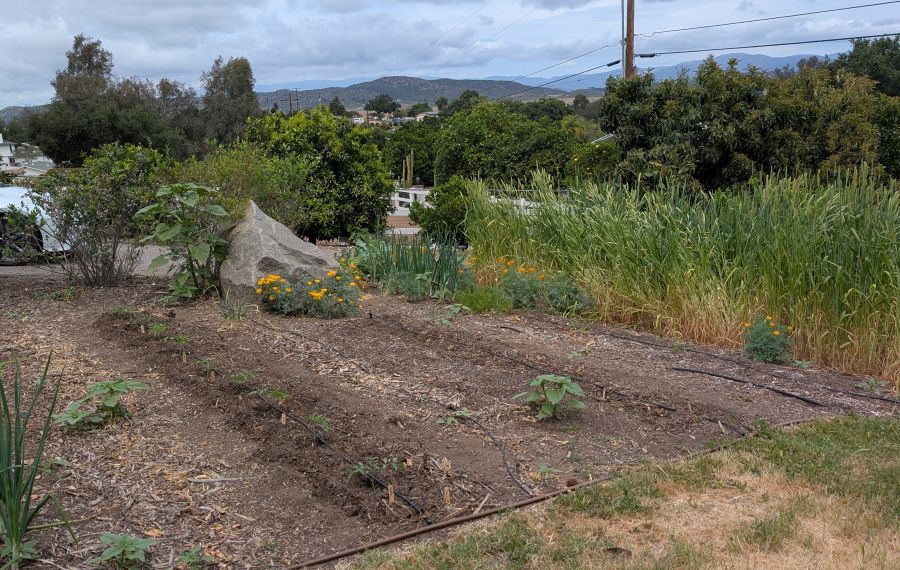
This March, I removed the burned-up peas and replaced them with tomatoes. The soil was warm and the tomatoes have been jumping out of the ground:
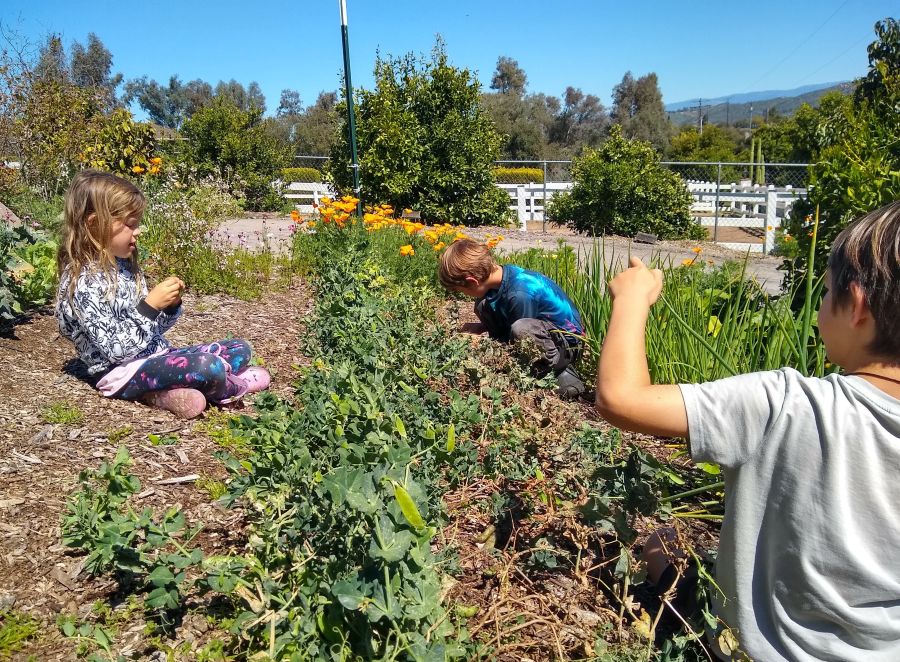
But look how happy our pea plants were exactly two years ago, on April 2, 2024:
So this March was an early end to my winter vegetables and an early start to my summer vegetables. I followed the lead of the weather (rather than the calendar) and planted other warm-season crops that have grown happily too, such as zucchini and cucumbers.
In most years, this transition doesn’t happen until April or even May. For example, 2024 and 2025 were cool and rainy throughout March, and so the soil hadn’t warmed enough for warm-season vegetables to grow well. In 2023, March was even cooler and rainier, with 8.8 inches of rain and many days of frost appearing in my yard, even frost on its last day, March 31.
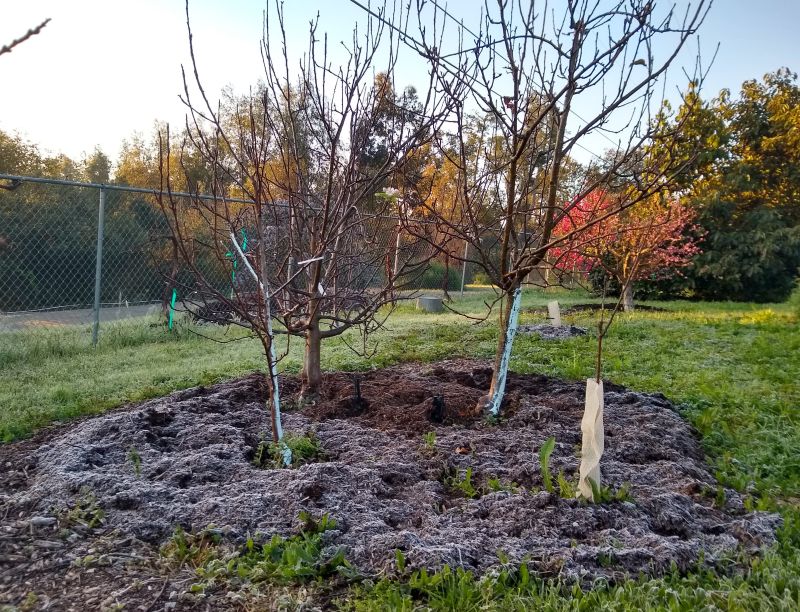
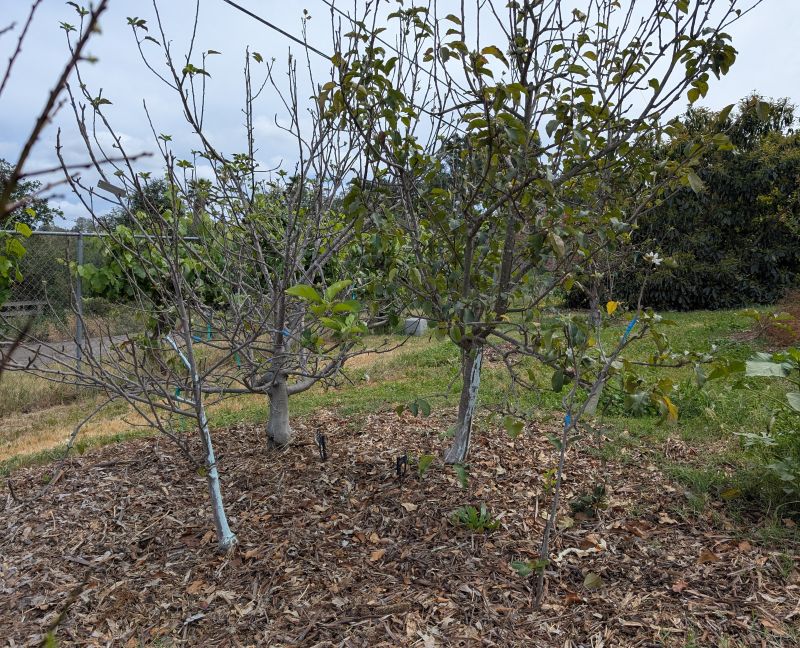
Considering how much cooler and rainier it was during the past three Marches, it will be interesting to see how the dry and hot March of 2026 affects plants through the coming spring and summer. My guess is that fruit trees will be affected more than vegetables.
FRUIT TREES
I had to water all of my fruit trees this March. Even the dirt under my peach tree was dry enough that I felt I had to water it in mid March despite the tree having no leaves yet. This is the earliest I’ve ever watered my deciduous fruit trees.
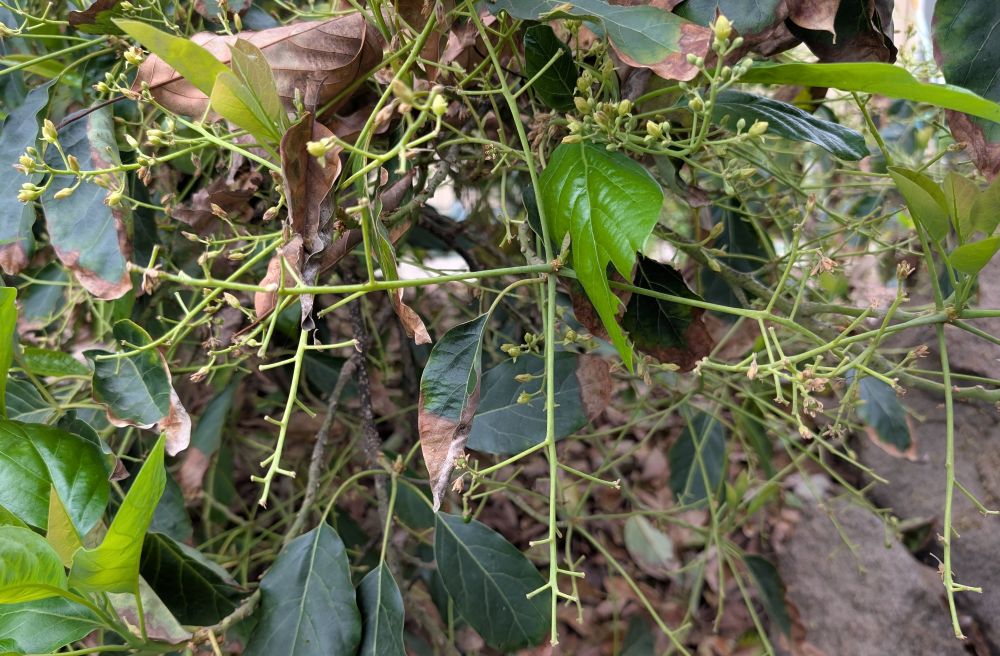
For the trees that were flowering during the high heat, I’m seeing poor fruitset on most. My pluots, apricots, and avocados were blooming during the peak of the heat but it looks like the heat prevented much fruitset, possibly by killing the pollen.
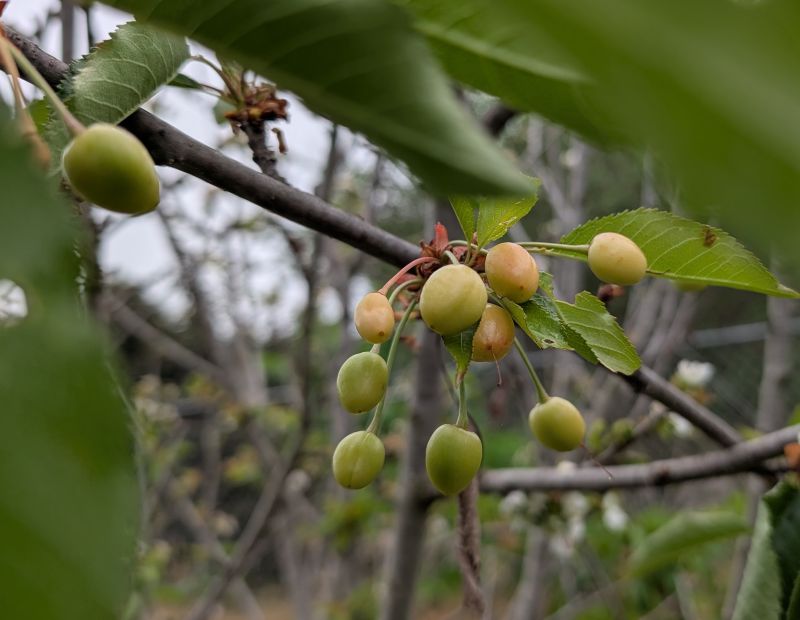
Fortunately, some trees had bloomed earlier, in February, and already set fruit, such as Minnie Royal cherry.
Thankfully, other fruit trees in my yard, such as Snow Queen nectarine and Sharwil avocado, are flowering later and these remaining flowers should become fruit in the current hospitable weather of April.
Grapevines are at home in high temperatures, and mine look as good this year as in any year. What is different this March is that they started growing earlier. Here they were just budding out at the end of March last year:
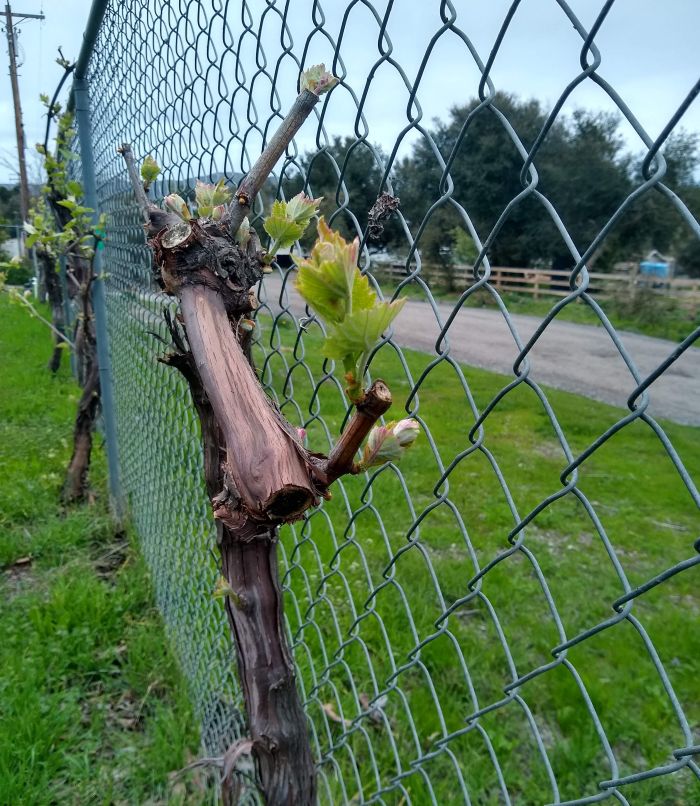
And here they are this year:
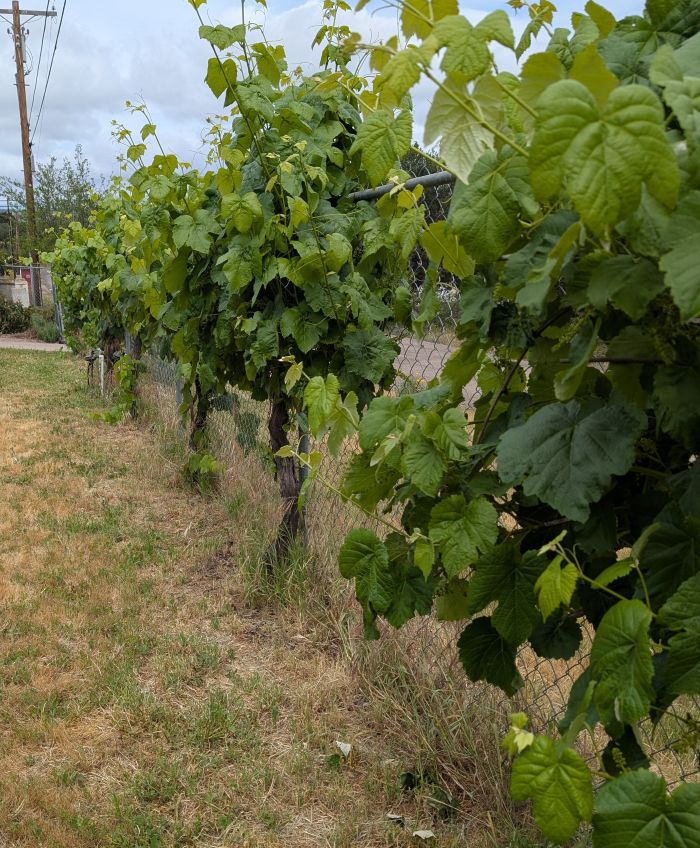
Grapevines appear not to have minded the dry heat of March, but bananas and mangos reveled in it. They had been saying thank you the whole month.
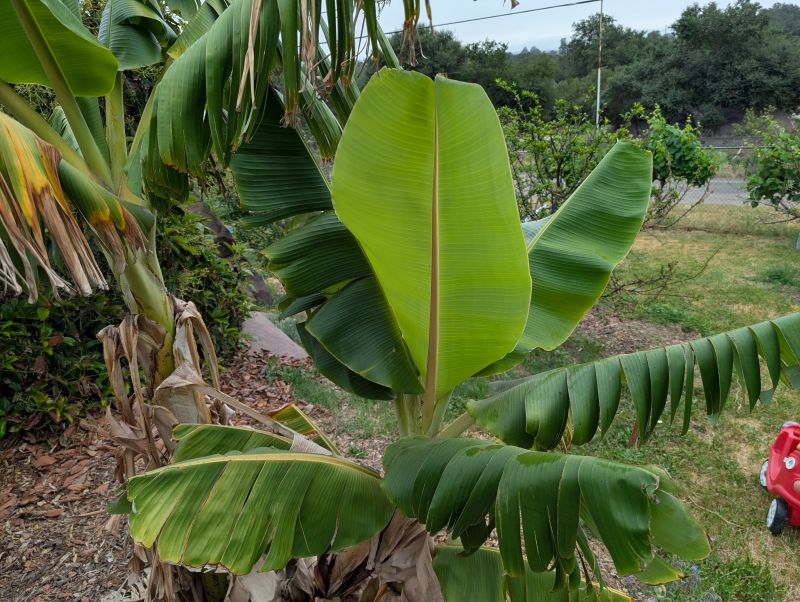
Part of the reason that tropical plants like bananas and mangos looked happy at the end of March was that the prior months of December, January, and February were also warmer than normal. Overall, the winter of 2025-2026 was warmer than normal.
This reminds me of the post I wrote near the end of the winter of 2022-2023, which was colder than normal, where I felt grateful to have fruit trees that enjoyed low temperatures, like apples and pears.
My post from 2023: “Why diversify your food garden?”
Where do we land? March is the last month of winter, but its weather this year was like summer. I don’t like that because I want a full winter of cool and rainy weather in order to rest and recharge before the long irrigation days of summer. Still, I can see the positives in the early growth of warm-season vegetables and the shiny new leaves on my tropical fruit trees.
I guess I land in the same place that I landed after the cold winter of 2022-2023, which is in gratitude for having lots of different types of fruits and vegetables in the ground such that, regardless of a season’s peculiar weather, I’ll still end up with some good homegrown stuff to eat.
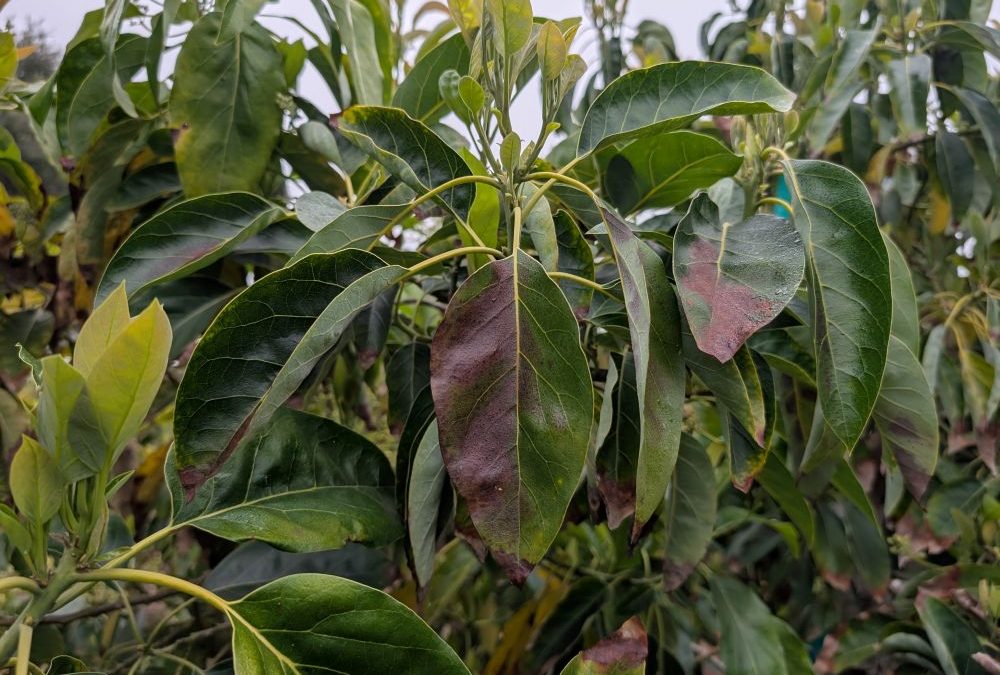
P.S. The photo at the top of the post is of sunburned avocado leaves. Can you believe it? Sunburn occurring on leaves in March!
All of my Yard Posts are freely accessible, and I run no ads on the website so that you can enjoy the content without interruption. Please consider supporting my efforts. Thanks!
All of my Yard Posts are listed here.


Most of the blossoms on my Mexican lime tree burned and looked like someone lit a match to the ends of the branches. It is an older tree and produces lots of limes, so it will be fine. I guess even citrus trees can be sensitive to heat.
Morning, and a Blessed Easter tomorrow!
March was almost hell in our canyon area of Chino Hills.
Our 3 in1 stone fruit is still holding some old leaves, we have a few apricots already large marble size. Plum is blooming hard but no leaves yet, nectarine has barely broken bud.
One of our 3 in 1 apples has never lost any leaves and more are coming, lots of Dorset Goldens set and at least 1” in size, but the other 2 varieties haven’t flowered yet (I’ve forgotten their type, and we’re helping out of town right now).
Our other 3 in 1 apple is just beginning to break bud.
Our small avocado I’m ignoring this year, hoping it will do something, and so far its growth has taken off. It has some angle shade shelter so overall it seems to have fared ok.
Our Washington navel dropped almost all blooms and ~10% of its leaves. Maybe 3 little oranges holding.
Our loquats have suffered burned leaves, our silky oaks blooms were hammered, not much to utilize for the orioles and songbirds that would feed happily on them, so they’re really haunting the nectar feeders.
We began watering the beginning of March, and it still wasn’t enough to support some of our plants fully, lots of dropped leaves and sunburned leaves. I’ve had to shelter various pots to keep the soil from getting hot, which I normally have done as we approached September. March is way too early for this.
As for ourselves, doing pruning and working outside, we both got pretty sunburned, and that is a first for March, for us.
No, this has been much more difficult for our green friends.
Hello, Sarah. I have a quick question about three in one trees. I tried a few a while back and noticed that in each instance one of the grafts withered and died while the other two took off.
It seemed to be such a ”thing” that I went to the alternate strategy of three, or two, trees in hole, or at least at such close proximity that I kind of pruned them like one entity. I am on my third orchard not and have so much room I don’t need to worry about squeezing in variety. I don’t really know how my earlier efforts are faring and they would not be a good ‘test case’ anyway as the succeeding caretakers were not seasoned gardeners.
Hi David,
The one 3in1 is acting just as you described, one graft has gone south. The other 3in1 is very vigorous and all grafts are leafing out well. As mentioned earlier, one already has numerous fruits I will have to thin now. It’s quite a mix of growth differences.
Any more additions where we can squeeze them in I think we may try your process, and I believe I may have read it here also.
Cheers!
Hi, Sarah, thanks for the reply.
I also thought of another twist. I’m betting your 3 in 1 was created by a certain provider and as such is on Citation root stock, which in my experience adds another level of trouble over time. Greg has a post or two about that root stock here. I now avoid Citation and have had to replace some trees using it.
I’m pretty sure it has to do with EL Nino and La Niña which take 14 years total to cycle … also climate change is going to make those even more pronounced . But it’s not as unusual as it sounds bc there are no trends that can be seen in the short time you have been keeping track
My Avocado trees dropped their blossoms in March. Did you think there is a chance of a second bloom?
I’m sorry, Dave. Probably not. If your avocado tree had flowers in March but has no more here in April, then it is likely done until next year.
Our beautiful romaine bolted overnight as temps here in northern LA County hit into the 90’s. Our sugar snaps started good but already look as though it is May. Tomatoes planted early this time look good as do the bell peppers.
Up north in Sonoma I’ve got a garden full of bolted escarole and lettuces that look like Christmas trees! I’m behind on summer garden starting this year. But I suppose there is still time?
Hi Mariangela,
I think that up in Sonoma as well as down here, we have such a long warm season that here in mid April is still not late at all to get started on a summer garden. In fact, it might still be earlier than ideal for a few heat lovers like chile peppers.
Hey Greg thanks for the content from a friend in the tropics!
Do you by the way sell scionwood of citrus or cuttings of blueberries?
Thank you!!!
It’s been a weird year near sdsu as well. We’ve got some stone fruit trees going out of control (very early varieties), others barely have any fruit at all or absolutely none. Our mango never flowered which is really weird. The bananas think it’s august. All in all I’m happy, though, there’s plenty to choose from, just weird. I tend to think it’s El Niño related too. I’ve got a Florida prince peach that will have harvestable fruit in about a week or so. The last time we got peaches that early on that tree was around 2012?? The papayas are loving this, too.
Im in zone 10, Escondido, southern California, north inland from San Diego. My lime tree had lots of dead wood and leaves were yellowing. I gave it the recommended citrus fertilizer April 1, 2026. Within 2 weeks the leaves all turned brown and fell off. The dead wood was now well exposed so I pruned out all the dead wood, and generally reshaped it back to its 5’ tall, 5-7’ wide. After a closer look I saw green moss/ algae like spots and a green hue in several areas. I was it in a mild solution of Dawn dish detergent and water and waited for it to fully dry. I covered cuts with tree wound paint. Im ready to cover it with shade cloth if temps begin to rise to 80’s +. Im not watering as we had a recent rain and ground still damp. There is sucker growth at tree base. Any suggestions on recuperation? Don’t want to paint it white bc it’s next to several natives and would look out of place. Still, if that would save the tree I would consider it.
Here in Olivenhain, 5 miles from the coast, we experienced much the same but to a lesser degree. All the winter crops bolted and were done so we had an early planting of summer crops. I’m already harvesting a few tomatoes and the ones that wintered over in the greenhouse have been producing well for weeks now. The trees were definitely a mixed bag. Few flowers and almost no fruitset on the apricot and good flowering but poor fruitset on the apple. Key lime suffered but tangerines are full of tiny fruit. Nothing bothers the lemon. Haas lost every leaf but bloomed like crazy and there is a huge amount of fruit now as the leaves are finally sprouting. The Bacon has leafed out well but poor flowering (it had a good harvest Dec-Jan) and the Reed has both abundant flowers and foliage. Evey year is different and we just go with the flow.
I’ve lived in SoCal since 1976, and I’ve seen some triple-digit temperatures in March, but never this sustained heat. The snow peas gave up early and the lettuce bolted repeatedly during the mild winter (so I gave up on replanting it). The Swiss chard is doing fine, though, and the mildness of the winter allowed the peppers, tomatoes, and eggplant to not only survive, but even produce during the winter, and some bush beans and cherry tomatoes volunteered round about December and continue to grow. The peach is finally flowering, and the citrus bloomed for a long time.
The blackberries in my Oakland, California yard flowered a few weeks ago and will start burying fruit in a week or two. This would be an early June
30 years ago. This would have happened in early August. Last year it was happening in mid-july. The climate is really screwed up.