
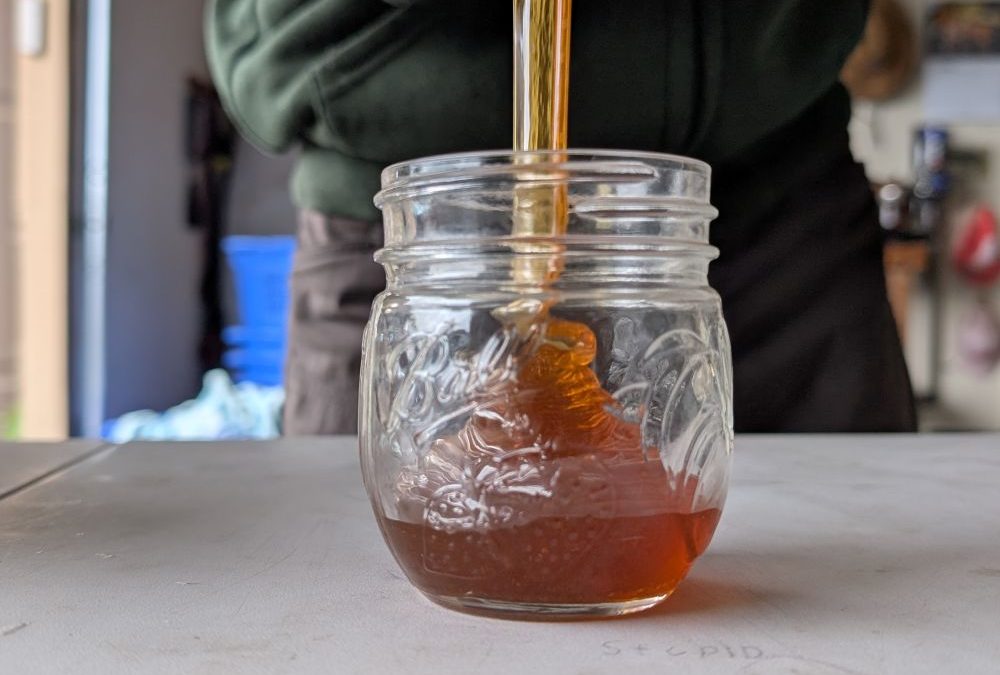
“Harvesting honey completes a circle in your yard,” said Jacques, as he was guiding me through the process of taking honey from my hive of bees which he had helped me install three years prior.
He explained: You grow these plants that flower (strawberries, tomatillos, apricots, etc.). Bees visit the flowers to gather nectar and pollen, and they unwittingly pollinate the flowers so that the flowers become food for you to eat. But also the bees take the nectar and pollen back to their hive and turn it into honey. Since they make more than they need, you can open the hive and take some. And the bees will continue going back to your flowers to feed, pollinate, and make more honey.
I bought a hive box in 2020 and placed it out in my yard, and I thought that bees from elsewhere would eventually find it and inhabit it, but that never happened.
So I was grateful when, in June of 2023, Jacques called me and said, “I’ve caught a swarm. I can bring it over and install it in your box.”
Jacques had been keeping bees for many years. He drove over with the swarm, and I watched him put the bees into the box in my yard.
Would the bees stay? Would they find my yard a nice place to live?
They liked my yard so much that their population increased rapidly to more than my hive box could handle. On June 13, 2024, they split. That is, half of them swarmed again, leaving my box to find a new home because they had outgrown the space.
So I bought two additional boxes (“supers”) to stack onto the original, in order to give the colony more room to grow and stay in my yard.
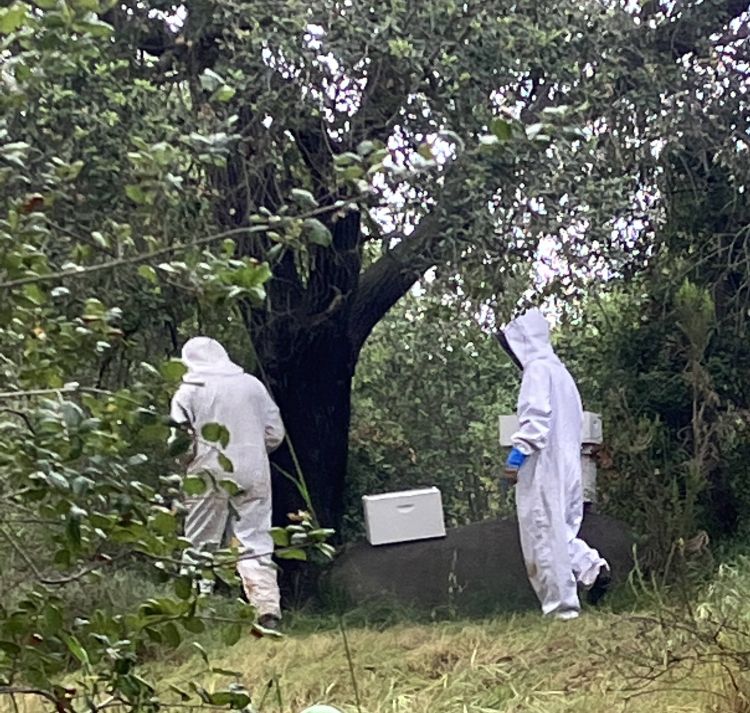
Why did I want to keep honeybees, and more honeybees, in my yard? Really, I just wanted increased pollination of my fruit trees. I had no interest in getting honey from them in the beginning. I added the extra boxes because I figured more bees would mean more pollination.
Spring of 2026
But this spring I could see by watching the number of bees going in and out of the boxes that their population had again increased to fill the space. There might be honey inside that could be harvested.
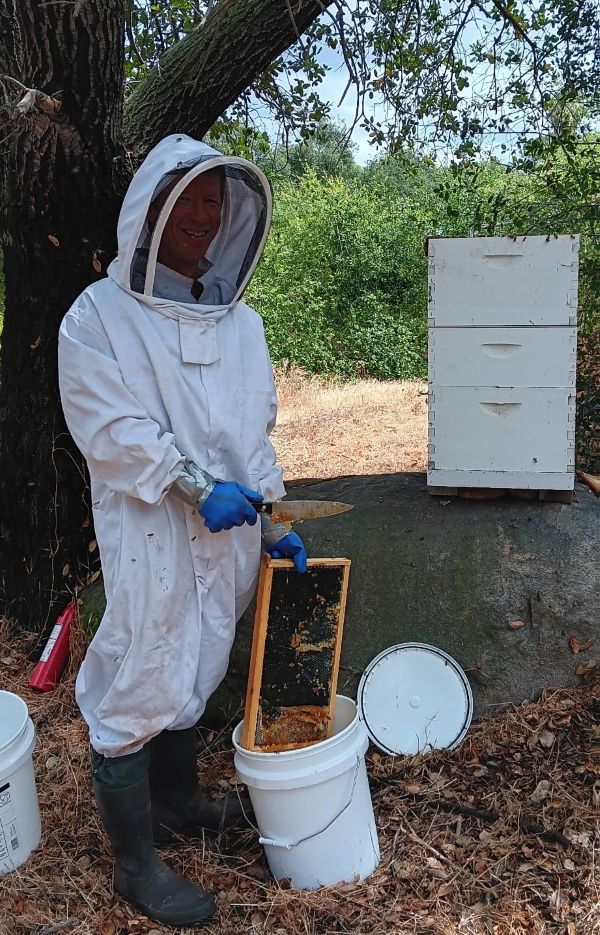
On April 26, Jacques arrived. It was a foggy morning. I donned my bee suit, Jacques lit the smoker, and we opened the hive. The top box had seven frames full of honey to harvest.
Like a good teacher, Jacques guided me but let me do most of the work.
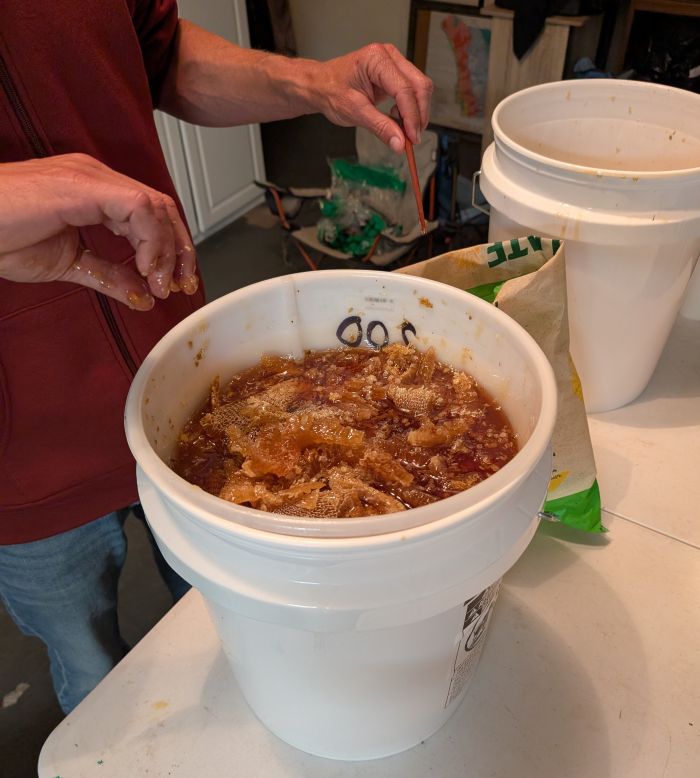
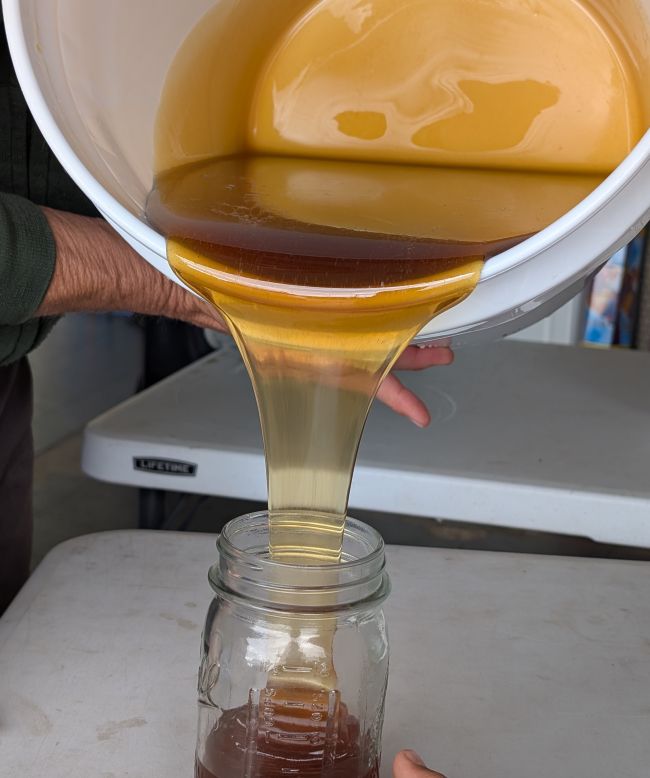
How much honey did we get? About 16 pounds. This much:
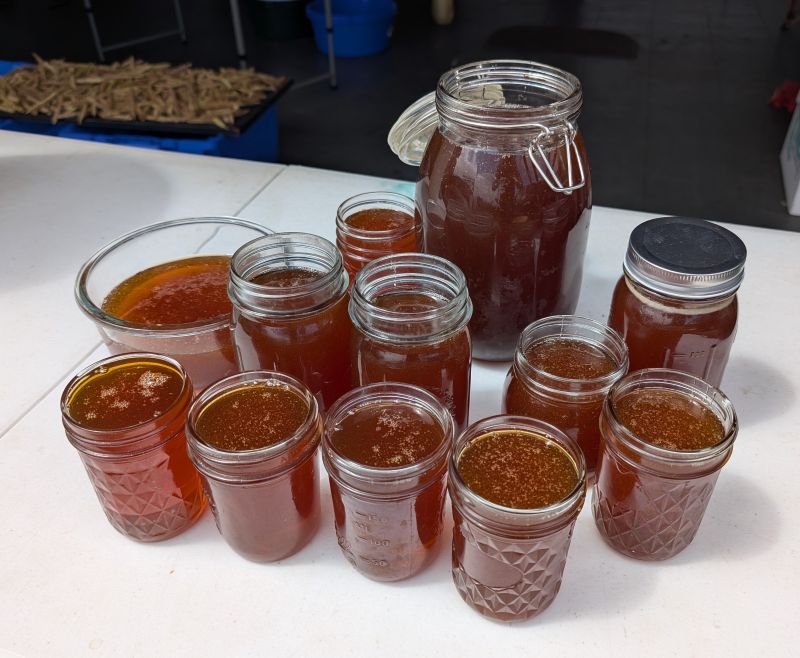
I was not prepared with enough jars on harvest day because I had no idea how much was in the hive. So I resorted to pouring into any glass container I could find. Later, I properly jarred the honey.
It was one day of work to get more honey than my family normally eats in a whole year.
I learned that harvesting honey is sticky work, and the easiest way to clean the sticky honey off your fingers is to lick it. So I ended up eating a lot of honey on harvest day just in order to clean my hands.
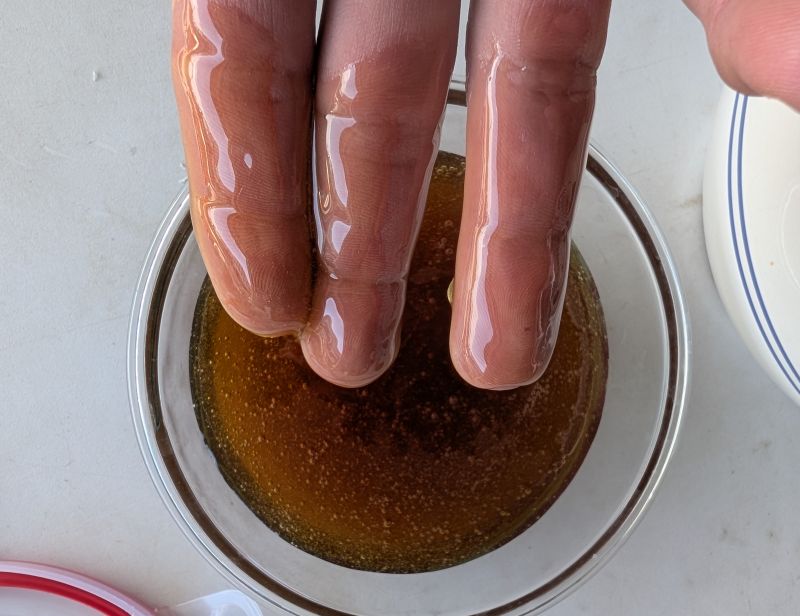
I also got to experience putting a piece of intact comb in my mouth and chewing to burst the honey out. That was new for me.
In the past few weeks since harvest day, I have grown to like eating honey more. It’s no longer just a product from a jar. I’m eating my honey.
And I know where it came from. This honey was made from an array of flowers in my yard: avocado, citrus, rosemary, cherry, apricot, broccoli, gilia, grape, poppy, elderberry, buckwheat, ceanothus, and on and on. There are even more flowers in my neighbors’ yards that the bees used.
My honey is light in color, and I might be biased, but it is the best honey I’ve ever tasted.
My Yard Posts are supported by you and only you. There are no sponsors and no ads. Thank you, Supporters!
All of my Yard Posts are listed HERE

Hey Greg! Really cool and I love how you have so much experience but are also constantly branching out to learn more.
How much space does one need to have bees?
Hey Nick!
What makes me feel so lucky is that I have friends like you and Jacques who know stuff I don’t and are willing to teach me.
I know people in urban areas with tiny yards who have hives, even on their roofs. I know that the bees don’t care how big your yard is because they use the flower and water resources of your whole neighborhood. But there might be rules about keeping bees in some areas. As you know, I’m in an area where we can keep horses, cows, and other large livestock so mine is a different context from the suburbs.
You want to make sure you’re not irritating or endangering neighbors. For example, I wouldn’t place the entrance side of a hive within at least twenty feet of where people often walk because the bees feel territorial about that particular area since that’s where they fly in and out of their home. You want to keep that “bee line” area clear and dedicated to the bees.
I say this based on experiences with my own hive and visiting many other hives in yards smaller than mine. Nevertheless, I am a novice at this so I’m sure that more experienced bee folks might have other ideas. Maybe Judd can chime in here?
Judd’s website: https://www.happybeesd.com/
Good work Greg! Congrats on your first harvest! I’ve gathered some information about what my wife and I have learned over the past 6 years or so of beekeeping that I share publically on our website. If you’re interested, go here: https://www.happybeesd.com/
A few things that I’m very grateful for:
1. The knowledge and expertise shared in the community of the San Diego Beekeeping Society.
2. The knowledge, expertise, and support of the County of San Diego Bee Apiary Program. We recommend registering your hive so that you can receive full support.
Maintaining a hive on your property comes with some responsibility, as you probably know, including ensuring that you manage the hive to mitigate the spread of diseases and varroa mites. The SD Beekeeping Society and the County have provided us with invaluable support and knowledge that has left us feeling confident that we are doing good for honeybee populations in San Deigo, in addition to pollinating our blossoms and indulging in honey.
Nothing can match RAW HOMEGROWN HONEY. I’d lick your fingers too for some locally grown. More memories brought back. Please contact me if you have any excess to sell. I’ll bring jars 😁.
My former provider raised his out near Southerland Dam. but sadly he moved out of state. Mary Anne near high school.
Thank you, Judd!
Fantastic. My neighbor has a hive and my yard feeds her hive. My concentration in my orchard is bumble bees more than the honey bees but I have a lot of those as well. The rows of Rosemary and lavender feeds them all year long. All the ice plants, the yellow flowers feed the bumble bee. It’s been at least 5 years of their return to this area. Keeping the clumps of succulents on the hillsides supplies the home for the bumble bee. Rose in the yard, The Mystic, a Palo Verde tree feed so many bees. My yard is one large bee factory. These two trees are covered in honey bees, black carpenter and native bees. Jasmine climbing up a backyard patio also brings in so many bees. The loss of habitat for the bumble bee is why I have worked toward giving them a place to live. I bet you have them as well—or will soon!! Best Tina Corso
Hi Tina,
I wish you were my neighbor! I do have some bumble bees, but I want more. Seeing them visit my ceanothus and blueberry flowers in late winter is always a pleasure. I will consider clumps of succulents to provide them with more habitat.
Congrats on your first honey harvest! Almost thought you’d offer them up for sale with avocados…wink wink
Greg, and fam! So excited for you all on this new honey adventure. Slightly jealous, too. Finally getting our garden started up in Colorado Springs after a few years of amending the soil (it was all demo fill and rocks when we first arrived). Hugs to you all. Peace. Love. Ali
Ali! I look forward to hearing what it’s like gardening in Colorado Springs. See you soon.