
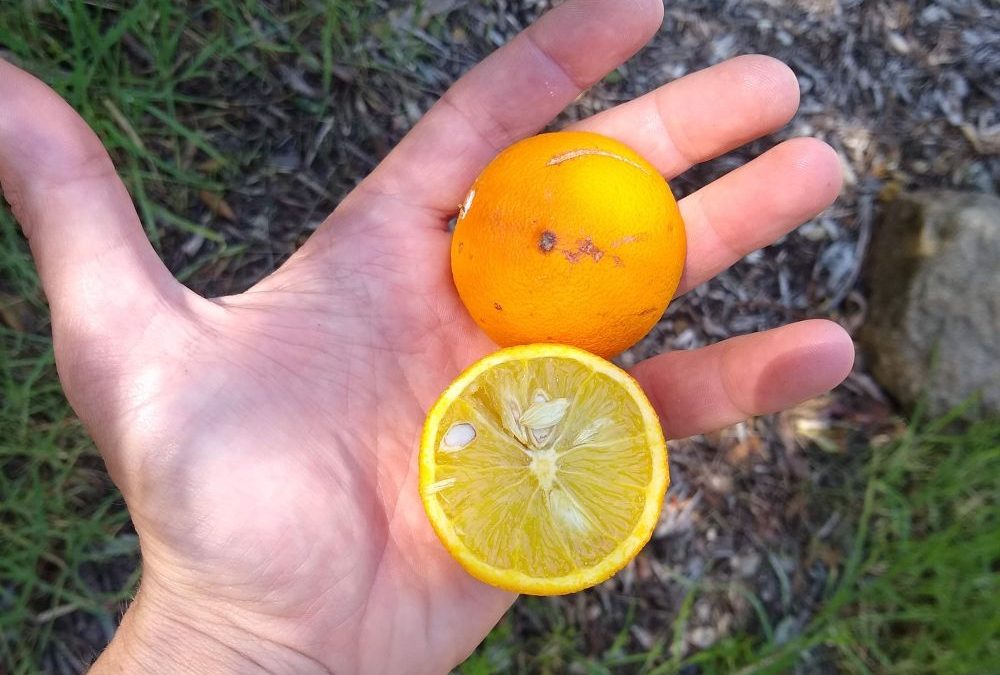
It all started when I identified my neighbor’s citrus tree as rootstock. The fruit was unpleasantly sour and very seedy, nothing you would ever eat. The leaves were in groups of three. I looked at the base of the trunk and could see where the intended top of the tree had been overgrown by these branches making terrible fruit.
It was the classic loss of a citrus tree from rootstock suckers. It happens time and again.
(My post, “Beware of citrus rootstock suckers.”)
But which rootstock was this? It looked most like C-35 to me.
I could use this, I thought. I could take a fruit, sow the seed, and later graft on a chosen variety. I could make my own citrus tree from scratch.
On February 11, 2024, I did the sowing. I let the seedling grow for two years, in which time I almost forgot about it.
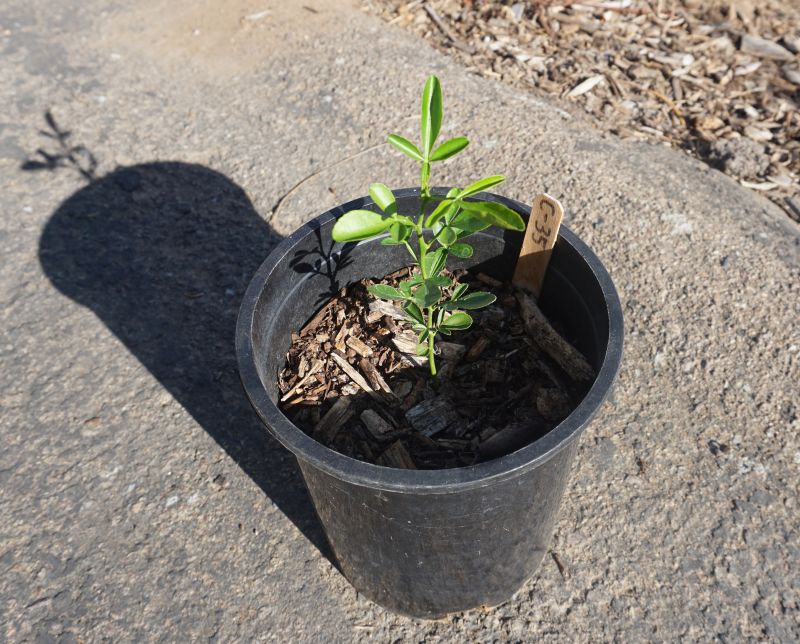
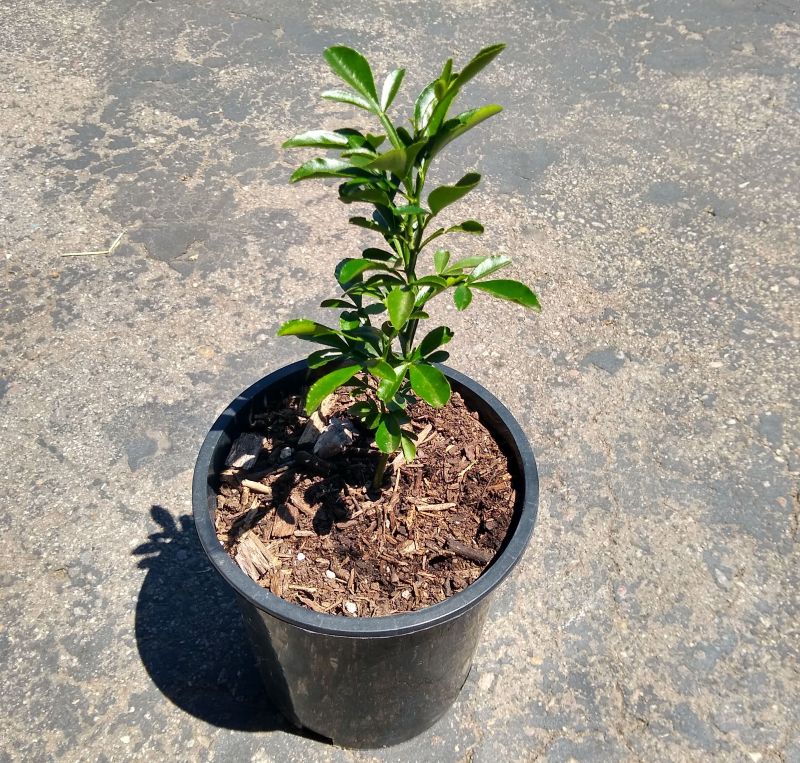
Then in January of this year, 2026, I toured the greenhouses of Four Winds Growers, a California nursery operation that has been making citrus trees for generations. It got me excited about citrus, and it made me remember my C-35 seedling, and it gave me an idea for how I would graft it.
Back at home, on February 19, I cut a little branch off my Shiranui mandarin tree. I wanted to make a second Shiranui tree since it is my wife’s favorite variety but the location of my first tree is not ideal. And the grafting method I used was the one I had seen used with great success at Four Winds, a simple splice.
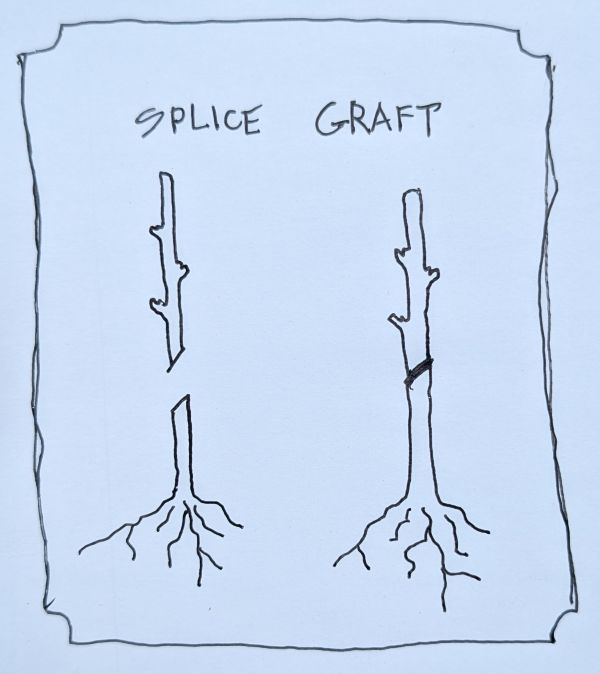
To aid the healing, I kept the grafted tree — Shiranui top onto C-35 seedling bottom — on a heat mat in my garage for a couple weeks. I was again trying to imitate what I’d seen at Four Winds, where heaters are used inside the greenhouses.
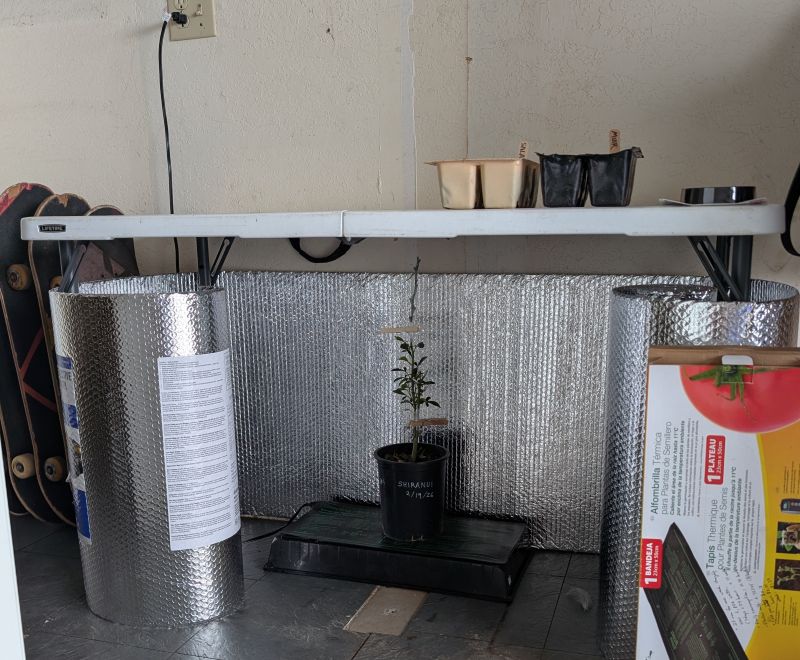
In great anticipation, I watched for growth. In mid-April, at last, I could see that the buds on the Shiranui scion were growing strongly.
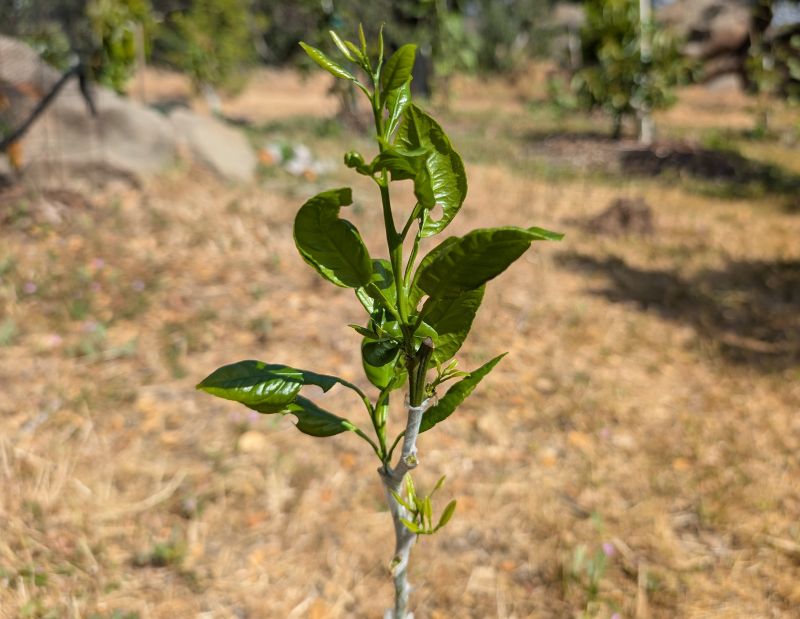
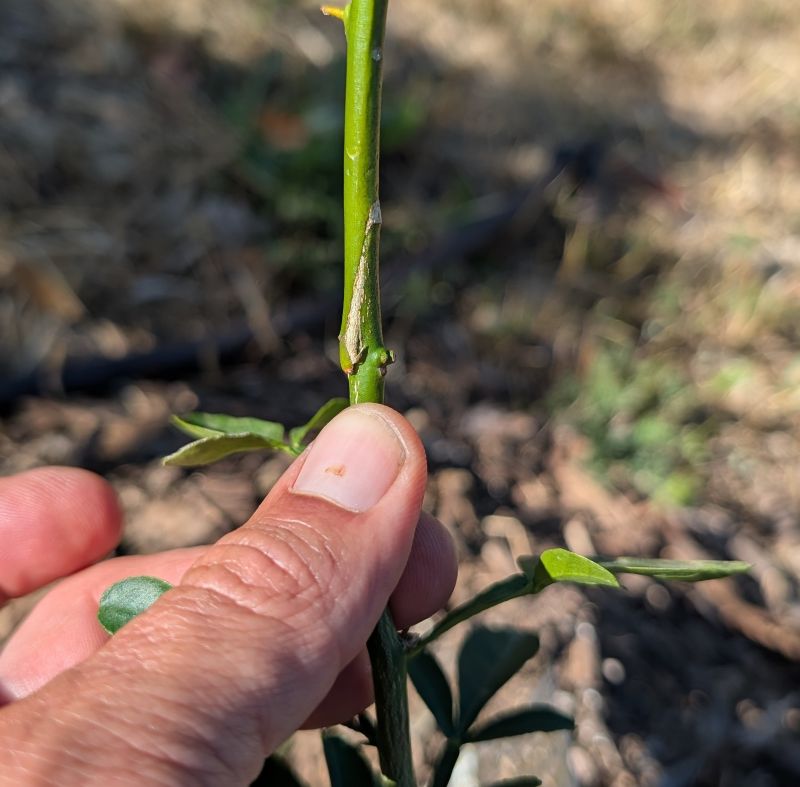
And the splice graft had healed well.
I hate taking care of plants in containers so I dug a hole. Upon removing the ball from the pot, I found that the roots at the bottom of the one-gallon container were circling but I teased them straight and spread them in the hole.
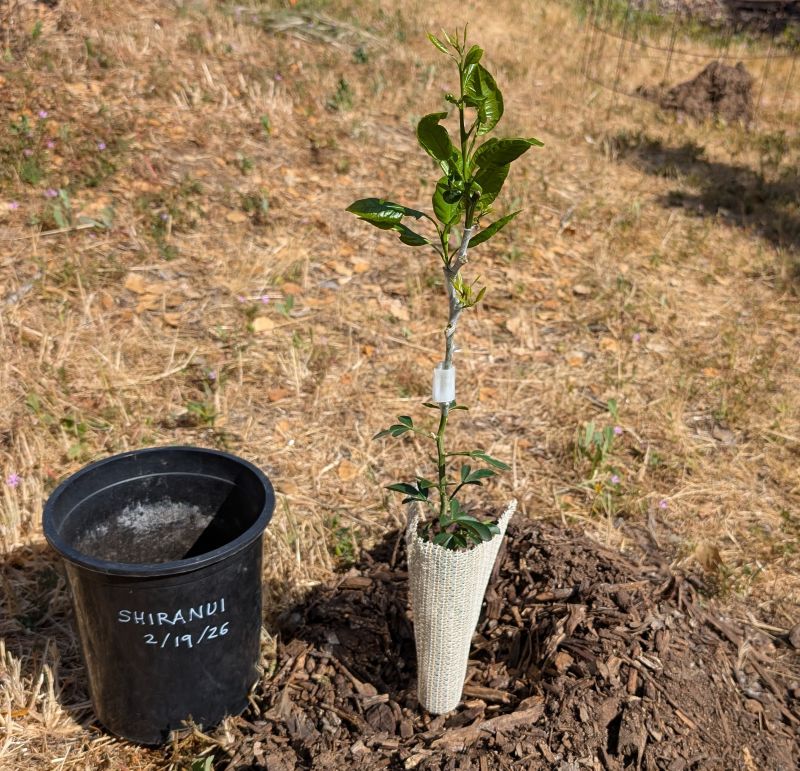
I stepped back to admire the little guy, and I felt like saying, “Look, Mom. I made a citrus tree from scratch!”
Want to make your own citrus tree from scratch?
You can sow a seed for the rootstock like I did or you can buy rootstock.
Four Winds Growers sells C-35 seedlings and other citrus types for rootstock whenever they have more than they need. (See the Four Winds citrus rootstocks page here.)
You can also buy a grafted citrus tree from a nursery and then graft it over to your desired variety, thereby treating it as a rootstock. If doing this, it’s best to use a citrus type that is similar to the one you’re grafting. For example, buy an orange tree if you’re planning to graft on an orange variety.
Where to get the scion, the top fruiting part? A reliable source that I have used in the past and that has a plethora of citrus types available is the University of California’s Citrus Clonal Protection Program.
I don’t run ads on my Yard Posts because I respect you and want to help make the Internet readable again. I rely on your voluntary support exclusively. Thank you.
All of my Yard Posts are listed HERE


I cut any suckers off my trees with C35 rootstock and root them. I’ve made a couple Shiranuis this way too. I’m hoping Shiranui does a little better on C35 than it does on the Carrizo rootstock it came one. Everything else I have on C35 does very well.
This is good to know. Also, this is the first time I have heard of the clonal program mentioned, but then I am upstate.
I did tour the original grounds of Four Winds not too far from Winters, CA.
They had a beautiful location, but the aging owners of the land wanted to move it along for other purposes. They sold the business and turned the land over to Solano RCD among other recipients.
Hi Jason,
I like that as a way to make use of those suckers. My original Shiranui is on C-35 and it does very well so I hope yours will too.
At Four Winds, when they use rooted cuttings for rootstock instead of seedlings, they take the cutting (of C-35, for example) and graft onto it (Shiranui, for example), and then stick it in media to root while the graft is healing at the same time. In other words, they don’t first root the stock and then later graft on the scion.
So smart of them. It cuts the required time to produce a grafted tree in half.
Gosh that’s a great idea. I sort of did a similar attempt though. I bought US942 scions from CCPP and grafted them to a Melogold grapefruit I made. I bought US942 because of its touted HLB resistance. I figured I’d get some rootstocks of those going if HLB got really bad. I let some grow to flower and fruit for seed and on others I grafted Shiranui, using 942 as a sort of interstem. My goal was to then prune off the 942 with Shiranui attached and root them.
I’ve probably given up hope on that since the 942 seems to go nearly dormant in the winter and stops growing. All leaves drop. I don’t think it will be that vigorous as a rootstock and maybe be like flying dragon. I suppose it’s possible some interaction with the scion might not let the rootstock go completely dormant but the initial look isn’t great. Also not as scared of HLB as I once was.
For rooting my C35 I use 2 of those wonderful clear plastic Starbucks jumbo water cups, put some soil in one, stuff in the c35, cover it with another cup and seal them together with grating tape.
Great info from four winds, thanks!
Fascinating stuff! Thanks for sharing. I buy directly from Four Winds but as a rookie I probably won’t be grafting anytime soon!