
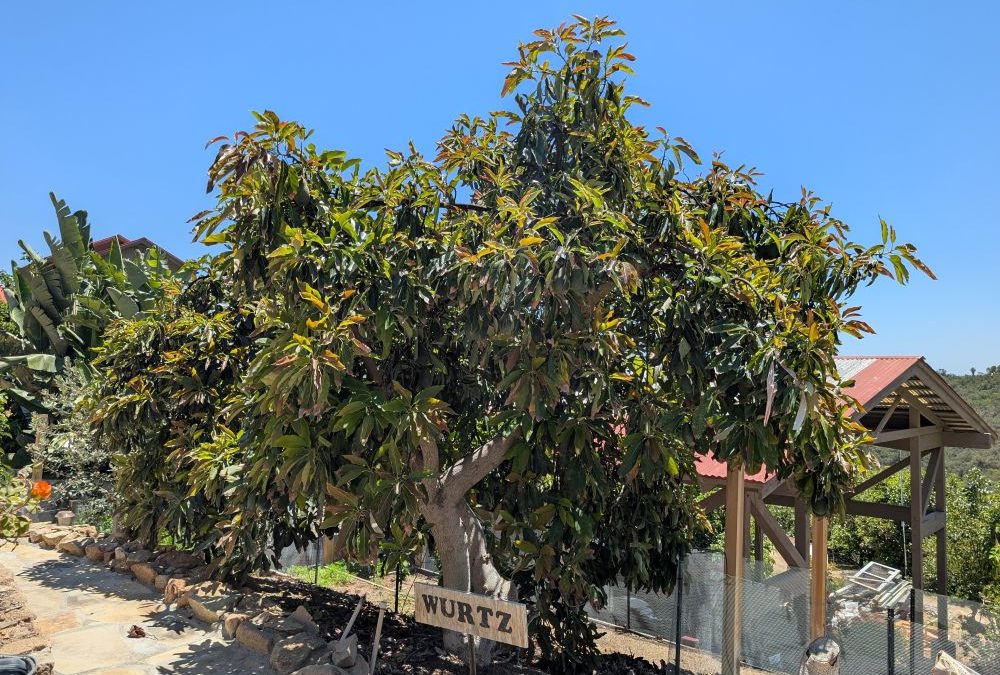
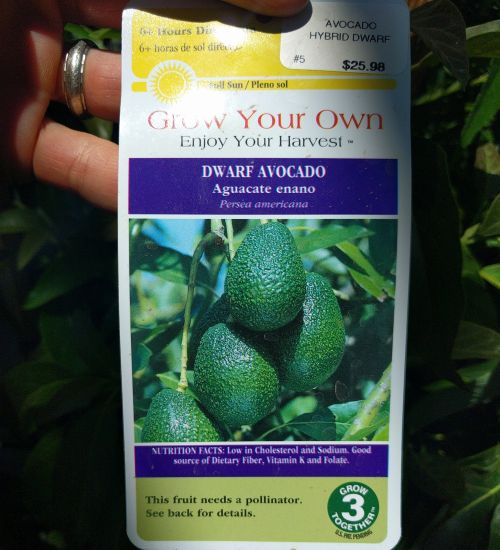
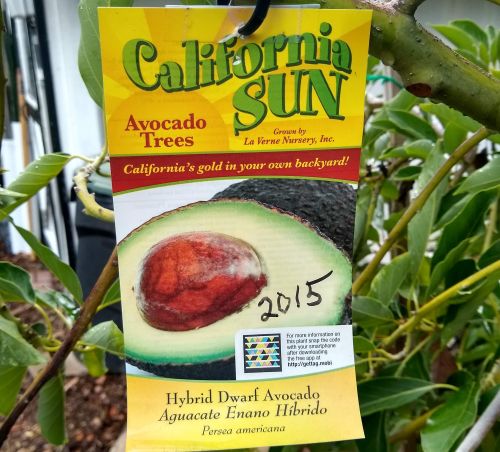
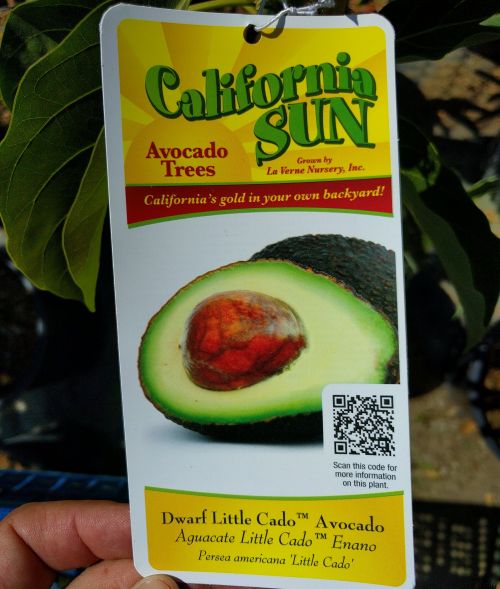
Is Wurtz that bad of a name? Why can’t nurseries leave it alone? They’ll call the variety anything: Dwarf Avocado, Hybrid Dwarf Avocado, Little Cado. Anything except the original, real name: Wurtz.
Wurtz variety history
Roy Eugene Wurtz, a clerk in the Encinitas post office, grew the original tree on his property there in San Diego County, California. The seed was planted about 1935 and by 1943 the variety was already mentioned in the Yearbook of the California Avocado Society.
In 1948, the Wurtz variety was being included in the Society’s Experimental Plots. (That year, another variety introduced by a post office worker up in La Habra Heights had recently achieved recommendation for commercial planting: Hass.)
Through the 1950’s, Wurtz was found to produce well near the coast but not inland at Riverside.
The variety made its way around the world, being grown from Turkey to Australia, but never took hold with solid commercial success. In some places, the tree’s fruitfulness was excellent but in others it wasn’t.
Wurtz avocado fruit
From the beginning, however, the main complaint about Wurtz was not related to productivity but rather to seed size: “The Wurtz, a green Fuerte-like fruit originating at Encinitas, matures during the summer period. It is precocious, prolific, and consistent in bearing. Its worst characteristic, as grown at Encinitas, is its large seed.” (1943, Marvin Rounds.)
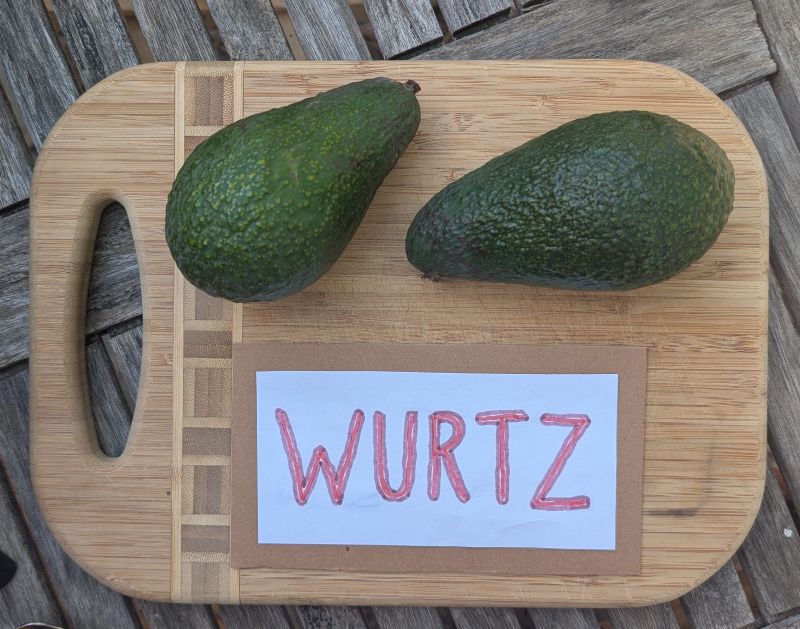
From the outside, Wurtz avocados look like this:
Cut open, they look like this:
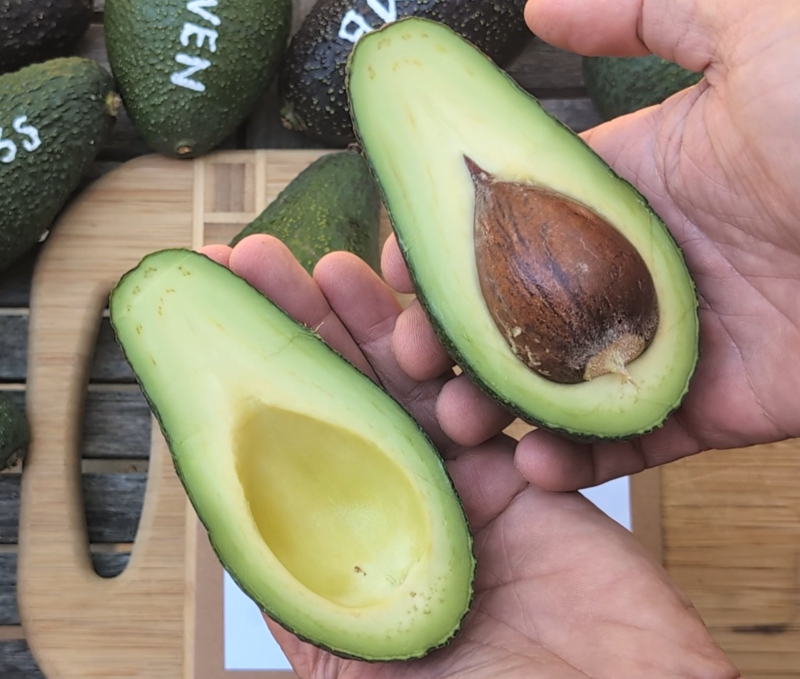
Aside from the large seed, Wurtz avocados have green skin, both while on the tree and when ripe.
They have been referred to in the past as “Summer Fuerte” because they appear similar to Fuerte on the outside yet have a summer harvest season (whereas Fuerte has a winter harvest season).
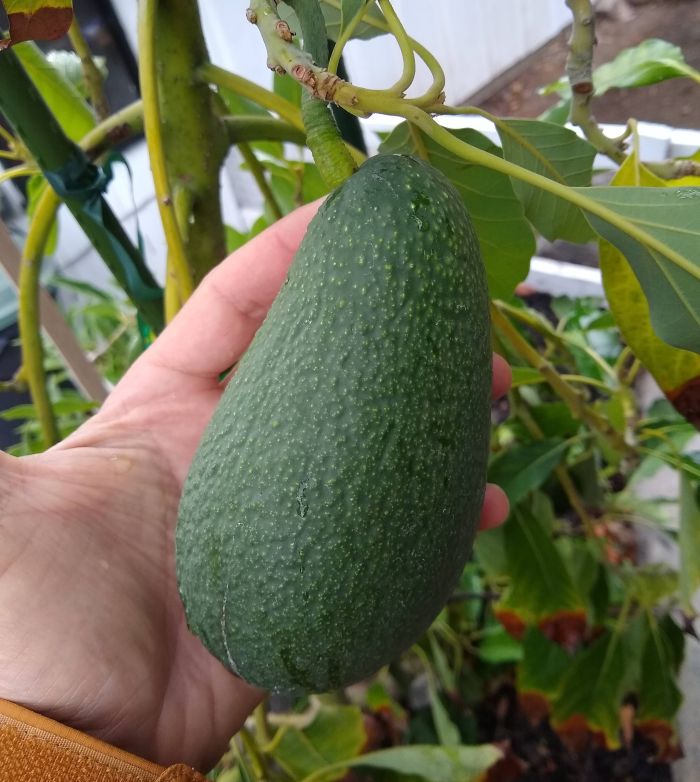
Wurtz tree growth and architecture
The Wurtz tree has a droopy, weepy growth habit. Some effort can be required to make Wurtz stand up like a tree rather than spread like a bush.
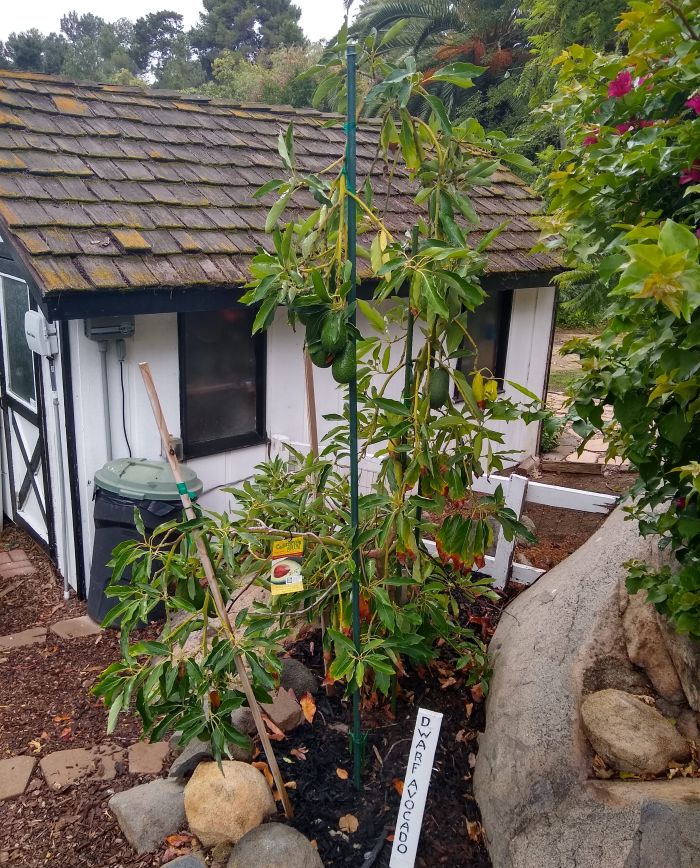
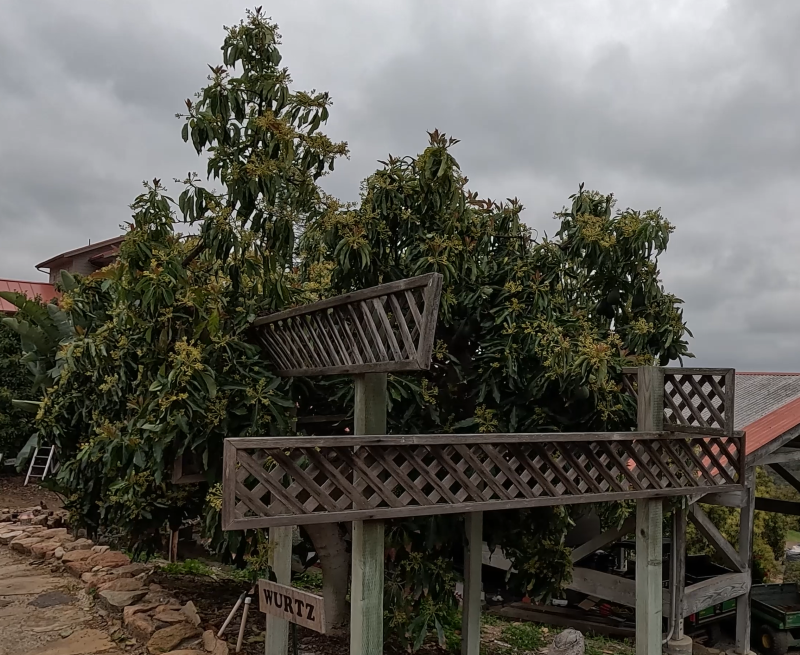
Another comparison to Fuerte comes to mind, as Fuerte also likes to spread horizontally, except that Fuerte is stronger. It’s more of a wanderer than a weeper. All the same, I sometimes think of Wurtz as growing like a miniature Fuerte.
Wurtz tree flowering and fruitfulness
Unlike Fuerte, Wurtz has an A type flower and fruits more at an earlier age.
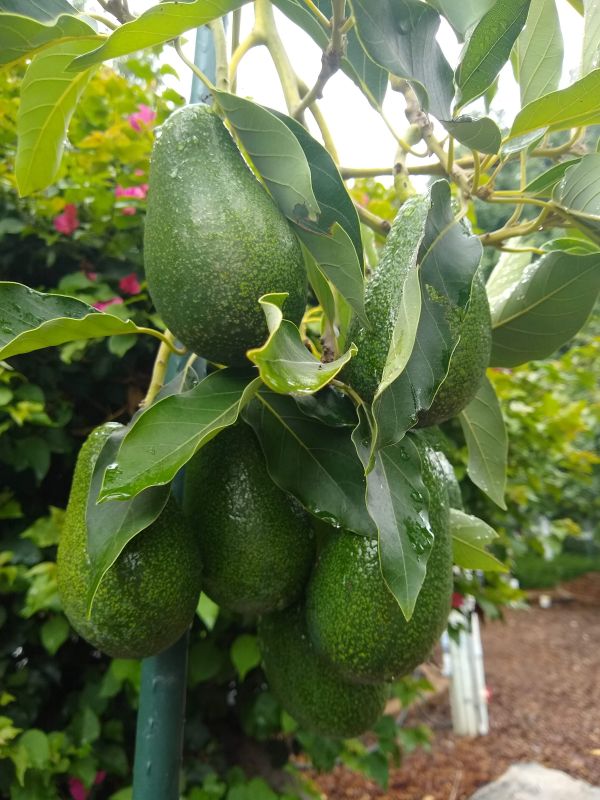
Wurtz also has a denser canopy than Fuerte.
Though it was observed that Wurtz did not fruit well in Riverside during the 1950’s, I don’t think that we should consider Wurtz a variety that’s only suited to the coast today. I haven’t personally seen a Wurtz tree growing inland that fruits poorly. (For example, the young tree above is growing in La Mesa, and the fruitful tree with the scaffold is growing in Rainbow.)
One last note on the character of the Wurtz tree relates to cold tolerance. While I have not had the chance to observe Wurtz in a freeze myself, there was a cold event in late December of 1968 that was said to be “among the most severe of all time to hit the California avocado industry.” And Oliver Atkins observed in the 1969 California Avocado Society Yearbook: “The Wurtz variety in the Fallbrook area showed a remarkable resistance to the freeze.” Hass, Reed, and even Zutano were severely damaged, Atkins wrote, but Bacon, Fuerte, and Wurtz showed better resistance.
Is Wurtz a good fit for your yard?
The main attraction of Wurtz is its compact stature. Wurtz along with Holiday are the dwarfiest avocado varieties that are widely available today. If you are interested in such a bushy type of avocado tree, then I would recommend Wurtz over Holiday unless you highly prefer large avocado fruit. (Holiday makes a big avocado.)
However, if your situation allows for a slightly more vigorous tree, then Wurtz would be competing against others for a space in your yard. I would choose the following varieties that make moderately sized trees over Wurtz: GEM, Pinkerton, Lamb, Reed, and Gwen, all of which are fruitful and bear superior avocados.
Possibly, Wurtz would have an advantage to these varieties in terms of cold tolerance, but I can’t say so firsthand.
Enjoy my video profiles of the Wurtz avocado and tree
Thank you to Emerald Hills Farm for letting me video their fine Wurtz tree.
All of my “Avocado Variety Profiles”
Did this Wurtz profile provide you any value? Then consider some support, and I’ll promise to I create more. Thanks.
All of my Yard Posts can be found HERE.

I am in Japan, where we can’t buy GEM, Gwen or Lamb. We can, however, buy Wurtz, along with Hass and Reed. Unfortunately, people in marginal climates can’t easily grow a Hass or a Reed because they aren’t very cold tolerant. I have Bacon, Winter Mexican, Mexicola Grande and Stewart, all of which give me fall into winter, and I am trying to see if I can get a Pinkerton growing in a particularly good microclimate, but Wurtz seems to be the only viable option for a summer harvest. Late flowering gives me a better chance of fruit set because my Mexicola Grande can’t set fruit in our cold spring weather. Compact and small would be good for my small yard, and the fact that Wurtz covers it’s fruit inside the canopy means that the stems that attach the fruit to the tree might be safe from freezing weather. Just because the tree itself can get through the winter doesn’t mean that the fruit will survive u damaged. I am trying to grow a Hass in a trellis that I can cover up in the winter, but since it’s fruit is exposed outside of the canopy, that project might fail once fruit is on the tree. Your profile video indicates that you aren’t that impressed with Wurtz fruit, but I think it looks like a great tree for marginal climates.
Wow, I am agreeing with Cynthia above. One thing she did not mention is its small size allows easier covering for frost protection.
Your write-up was well received here, as I am in latitude 38, and frost is an issue.
I have lost/killed three avocado trees, but currently have a Mexicola and a Zutano.
My ears perked up that the Zutano was troubled by frost that the Wurtz shrugged off, and the Mexicola fruit may be defeated by cold springs.
I grew up in Long Beach with what I think was a giant Fuerte next door that I could harvest by going on our garage roof, so I am hoping climate warming makes my latitude hospitable.
Thanks for the profile. Answered a few questions (Harvest season, color and flavor) My Wurtz turned 9 years old before it produced – 2 fruit. This year, its 10th, after a warmish winter and coolish spring, it has lots of BB’s. It’s only a hair over 6 feet tall and about 7 1/2 feet wide, very bushy and weepy to the max. As a result I’ve had to paint the bared upper trunks one heading west and the other to the east. It’s handled a few of our cold winters here in Humboldt (dipped below 28 for a few hours) at young age fairly well. If you harvest beginning in May we probably can harvest in late June into July. It had a huge limb from a tree fall on it, a little snow, covered up by a Japanese maple (since removed) been transplanted and survived early neglect. It may not be one of the elites, but i swear it has personality. It’s my 1st tree and I have learned its ways.So despite what some have said, I’ll be keeping it – as long as it gives me some fruit. Hear that Mr. Wurtz?
P.S. Thaks for the Gwens. Super good! Support coming your way.
Hey Greg would love to chat and get your advice. I’m trying to do the impossible, growing avocados in Oregon, zone 8. Currently have a fuerte and a bacon and want to top work them.
Hi Greg – Wurtz seems like a perfectly good name. I will jump on the GWEN bandwagon this week! Thought I would share an article written about avocados growing right here on a farm in Sonoma! I buy from them at the farmers market and am excited to try their non-Hass varieties. Of course the magazine only took photos of Hass- weird! https://www.sonomamag.com/seven-moons-farm-brings-locally-grown-avocados-to-sonoma-county/
Hi Mariangela,
This is great. Thanks for sharing. I hope they have lots of success.
I grew up with a wurtz avocado in Fullerton CA planted in the late 1970s. Was still producing delicious fruit when we sold the property in 2022.